Mariam Kamara is not your regular architect. Born in Niger, she moved to the USA after high school and embarked on a decade-long career in Software Engineering before deciding to go after her calling…architecture. Returning to school to learn the subject technically, she is now the Principal Architect of Niger’s Atelier Masomi design practice, as well as being one of the most forward thinking architects on the continent. Her belief is that the profession can be a force for social good and that her job as an architect is to be of service to the people who will inhabit the buildings she designs. Her achievements so far have led to her being one of the protégés in the Rolex Mentor Protégé Initiative, where she was mentored by the architect, David Adjaye.
Atelier Masomi focuses on what Mariam calls “Context Based Architecture.” Working in a field that is very male dominated and Eurocentric in its educational focus and in the opportunities that it provides, she believes the world is being robbed of a rich diversity of knowledge, ideas and architectural history from underrepresented regions. In most western institutions, architecture is taught as though only Europe has any history. While studying, she’d look through “World Architecture” books and find that only 10 percent, if that, covered building design from regions other than Europe and America; and even at that, only for the last 500 years. What was excluded was the rich architectural history of indigenous cultures of the world, particularly in the times before many of these regions were seized, enslaved or colonised. This violent erasure was shocking to her as a Nigerien who knew, lived and experienced her country’s rich architectural history. And so, when she started working in Niger, she made it a point not to regurgitate what she’d learned in school.
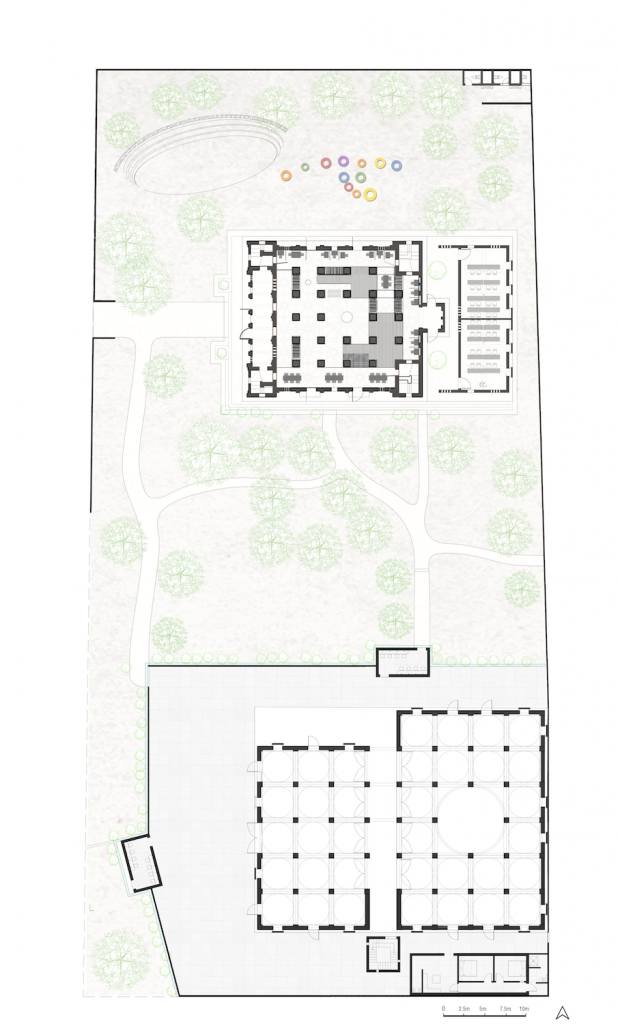
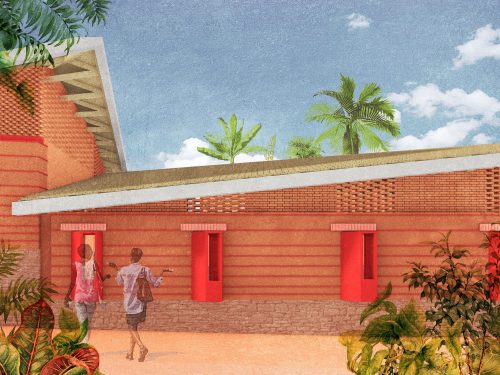
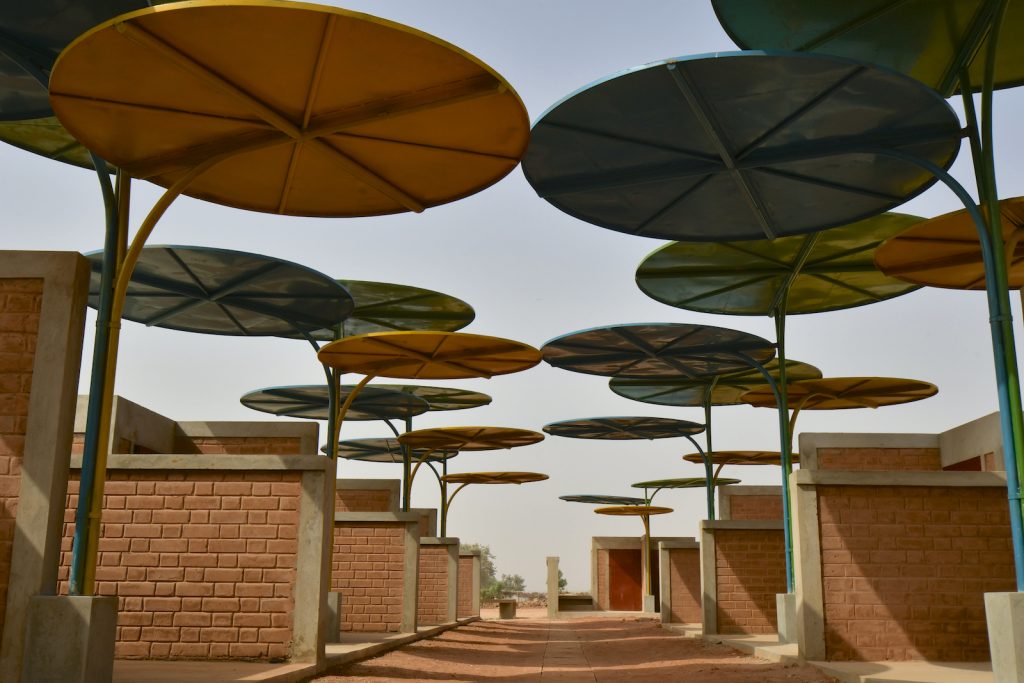
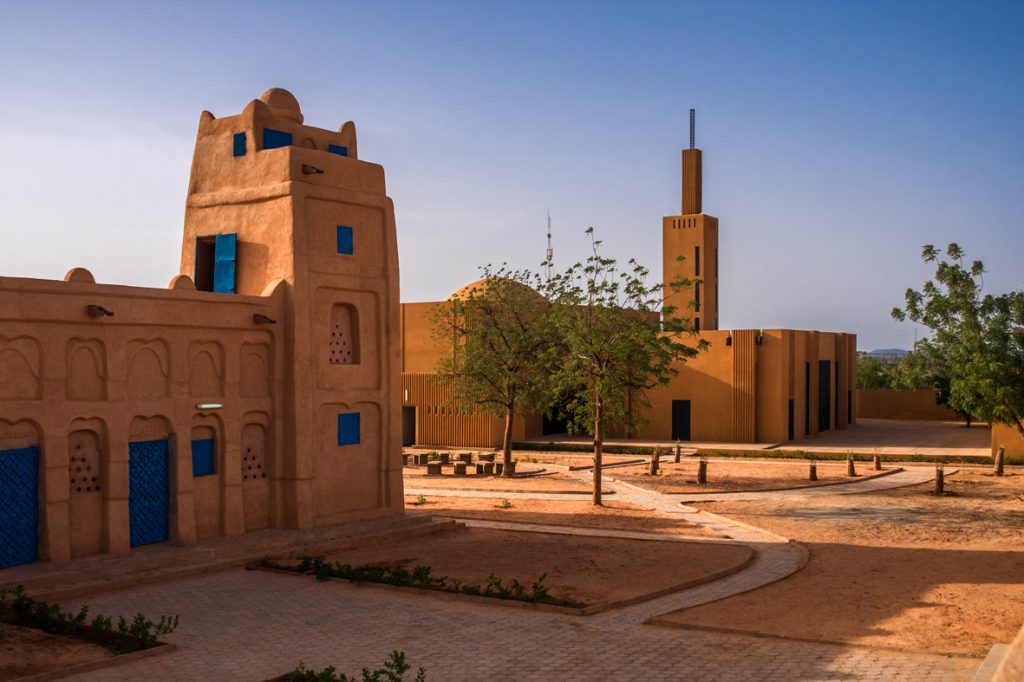
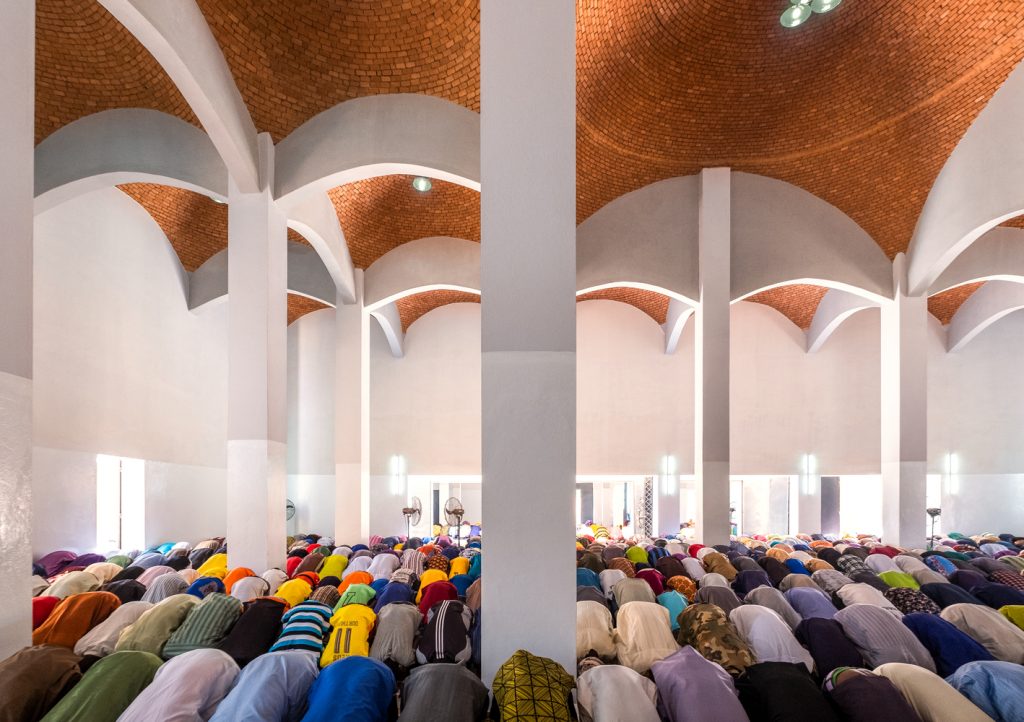
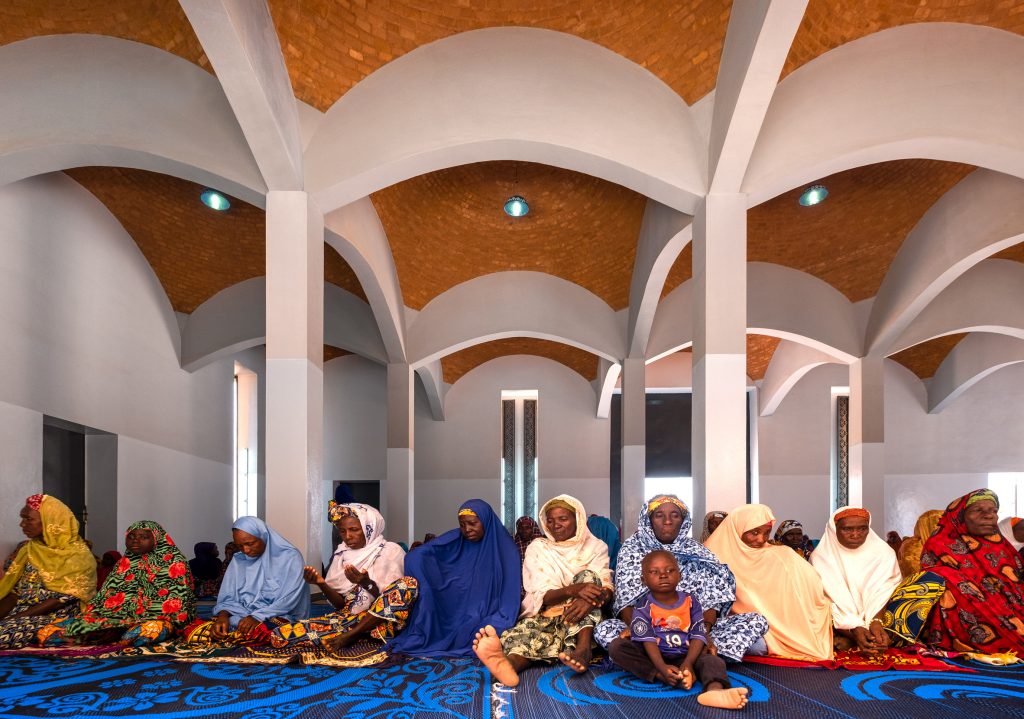
Three particular Atelier Masomi projects – amongst others – include the in-process Niamey Cultural Centre, an educational, agricultural and creative centre that brings contemplative space to a city where specific venues for this are rare. Another concept is the Artisans Valley, which is part of a vision to create a public building that will be constructed using the skills of weavers, metal-workers and local craft masons. In rural Niger, Atelier Masomi completed the striking Dandaji Regional Market, known for its bright, circular, recycled metal canopies, under which the area’s traders sell their goods. Mariam’s portfolio also includes an elementary school, a religious and secular complex, and an American international school.
A further, much anticipated public space proposal is one that considers ‘mobile loitering’ or ‘4 miles of flânerie féminine’ whereby young girls in Niamey can use a dedicated urban route as an alternative way to link them with public venues that are popular with the city’s youth. Ultimately this will allow them to socialise with each other and at the same time escape the public scrutiny that often exists in a conservative Muslim society. In essence, the atelier has found an innovative way to look at this metropolis through a gendered lens.
Mariam’s process for designing a new building typically starts with a series of workshops and conversations to try to understand what potential inhabitants want and need. Teenagers are her preferred participants as she believes they are more likely to express their ideas without the diplomacy and double-speak most adults inherit as they grow older. Sometimes these groups are given cameras to take photos of their surroundings; other times, they are asked to write short essays or sketch responses to questions she may pose about their ideas of home, community or whatever is relevant for that project. Through these tasks, Mariam finds “clues” about how these young people see their spaces. For example, when asked to draw their dream home, they often draw, not just one house but a neighbourhood – symbolising how important community is in an African setting. They usually include trees, which highlights the need for shade, given that Niger is located in the Sahara Desert, where temperatures reach as high as 45˚C.
After these sessions there are lengthy discussions whereby Mariam interrogates the ideas behind the responses. Along with her team she then distils this information and includes it in their research about the architectural history of the place and the cultural uses of certain spaces.
To undergo a process as open and egalitarian as hers, Mariam believes we need to be open and accepting of the information we receive and in turn use this information as an antidote to our preconceived notions and biases. This is what differentiates architecture as a form of social spatial practice as opposed to a purely sculptural one.
In Niger, the Masomi team works a lot with earth, which is the traditional material used in the country. The hot and arid conditions mean that the soil has several unique thermal advantages. This is particularly important because energy efficiency is often framed in the context of heat preservation, through maximising natural light, or having south facing windows. However, in places similar to Niger that are close to the equator, energy efficiency is working to achieve the opposite effect.
To Mariam, this monolithic approach is dangerous as architecture and urban design can be used to include or subjugate entire communities. Colonisation led to the destruction of architecture around the world, which occludes the imagination of people so much so that we often cannot imagine what existed before. And if we can’t trace our history it is hard to picture a modernity that stems from us. This is what Mariam believes has led to great confusion in not only architecture but several knowledge-based practices in the world: Modernisation is often confused for Westernisation. The aesthetics, philosophies and practices of most “contemporary” architecture is based on European needs, values and climates. The work of Mariam and Atelier Masomi is to develop a new language of modern African architecture, steeped in rich traditional practices.
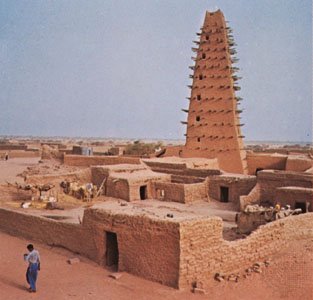
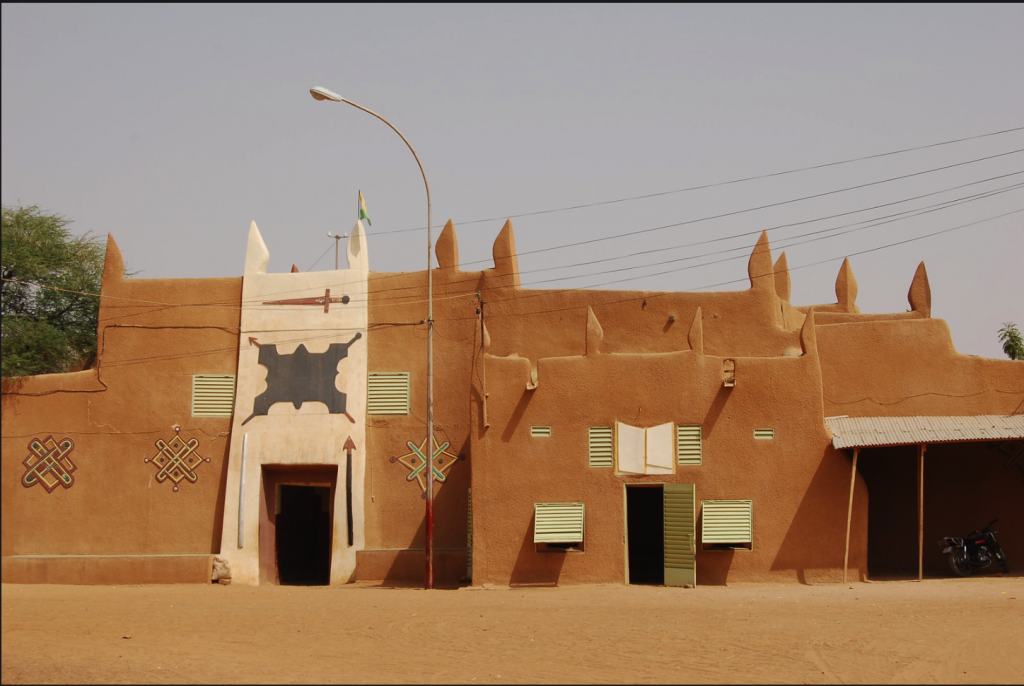
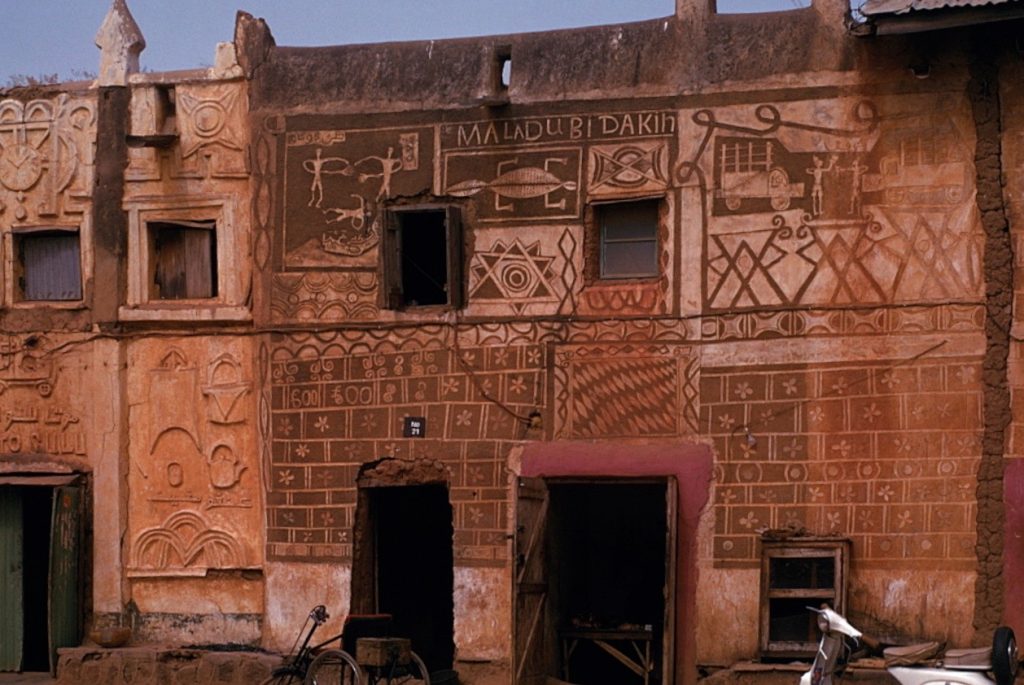
However, Niger is an artificial country, created around 100 years ago when borders were created by its French colonisers. So, the challenge, as with most of Africa, is to create a sense of national identity. This is difficult given the relative youth of the country and the fact that thousands of years of cultural practices have been randomly split along arbitrary lines. Luckily, much of the rich diversity and history of Niger was unscathed by colonial destruction and in some regions, its architectural history, dating back to the 15th century, is still intact. It is from this well of knowledge that Mariam and her team draw their design inspiration.
The central question that she wants to answer with her work is, what does it mean to have a Contemporary African City? In answering this, her studio has created buildings that are inspiring a whole generation of architects and artists across the continent.