In a strange turn of events, I’m of the mind that we’ve all on some level turned into Chicken Little and are screaming “The sky is falling” daily into the ether and on the internet. And it very well may be. Within the perpetual madness, however, are a select group of people who’re able to laugh in the face of mortality and its meaning – comedians, not sociopaths.
While much has been written about the various tragedies that have befallen African countries through artistic explorations by its people, not so much has been explored about the laughter and joys of the various nations, so what better time to do this than during a pandemic?
Kago “Jonny Pula” Rannoba is a familiar face on the Botswana entertainment scene as a headlining comedian, actor and host of Comedy Nights.
Onkagetse “Monna O Motona” Mbulawa is a rapidly evolving one man (and a cat, Milo) show, famous for his impersonations of Botswana’s entertainers and elite figures, who’s swiftly becoming a brilliant entertainer himself, along with having a Midas touch that extends to marketing.
We spoke about their individual journeys, Botswana’s fledgling comedy industry and the realities of being a comedian during COVID.
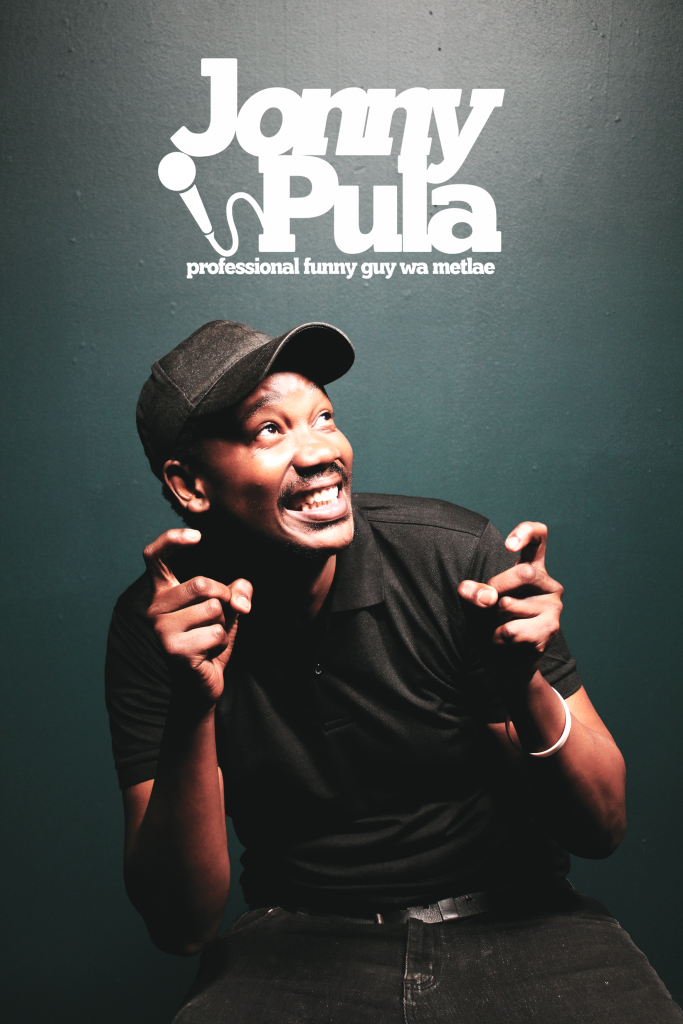
Kago “Jonny Pula” Rannoba
For many, you’re the first person that comes to mind when people think of Botswana’s offline and IRL comedy scene. How did you get started, and how did that start lead to Comedy Nights?
I’m trying to get online nowadays. It is not my scene, but we are getting there. I’m adjusting because I’m used to active audience engagement. My journey started in 2013/2014, that’s when I decided I wanted to be a comedian. I previously collected comedy content and then I eventually decided to pursue it. I looked around for other Batswana comedians and spent time on YouTube trying to learn how to write my own jokes. In 2015 I met a guy called Thulani at a house party. He showed up with his friends, all dressed in suits, and he said they were from this comedy show hosted by legendary comedian Ribcracker, then at Main Mall.
Bafana “Rib” Letsatsi and Modiri “MOD” Keseabetswe took me in and showed me the ropes through Cracker Nights. They mentored me and I was there for years. When they outgrew it, around 2018/19, I kind of stepped in with a company called Pitch Media Mail. We then moved on to Phakalane Comedy Nights, which is where things really took off.
How’s the transition from being on stage to there being no stage been for you?
It’s been rough. Being onstage makes money. A weekly income. The scene really grew from late last year and early this year. I had to get creative doing lockdown. We did International collaboration and online shows but even that was a bit rough because we aren’t that popular. Thankfully First National Bank (FNB) came through with some grants. By that time though, I’d already run through my savings. It’s been a rollercoaster. I’m still creating and sharing content, which has exposed me to clients trying to collaborate, but even the online scene has people who’ve already been running it. I’m learning a lot of new stuff, but it’s absolutely been rough for the better part of the year.
‘I’ve noticed the comedians who do the political stuff tend to do it in Setswana because it allows for a certain nuance that may not translate in English’
Jonny Pula
By virtue of every society having its own culture, every society has its own sense of humour. In your experience, what’s Botswana’s? What’s subject matter usually gets the loudest laughs and the standing ovation?
Firstly, I think Batswana are the best audience because they try to “get it”. Stand-up comedy is new to them, but they’ve tried their best to be open and receptive. Both sides are learning, the comedians and the audience.
Sex is always a fun topic. I don’t usually do that content myself but sex, marriage, relationships … the awkward stuff always draws a laugh. I don’t think people would openly admit it, but I’ve seen it. Culturally I feel Botswana have an aversion to vulgarity so to cover certain topics requires you to be careful with your approach.
Politics and the government tend to be polarizing. I’ve noticed the comedians who do the political stuff tend to do it in Setswana because it allows for a certain nuance that may not translate in English. Batswana are the best audience when they feel they connect with you. Jesus, God and the Bible will also knock it out of the park, if done right. Personally, the older I get the easier and more fun it becomes to perform for a homegrown audience.
What’s the reality of trying to make a living as a comedian in Botswana? Where would you like to be, and what needs to happen for you to bridge the gap between those two places?
The current reality is that making a living as a comedian is next to impossible. The average comedian’s not making bank and is ready to quit that job. You have to be resourceful and diversify income streams. Batswana aren’t used to paying for comedy because they are used to getting it for free online, so that’s another thing to consider. An online audience doesn’t necessarily translate to sales because of that. I do think it’s important to increase online presence to solidify our place as an integral part of the entertainment industry, because I do believe people will pay for a good time, nationwide. And to be able to not just sell content, but video and audio content on streaming sites as well. Comedians in other countries get nominated for actual Awards and stuff and I want that for us as well.
I think as comedians we need to produce content that’s readily available for sale and expand how we can to create a whole industry. We’re working on creating a Comedian’s Association to assist in all this.
As you’ve extended yourself beyond the stage, which skills have you picked up to supplement and enhance your pursuits, and which have proved to be the most rewarding for you so far?
Funny enough, fliers used to be a big thing. They never used to come out right. I got Photoshop and picked that up. Now I’m a beast at it, so I’m able to get graphic design jobs. Photography as well. Screenplays too. I’ve taken an interest in cinematography and I’m currently also doing a bit of voice acting, and actual acting. I’ve been cast in sitcoms and short films that have brought in income and writing in various forms; jokes, copy.
I studied architecture and last year I got fired, but frankly, I just haven’t looked back. If anything, it’s given me space and time to dedicate to this path. Comedy’s led me to TV, and I foresee a lot of growth there. I’m an industry guy now.
Outside of the obvious globally morally unacceptable hard limits in terms of content, are there any topics or themes you wouldn’t touch or have scrapped because you fear a visceral reaction from Motswana ko Lapeng?
I’ve scrapped a lot of bureaucracy related jokes. Stand-up wise I don’t talk about things I generally wouldn’t talk about; so sex, I don’t particularly delve into that. Drugs as well. Politics too, and political figures. As a comedian sometimes you think of a thing and it doesn’t hit you as crude until you see people cringe then you realize “I shouldn’t have said that”. When I used to drink during sets, I said some cringe worthy genital stuff, but I stopped so now I think I’m pretty confident in my sets. I don’t make certain mistakes. You get older and realise you have to respect yourself and put out stuff you’d like to look back on.
Do you have plans to perhaps host some sort of revamped revival of Comedy Nights?
I personally don’t plan to be as involved in the performance scene this year. I’d like to work on a secret project. I’ll still gig but I want to focus on that until it’s done. I’m handing over the comedy baton somewhat and running a different race that I’ll hopefully win, nationally and internationally. I’m saddened by the semi departure, but I know I have to grow.
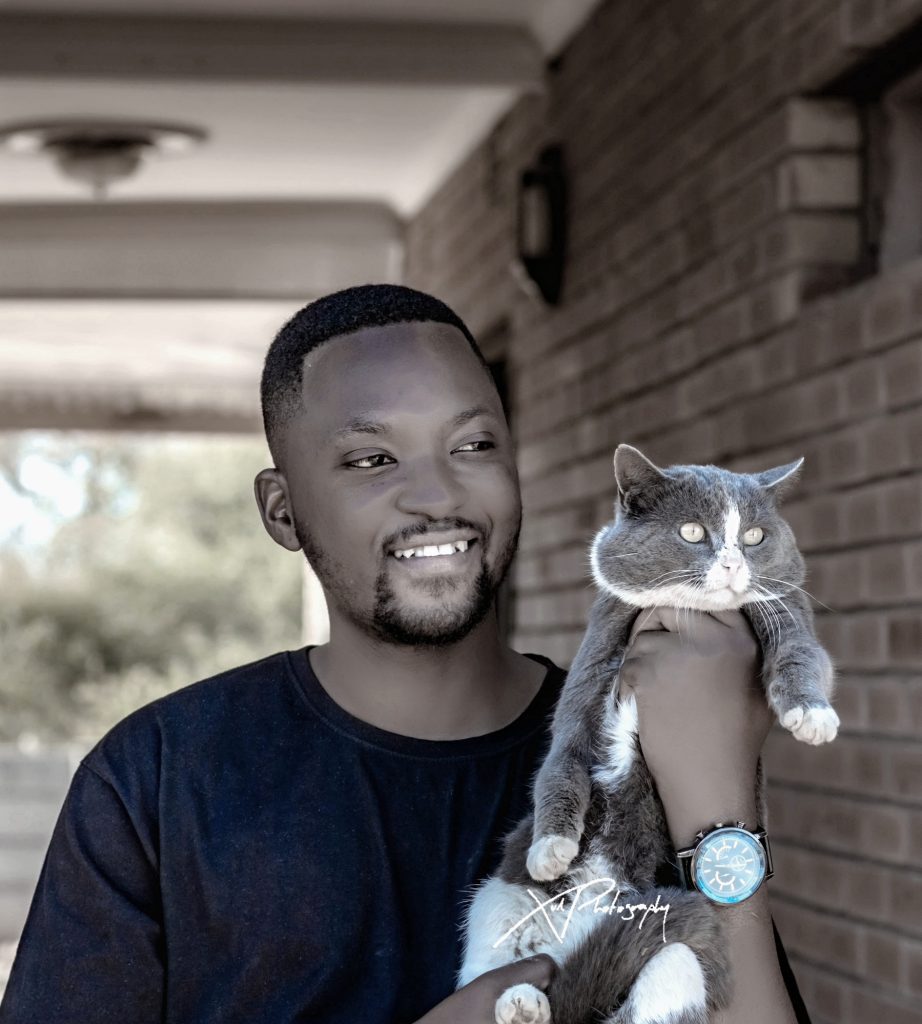
Onkagetse “Monna O Motona” Mbulawa
NB: “Monna o Motona” literally translates to “The or A big man”
There was a point in time when many Batswana were wary of speaking about, no less openly laughing about public figures and MPs, but when it comes to your work, they seem to love your impersonations of these people the most. Do you think part of the reason why they gravitated to and adored your work wasn’t just because it’s hilarious, but also because at the time you debuted, you possibly represented a certain open satirical freedom that many members of society felt we no longer had at that time?
I think people adored my work because I brought a new style of comedy. For me it wasn’t about politics, I was just mimicking people who were making news every day. I wasn’t aligned or affiliated with any political party or certain group. I impersonated politicians and MPs who were making news on Botswana TV (BTV). I’m a comedian so I follow trends. I read newspapers and then I impersonate whoever is relevant at that time.
When I debuted in 2017, I was impersonating whoever was relevant or making news headlines at that time. Yes, the year I started comedy was a time when Batswana were apprehensive about openly discussing politics in public, under the leadership of our former president, but to be honest I still don’t understand why. I’m glad my comedy played a humongous role in taking away that fear from Batswana, I mean I brought leadership closer to Batswana through my craft.
‘The government should give us a platform to share our content on National TV by buying our videos’
Monna O Motona
By virtue of every society having its own culture, every society has its own sense of humour. In your experience, what’s Botswana’s? What’s the subject matter that usually gets the loudest laughs and the standing ovation?
Politics. Batswana love politics and a bit of propaganda, my comedy videos hit more views when I impersonate the presidents and politicians.
What’s the reality of trying to make a living as a comedian in Botswana? Where would you like to be, and what would you like to see happen for you to bridge the gap between those two places?
Comedians have a large following on Social Media. We work hard every day to bring top notch entertainment to our followers, but it’s still hard to get recognition in the creative industry when it comes to sponsorship and financial assistance when you are an individual brand like Monna O Motona.
I would like to see myself representing Botswana on an international entertainment platform as a comedian. I would also want to run and manage a fully equipped Media Production Company and create TV content for BTV. The government should give us a platform to share our content on National TV by buying our videos.
As you’ve extended yourself beyond the stage, which skills have you picked up to supplement and enhance your pursuits? And which have proved to be the most rewarding for you so far?
I diversified my content in the past two years, to allow my videos to be used for marketing. I realized I can sell things really well with my craft, and so I make video adverts for small local businesses. That’s how I make a living. I grow people’s brands and post those video adverts on my Facebook page because of a large following I have.
Are there any topics or themes you wouldn’t touch/have scrapped because you fear a visceral reaction from Motswana ko Lapeng?
I will never create explicit content, whether its strong language, violence, sexual behaviour or discriminatory language in my videos. Botswana is governed by “Botho” (good character); that’s why I make clean comedy videos. I try as much as possible not to offend anyone when I deliver my content.