Having been ‘around each other’s circles’ for a number of years, the dynamic duo that is David Muriithi and Mbithi Masya are working together for the first time as co-presenters of Sonic sessions, a No Direct Flight, Nairobi (NDF: NBO) celebration of the past, present and future of homegrown Nairobi pop music.
In an editorial partnership between People’s Stories Project and NDF: NBO, we asked David and Mbithi a few pop-related questions, but first a little separate focus on both artists …
‘Artists such as Roberto (Zambia), Innoss’B (DRC), Harmonize (Tanzania), just to name a few, have arisen to create fresh audiences with their ever-popular dancefloor-fillers’
– David Muriithi
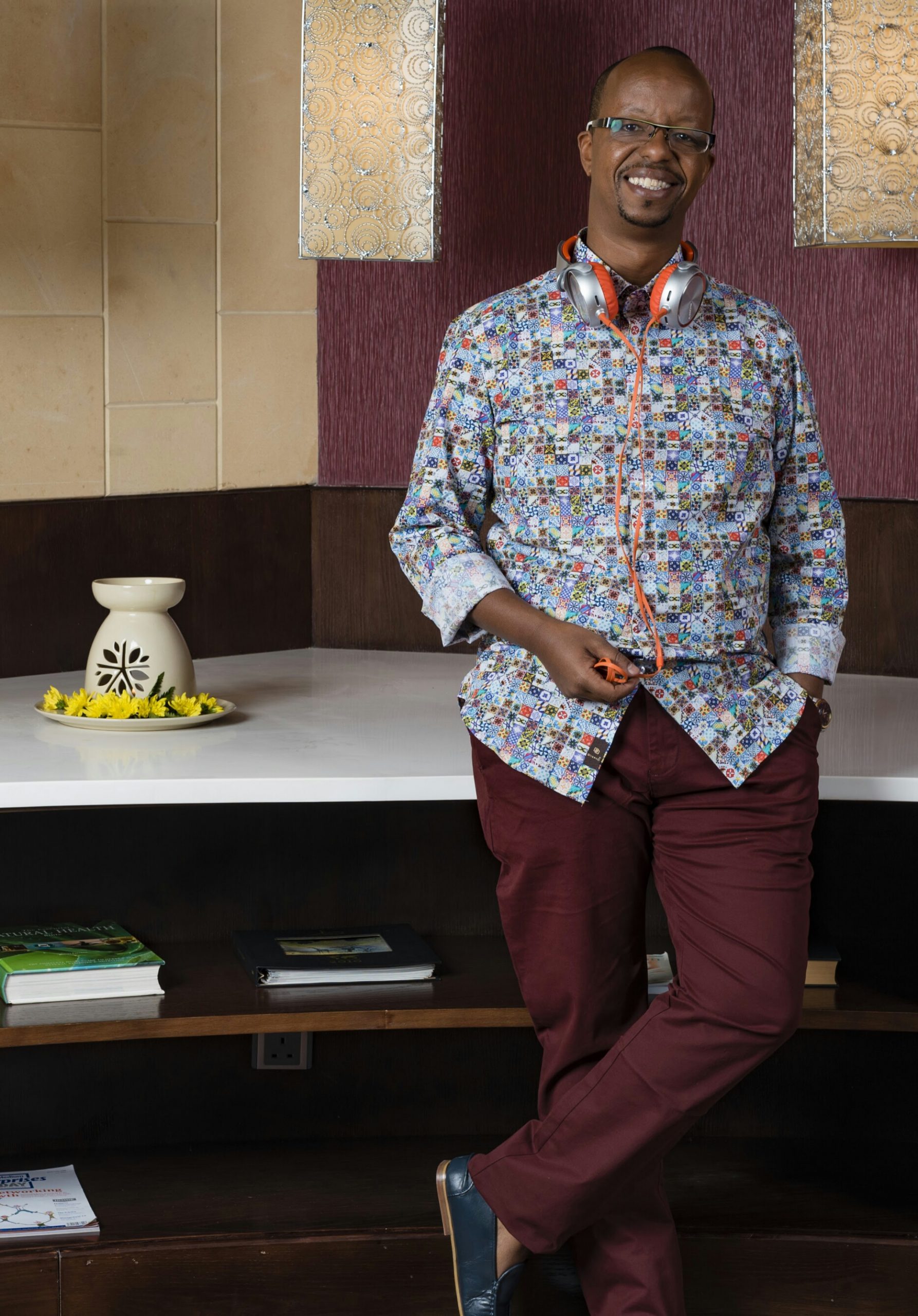
DAVID MURIITHI
A business mentor, copyright expert, music producer and property developer, David Muriithi also has an alter ego – DJ D-Lite. Three decades worth of dropping tunes has seen him taking Kenyan Jazz, House and Hip Hop to national and international stages – including South Africa, Nigeria, Uganda, Italy, UK, Holland and Brazil, where solidly upbeat response has had ‘people in each location, bopping to the previously unheard songs and asking for the Spotify links.’
David’s experience in so many sectors and cross sectors sits perfectly with his strong focus on Africa’s creative industries. With a keen eye on the music industry, he has a good sense of where some of the most lyrical changes are taking place.
‘Rwanda, Tanzania, Ghana, Zambia, Mozambique, DRC are all experiencing some form of revival in their respective music industries. Artists such as Roberto (Zambia), Innoss’B (DRC), Harmonize (Tanzania), just to name a few, have arisen to create fresh audiences with their ever-popular dancefloor-fillers.’
These are good names to watch – but arguably one of the biggest to cross David’s path was Barack Obama. Back in 2018 the ex-POTUS visited Kenya – still displaying a reasonable amount of presidential glow – for an event that featured a DJ D-Lite set.
David: ‘I now understand what the phrase “man crush” means. He has the charisma of 50 men. I suspect only Nelson Mandela may have surpassed this feat.’
…And which tunes did he spin for Barack?
‘In preparing to curate music for the two mini and one major event where he was present, I researched all his favourite Spotify playlists since he became President. I then combined some of them with the very best of Kenyan and African music, not forgetting Luo music from his home area within which the event was taking place. Some of the tunes included Kisumu 100 – Suzanna Owiyo (Kenya), Grazing In The Grass – Hugh Masekela (South Africa) and Love and Happiness – Al Green (USA).
MBITHI MASYA
‘Maybe one day…’ is film director Mbithi Masya’s gentle response to a question about when the break or hiatus of the Kenyan House Funk and Disco Just a Band that he is a member of, will end so that their fans can tap into more music.
Co-founded with Bill “blinky” Sellanga, Dan Muli and Jim Chuchu, the band embodied fashion, drama, playfulness and artistry within their sound and DIY music videos. They were unique in Kenya, and Mbithi tends to concur.
‘I don’t think I can say any artist in particular followed our style and way of doing things, but that’s not necessarily a bad thing. I think there’s much more room for artists today to just be who they are. We stood out because being ourselves felt very different, but today, being yourself is the least you can do.’
Multi-talented and dexterously artistic, Mbithi is a writer, filmmaker, and co-founder of the independent Nairobi Film Festival.
His first feature film, Kati Kati, which was released in 2016, has won several international awards, while his music videos, which include Sauti Sol’s Extravaganza and Blinky Bill’s Mungu Halali have had many multiple playbacks. He also works in creative advertising, with Safaricom being a regular client, however it’s essentially cinematic thinking that’s the predominant occupation of this film maker these days.
‘I’m currently keeping my head down writing and developing new film projects, so we’ll see if any of them materialize soon. Film has a long gestation period.’
A year ago, Mbithi was over the border for Rwanda’s 25th anniversary of liberation. Perhaps there is movie making inspiration coming from that side of East Africa?
Mbithi: ‘The visit to Rwanda was amazing and I’m definitely glad I was invited to experience those celebrations first hand, but it wasn’t my first time there. My wife is half Rwandan and we have relatives and friends there. Overall, the experience might not have directly inspired any [features], but the lessons on perseverance, grace and faith that the people of Rwanda have experienced definitely rubbed off into my life and my stories.’
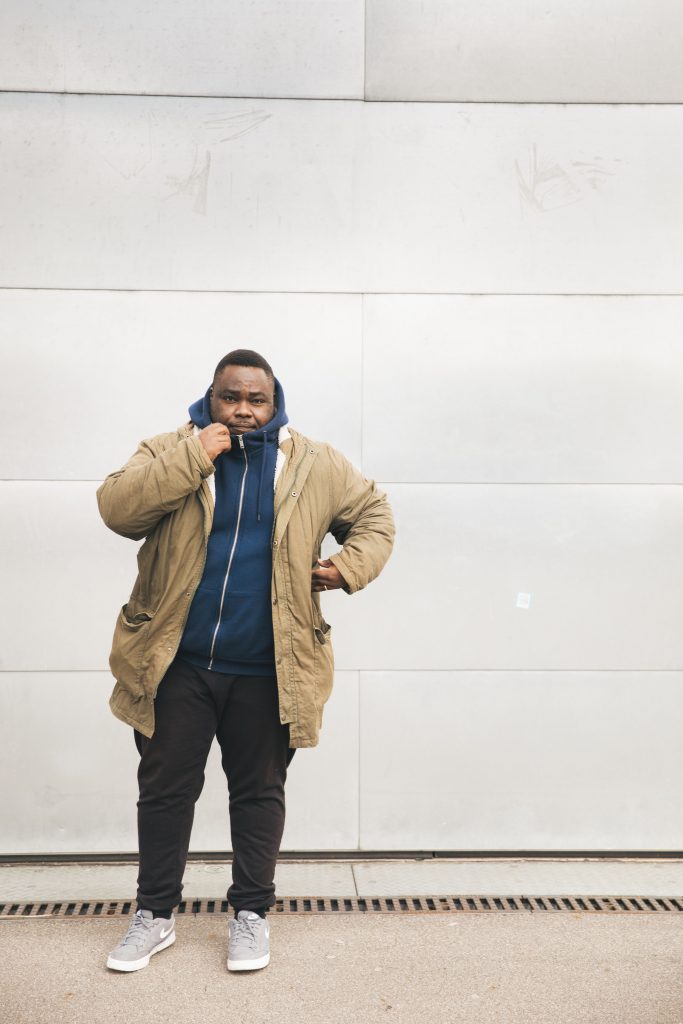
‘I don’t think I can say any artist in particular followed our style and way of doing things, but that’s not necessarily a bad thing.’
Mbithi Masya
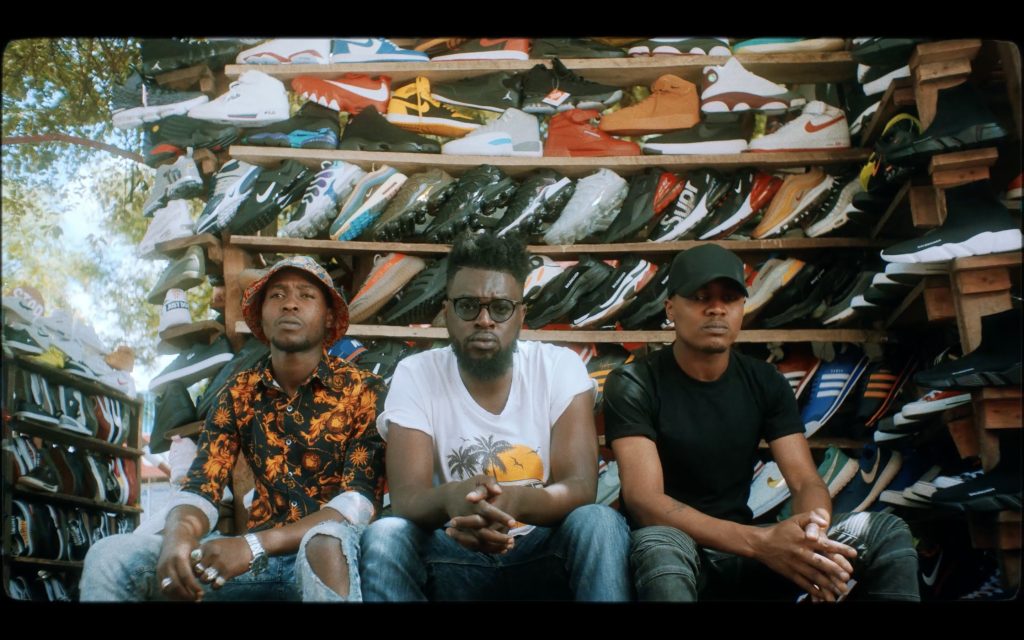
A shot from Blinky Bill’s Mungu Halali video (Mbithi Masya) 
DJ Euphorique in a safari com commercial (Mbithi Masya)
Q&A INTERVIEW
People’s Stories Project: Who would you say is the King and who’s the Queen of pop – African and non-African?
David Muriithi: King of Pop – Michael Jackson, Queen of Pop – Beyoncé. African King of Pop – Wizkid, African Queen of Pop – Brenda Fassie.
Mbithi Masya: King of pop? Alive or dead? I think Michael Jackson will always have that title. Alive… don’t know. I find myself listening to radio pop less and less nowadays, so I’m not sure who the king is. Queen of Pop… MARIAH! Beyoncé is definitely the queen for most right now, but growing up, Mariah was everything.
PSP: What makes an ‘authentic’ Kenyan pop song, lyrically…or aesthetically?
David: There is no such thing as a Kenyan sound, however a mix of sheng (slang) and a deep reggae and Hip Hop influenced sound might pass for authentic.
Mbithi: Kenya is a bit of a cultural melting pot. We’re in a place where we were greatly affected by music and art coming from elsewhere, going back all the way to the 60s and we had funk bands in the 70s that sounded like James Brown and singers in the 80s and 90s that sounded like Bobby Brown and more. It’s been that way all through. So, it’s difficult to say what “authentic” would be in the Kenyan context. My personal opinion is that an authentic Kenyan song would speak to our experience as Kenyans. Speak to the lives we live. Don’t think there’s a particular sound that does that.
PSP: Would you say there was a ‘magic’ year or era for Nairobi’s best pop music, and what are some of the names that created this?
David: 2001 – Namless, Gidi Gidi Maji Maji, E-Sir, Necessary Noise, Kleptomaniax and Amani – just to name a few.
Mbithi: I think the ‘magic’ era was the Ogopa DJs era. 2001 to about 2003/4. They were on fire and brought a freshness to the scene that hadn’t been there for a while. Everything they dropped was a banger!
PSP: Where did the Sonic Sessions idea come from and what is the essence of what you will both be bringing to No Direct Flight via this collaboration?
Mbithi: The idea for the Sonic Sessions came from the NDF folks themselves and I think it’s an excellent way for us to celebrate and remember the journey Kenyan music has been on as we keep pushing and growing our sector artistically and commercially. The world is changing so rapidly minute by minute and it’s good to just take a moment to reflect and honour those who built the foundations of the house we stand in.
David: We will be bringing a session of edutainment in a way never presented before.
PSP: Western pop has traditionally excluded African (or anyone who can be labelled black) artists from the pop genre. Are there any specific forms of cultural elitism within Kenyan pop that affects artists and audiences? Maybe around issues of class?
David: A new youthful sound has recently emerged in Kenya from the underground. Gengetone has reinvigorated the Kenyan music scene via social media, local club nights and roaming mini buses, known as matatu. Gengetone evolved from Genge-rap, a musical style incredibly popular in the 2000s in Kenya. It blends rap with reggaeton and dancehall infusions resulting in a high-energy and dance-ready sound. This has created its own form of cultural elitism in that anyone over the age of 23 and living in the suburbs would find it nearly impossible to understand the lyrics of songs from this highly popular genre.
Mbithi: There is an issue of class. It’s a strange one. As much as I said I don’t think there’s a distinct Kenyan sound, there does seem to be different sorts of sound associated with different “classes”. Not that there isn’t crossover but there’s a problematic association of some types of music, with bougie folk and other music being associated with “the streets”. But there’s more crossover than most would admit.
PSP: Are there compromises or non-compromises in Nairobi pop around the use of English language in the songs?
Mbithi: Not really. English, Swahili, or both (Sheng) … everything goes. It’s whatever sounds and feels authentic and truthful for the artist.
David: Artists in Kenya are multi-lingual in their song-writing; sometimes incorporating more than two languages even. However, experience has taught me that when an artist sings in their own mother tongue or national language, such as Kiswahili, their tonation is a lot less strained.
PSP: Does K-Pop have much resonance with pop music in Nairobi or does the Korean style ‘borrow’ too much from African American culture?
David: Admittedly I have never personally experienced any K-Pop influence in Kenya EVER! K-Pop is an amalgamation of many Western influences whilst still marinating some elements of Korean culture. I think all music is influenced in some form or other, from music that existed before it.
Mbithi: In my view K-Pop hasn’t really had that big an impact in Kenya. I know there’s a younger generation into it and a few people here and there watching documentaries on Netflix and all, so I don’t really have an opinion on it.
This conversation comes from an editorial partnership between No Direct Flight, Nairobi and People’s Stories Project (PSP).
NDF 2020 runs from 20-29th November 2020 and is produced collaboratively with Kenyan partners African Digital Heritage, Go Sheng Foundation,Down River Road,Studio Tisa, and Monday Movie Nights with Mugambi Nthiga.