Interview: Nana Ocran
‘I did this video in 2018. I was receiving masterclasses with a British artist, Deborah, who was working with the Hague at the time. She was supposed to work with 10 trans men and women who were selected from Latin America to go to the Netherlands to present our stories.
I wasn’t supposed to make a video. I was supposed to make a 5-minute statement about my life. I was so confused because I wanted to explain things about my Caribbean trans bros and not about me, but she was like, “I want to know Nico.”
I already had some animations from another documentary where I explained about Caribbean victims of armed conflict, so most of A Daily Revolution was made between two scripts, and it’s just in the first minute that I’m talking about myself.
When I arrived in Holland, I was still making the animations. Everything was in my head, and my head was a mess. I was so tired, and my voice wasn’t correct. I was on Skype with Deborah at 1am. It was Friday, and I was supposed to present the video at 5pm. She told me, “Imagine you’re with your bros and you start saying the same thing but smiling. You are going to notice the difference.”
So, I started reading my script, smiling, talking with her, and then she told me, “Ok, you’re ready.”
When I showed the video, I was sad and happy at the same time, but I didn’t expect to find people in the audience crying. I thought if anyone is going to cry it’s going to be the trans people, but no. The Director of an organisation that supports LGBTI people was crying; a man of 60 or 70. That’s what I wanted to see. I wanted the people to listen and not be afraid; to know about our story and help change some lives.
When I was a child, I was always talking about searching, about feeling uncomfortable in my own body. I would talk about feeling rare, strange or unique in a very sad way and that scared people.
‘The main thing about the video is that A Daily Revolution could someday not be a daily revolution if we share our stories in a massive way.’
I used to write poetry, but it was too sad and too weird for people. My teachers always tried to avoid letting me read [my poems]. Once we had a [competition] and I wanted to win. They decided that my poetry was not a childs, so my father went to the school and said, “it’s her poetry and she wants to apply, so why aren’t you giving her the choice?”
They gave me the choice, because my father was too angry, and then I won. It was very strange for them, so the school started making me go to the psychologist once a week. I found that almost all the trans men that live where I live were feeling the same at school.
Every time I share that I am trans man or a girl share’s that she’s a trans woman, it changes some minds, whether they like it or not. Often people don’t know how to treat us, or they don’t know that we exist, so I wanted the name, A Daily Revolution, because I feel that every place we go, we are changing that place.
In Colombia we have so many types of cultures, but the difference is that in the Caribbean region everything goes through sexuality. All the toxic male stereotypes are here. Men can be very abusive in their language and how they see being a trans, lesbian or gay person. They expect us to be very feminine, or if you are a man you need to be very strong, to like sports, or to be with so many women. If our identity is not what they expect then they are violent and say a lot of things like “oh, but you are not a hairdresser or a sex worker” … and that’s the macho culture, not just men but also women.
Maybe I’m here right now as a trans man because I have this energy to paint, to animate and to make things on my own, but I sometimes feel nostalgic because when I was a kid, I was just fighting with all of the things that I had around me and for my own voice to be listened to. I wanted to feel what it feels to be me in school and not that scared me that didn’t know how to explain that I wasn’t a girl. I lost so many opportunities because I wasn’t comfortable with myself.
Last year 33 trans people in Colombia [were killed], but it’s just the ones that we know, or the ones who have been living in a trans visible way.
The main thing about the video is that A Daily Revolution could someday not be a daily revolution if we share our stories in a massive way. Not my story; everyone’s story. I don’t know how many bros I have lost because they were feeling alone. That’s why I’m still living, because I felt alone, but I wasn’t.’
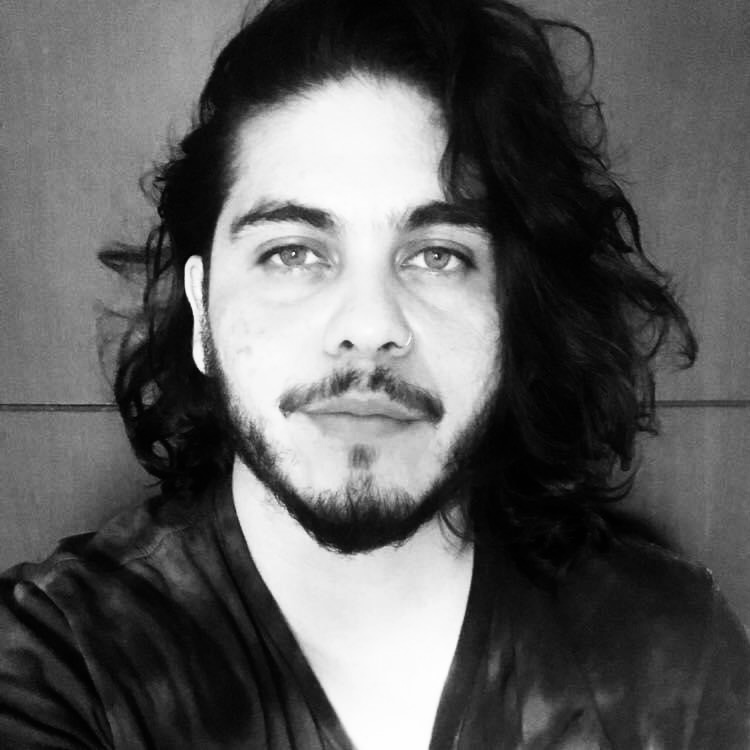
City: “I was born in Barranquilla, and I live in Puerto Colombia that is 20 minutes away”
Influences: “Red Communitaria Trans. They do a lot of art stuff. I admire their strength and trans fury. Also, Bojak Horseman. I love the animation, colours and style, but also the script and the way they talk about so many difficult topics in a cool way.”
Any brief words advice you would give to other Artivists? “I would say, keep going. It’s difficult but we make ways just by walking and existing.”
Any helpful advice that anyone has given you in life? “Yes, my dad. So many years ago, he said to write whenever you are scared or sad and leave everything there, then that thing won’t damage you. I’d say the same: write, paint, dance… art can save your life.”
IN MY WORDS is a series of short, first-person essays based on a conversation between People’s Stories Project and an artist, whereby the starting point is a single piece of their work.