Interview: Nana Ocran (PSP). All images courtesy of Natasha Mwila
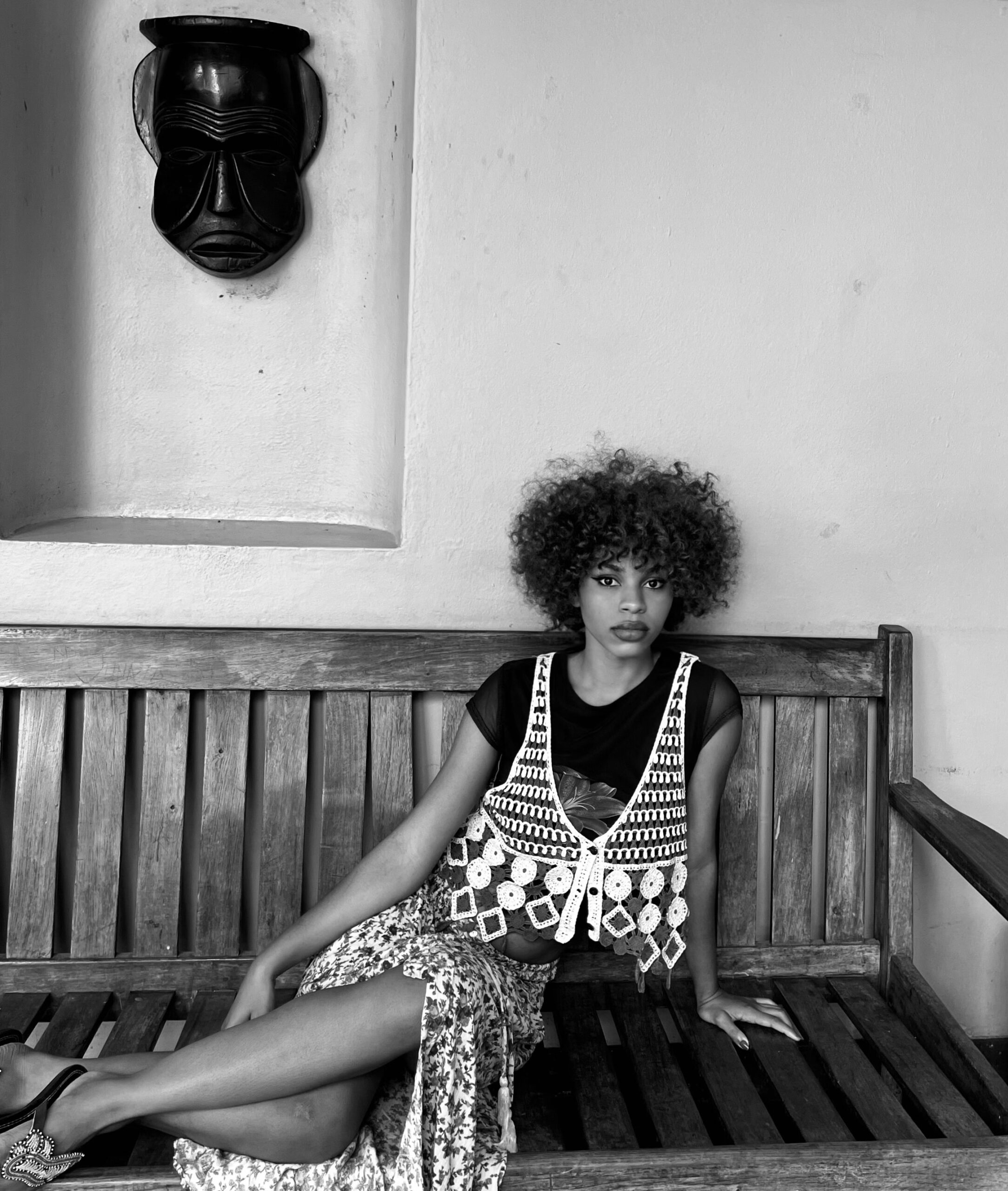
The journey into digital collage for artist Natasha Mwila started with photography and a passion for fashion.
‘I was very much into the whole idea of modelling and fashion design’ she says, recalling the days when she’d pose with friends, before adding patterns to the images she took.
From there, it was an educational choice to study political science that directed and solidified the types of messaging that are now found in her multimedia collage work. Her initial academic route wasn’t straightforward. Forensics was a topic she’d originally wanted to study at bachelor’s level, but law was what she was being pushed towards. That was a hard “no” as far as she was concerned, so, as a last resort option Politics and International Relations was what she signed up for. ‘I started studying and then wow … I found that liked it!’ she says. ‘I discovered so much information that I wasn’t aware of, and I thought, why aren’t you talking about women’s representation, and things like that?’
Armed with more politicised ideas, Natasha opted to communicate them through images. If she has an artistic statement it seems, according to one fairly recent Instagram post, to be a mission to highlight the importance of sparking critical conversations about representation, justice and the evolving nature of identity.
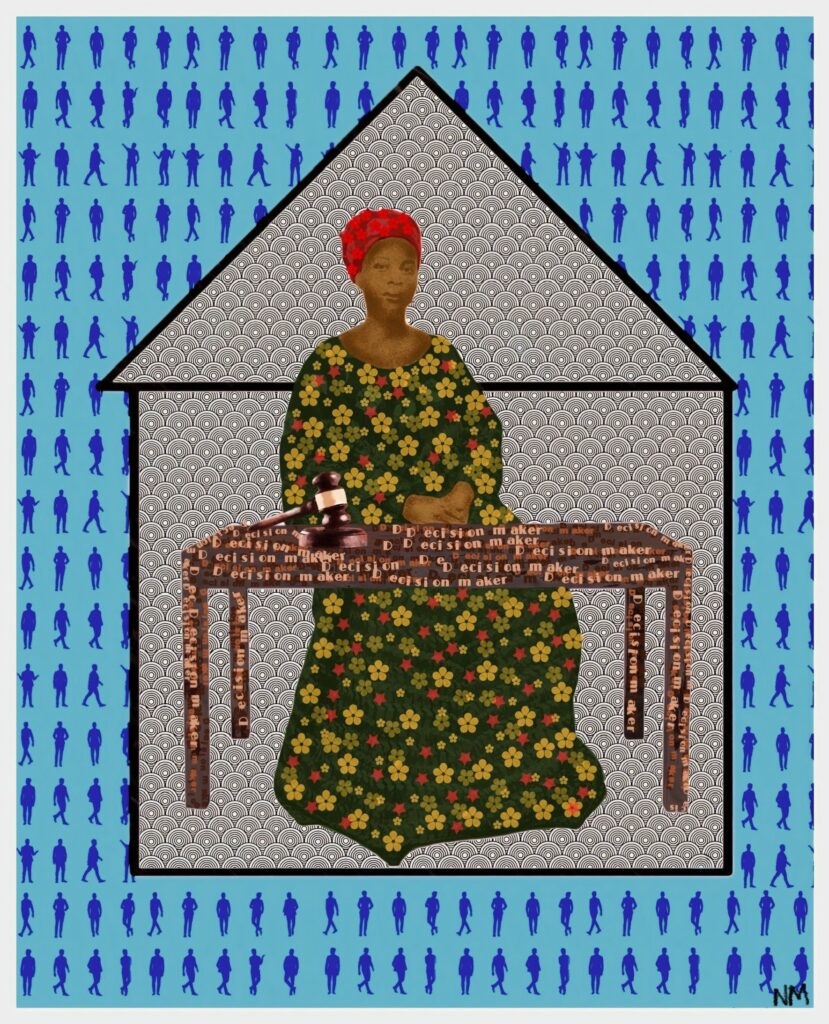
Considering herself to be a journalist rather than an artistic storyteller, her visual politics align with the ways in which her immediate audience responds to societal information. ‘In my country, people tend to engage more with things that are visual compared to a written block of text’ she says. ‘I’d also like my friends of my age, or other people, to have an awareness of what’s really happening.’
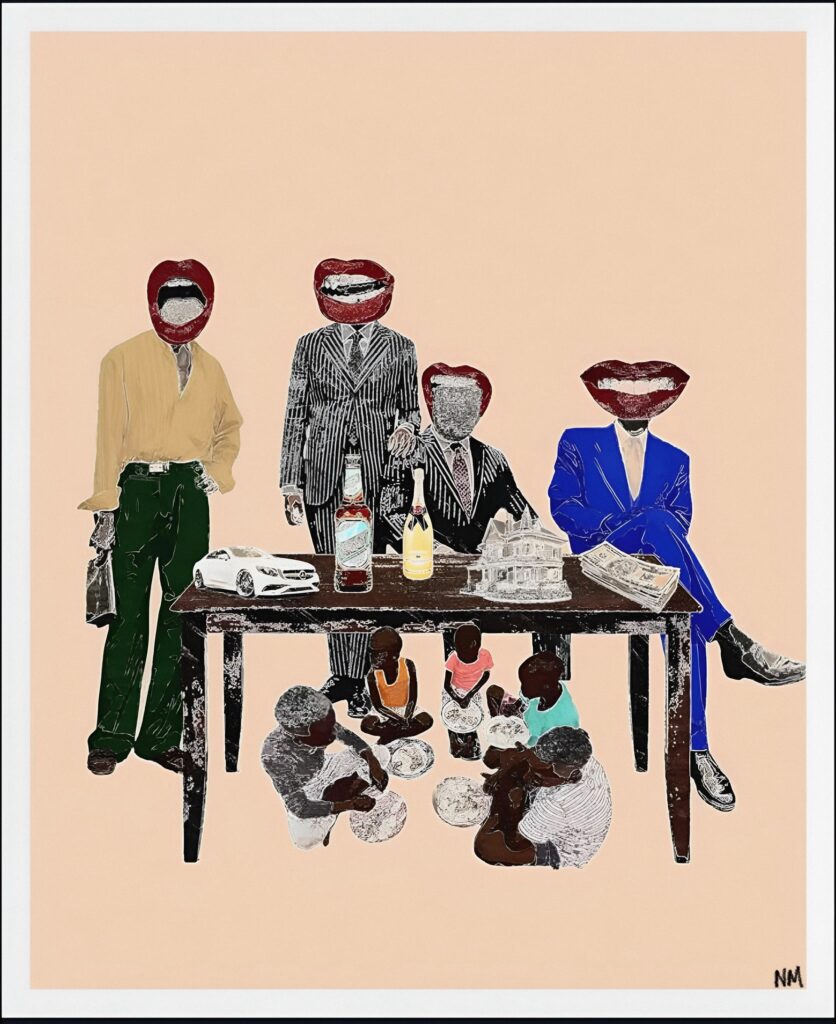
All. Talk. And. No. Vision is the image that first drew me to Natasha’s work, due to the title and the quartet of rubescent lip-shaped heads that dominate a split social narrative. ‘With this particular artwork, I wanted the centrepiece to speak more,’ she explains. ‘If you notice with my other collages, the background is very colourful, with patterns, but in this image it’s very plain. I wanted the focus to be on the people and what’s happening. Very simple, but very direct because I wanted people to instantly get the message, without reading the caption.’
Her visual statements don’t come without a level of precaution, and compromise. ‘The thing is,’ Natasha begins, ‘where I live, here in Zambia, you can’t directly criticise political figures or the government because money talks, so it’s like you’re questioning someone in higher authority. If they see it, you’re in trouble, so I have to dilute my work a little bit, although sometimes I’m very direct in my speech, and at times, my directness may not be so appreciated.’
Being an artist isn’t something that she takes lightly. There’s no “look at me, look at my work” in relation to the artist title. What she’s more concerned with is the ways in which people might be driven to talk about certain issues that are bothering her. ‘In some capacity, being an artist is a great responsibility because you have the power to influence people negatively or positively, which is important.’
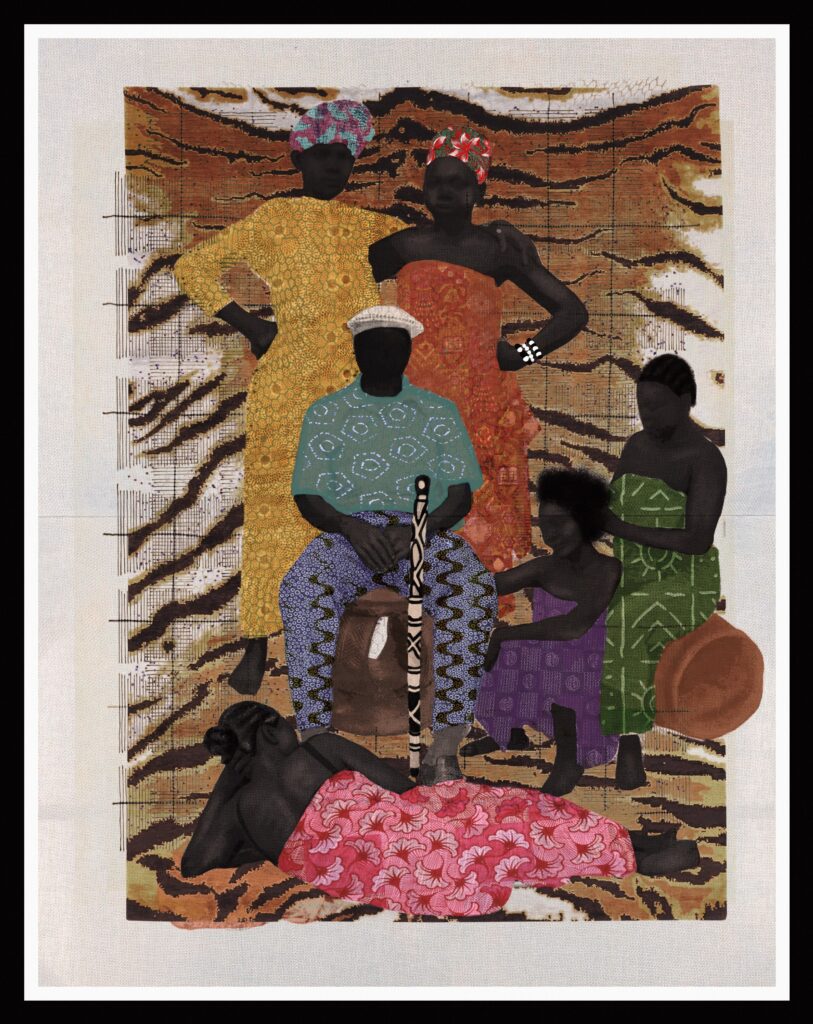
The aesthetic style of her pieces is just as important. Her compositions have been influenced by fabric work, mainly through the artistry of US artist Bisa Butler, whose quilting techniques are unique in the way that they resemble material-fibred paintings. ‘I really like what she does. It’s not exactly digital. She makes an entire image using different types of textiles, so I think that’s what led me to incorporate colours and to match all these images together.’
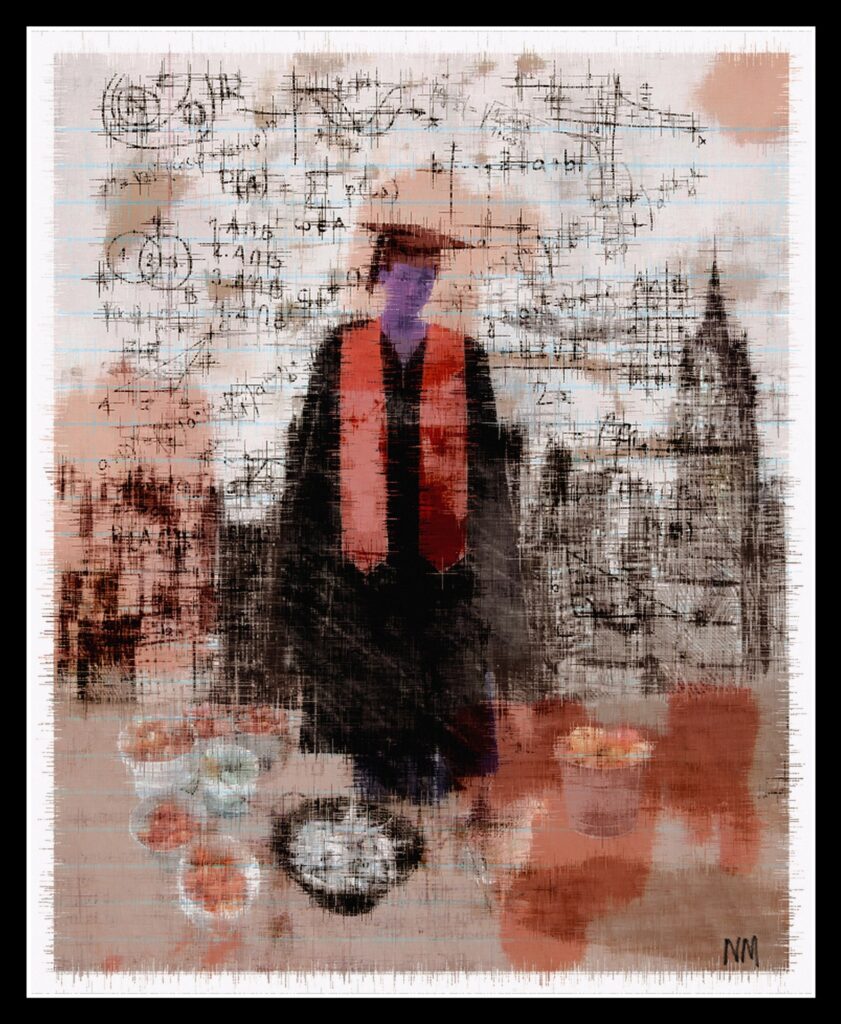
The reactions to Natasha’s work depend on the location of her audience. With digital collage not being a popular artform in Zambia, the response there is often, “oh, this is new. This is interesting,” presuming an ease of production. ‘I have to explain the process as they assume that the work is simple to do, so when they ask about prices, they’ll also assume that it’s very cheap without realising that it’s very costly compared to traditional art, like painting. There’s a lot of software, printing … the type of paper I use …’ Responses are different with international audiences who seem to tap into the narratives behind the work. ‘They like the storytelling aspect of it.’
culture
Predictably, I asked Natasha about her future plans and upcoming work. This was met with a long pause, a cautious tone and then an energetically delivered bombshell.
‘Right now, I’m on a break because I just found out that I’m adopted’ she stated. ‘For me, it’s like everything has changed. I’m trying to find out who I am and navigating that. All of this is going to start translating into my work.’
This openness is something that had set the tone throughout the conversation, along with an undeniably joyful spirit, so clarifying whether or not I should mention this personal element within the piece was met with generosity. ‘Yes, it’s fine’ she said. ‘I think it’s important because you know, finding out this information is huge. All this time, I thought I was Zambian, or I’m this, or I’m that, but now, it’s like, I just feel displaced.’