Interview: Nana Ocran (PSP) with all images provided by Sound of Nairobi
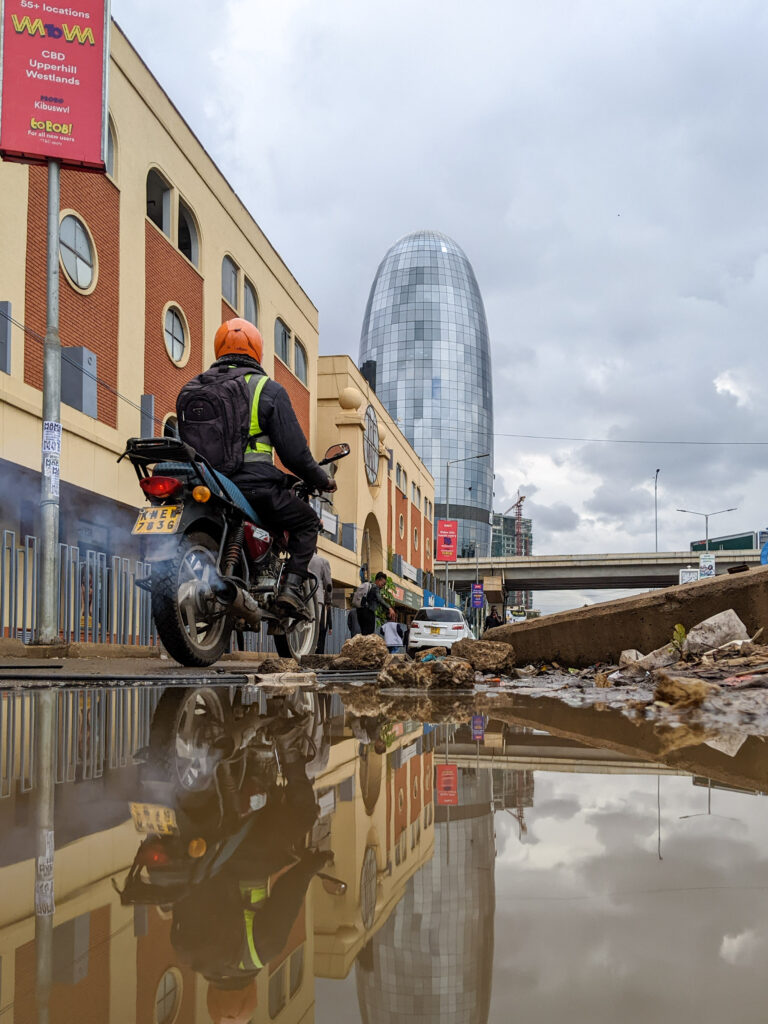
Sound of Nairobi (SoN) is, at heart, an art project that exists as a home to an open-access digital archive of city sounds taken from Nairobi’s streets and open spaces. With a focus on ways of listening, the whole creative process is led by a core team of three – Raphael Kariuki, Brian Muhia and Sophia Bauer – who (even through temporary pauses) are constantly shaping or thinking through the layers of ideas that keep this communal, technical and cultural project alive. This isn’t the first time People’s Stories Project have highlighted the team. It was writer and filmmaker Wanjeri Gakuru who originally brought them to our attention back in 2020. Six years on, it’s good to re-connect and to find out how things are going.
People’s Stories Project: Since starting the Sound of Nairobi project, what have been the biggest challenges over the last six or seven years?
Brian Muhia: For me, it’s maintaining the digital archive and making it accessible continuously, and there’s layers of complexity there. Cloud services are one morass of problems of reliability and making sure that they always stay cheap. Also, the tools chosen to maintain the archive should allow us to iterate and continuously improve it.
Raphael Kariuki: The biggest challenge by far has specifically been the difficulty of paying for commercial server space hosting reliably large amounts of content. We haven’t been able to keep up with AWS (Amazon Web Services) and have found equivalent free alternatives difficult to set up or too dependent on social media platforms that we would rather avoid for various reasons. We are most likely going to improvise something for the short-term as we search for a long-term solution.
Sophia Bauer: Another main challenge is that we’re all doing Sound of Nairobi along with other jobs. So, in general, putting energy into the project for thinking of new ideas, new concepts, maintaining the blog or reaching out to other people has definitely been a struggle. Also, with the constellation of the group, there are times when one person has more energy than the others. At times when we’re all head down in our other projects, things can stagnate.
PSP: Understandable, although it seems clear that the passion is still there.
Sophia: Sound of Nairobi is close to our hearts. It’s a really fantastic idea and is also instrumental in creating a platform or discourse for thinking about sound and listening, so we’re thinking of strategies to connect this with our personal work.
Raphael: Despite its current offline status, the archive is still the best part of the project in my opinion. It is a team effort, and the small community of recordists that formed at the beginning and has contributed to it so far, has been a source of encouragement and energy.
PSP: Why open-access? Were there other alternatives?
Raphael: Soundscapes are a kind of commons; it just doesn’t make sense to put them behind a pay wall. To treat sounds recording in public as proprietary does not feel honest.
PSP: What I love about the overall Sound of Nairobi project is the mix of tech and creative skills that go into it. What would you say are the most crucial elements?
Brian: I think research is the most important part. At this point, we have good enough software engineering ability to turn the project into something where we can actually have more people being asked to help. A lot of people have stepped up, but the software, the sound, the ethics and the events that we’ve now done are all about presence and listening, which makes it easier to diffuse those skills within the community. Teaching and learning about maintenance of things over a very long term is something I personally wanted to explore. I was inspired by the Long Now Foundation, which imagines a projected future of 10,000 years.
PSP: How do you restrict or control the materials you gather for the archive?
Raphael: I can only think of that in terms of how we initially handled submissions. We started forming a cohort of recordists who trained together at the beginning and then sent guys out with microphones. We ended up with a little crowd of people who regularly contribute. We haven’t yet faced an issue of having to moderate content because we describe what we’re trying to do and define the space within which we are working. If there’s anything we do deal with in terms of control it may be that some submissions were too long or not great quality.
PSP: So, are there any general ground rules that affect what’s uploaded?
Sophia: At the beginning we had quite a bit of discussion about how we’re going to do this, so there is a code of rules, like no hate speech, no discrimination… but otherwise it’s open and the idea is that as a participant, you can write the history of this archive. You can submit your file and be part of this by narrating the history of your city in the way you feel is coherent. I think somehow sound lends itself to this kind of perspective of subjectivity of an archive.
PSP: Are you archival custodians, or is it more about providing a space for something that’s well cared for, with broad ownership?
Sophia: I don’t think there’s an ownership over these recordings by any of us, and there’s no censorship in terms the archive, which is like a vessel from which you can take what you find useful for yourself.
Raphael: I feel that Sound of Nairobi is more a facilitator than custodian. If there is a sense of ownership it is of the project, because of the labour that has gone into it … and continues.
PSP: And thinking specifically about the creative work you’re doing, how would you define ‘sound’ … or ‘listening’?
Brian: Sound is memory, and I really think about that when I listen to the archive’s recordings. I’m mostly reminded of where I’ve been, and even if I haven’t been there, I’m trying to reconstruct this memory of having been there. It’s building a world in your head, in a way, like reading fiction or non-fiction. We don’t know exactly who we are looking at, or who is being spoken of, but you recognize when you hear bird song or footsteps. It sounds like a place we’ve been.
Sophia: For me, sound has somehow become a way to think about the world, a kind of medium that is like creating relationships; like feeling my way through different concepts and ideas. It’s a medium that creates networks, relational ideas and environments and that’s something that I think is really beautiful.
PSP: I also wanted to ask about any projects that have surprised you or gone ‘wrong’. I was interested in the series that you did during the Covid restrictions.
Sophia: It didn’t really go wrong, but it didn’t meet our expectations. We were recording the sound of the pandemic in three phases, and in the end the recordings were very similar to before the pandemic. It was called Sounds Like a Pandemic?, and at the end, when we finished the project, we added a question mark.
PSP: I think I liked the fact that although it frustrated you, it became a valid experiment.
Sophia: Totally. Working with sound is often like this for me. It’s difficult to decipher. I make a recording that I listen to on the spot, and then come back, and it sounds different from what I expected, because I think you have a personal way of listening to things, and the recorder records this differently. The two different perspectives are remembering what you heard and then listening to what you’ve actually recorded. That’s a very interesting conundrum, which still fascinates me.
Brian: Another thing about Sounds Like a Pandemic? is that there were so many other technical things I wanted to do, like turn the recordings we had at the time into a machine-learning model that could generate more sounds based on whatever was there.
PSP: What happened with that idea?
Brian: It was an experiment I ran for maybe four months in 2021. It was just training a system on a laptop. It has its glitches because it doesn’t have a lot of data but the system is there; it just needs to be turned into something that could be used to make audio for games or for different types of environments in the same spirit as the recordings themselves, but through a different medium. A lot of this is just nerdy technical ideas that need a lot more people to work on them, and a lot more attention to make it good instead of like a tech demo or prototype.
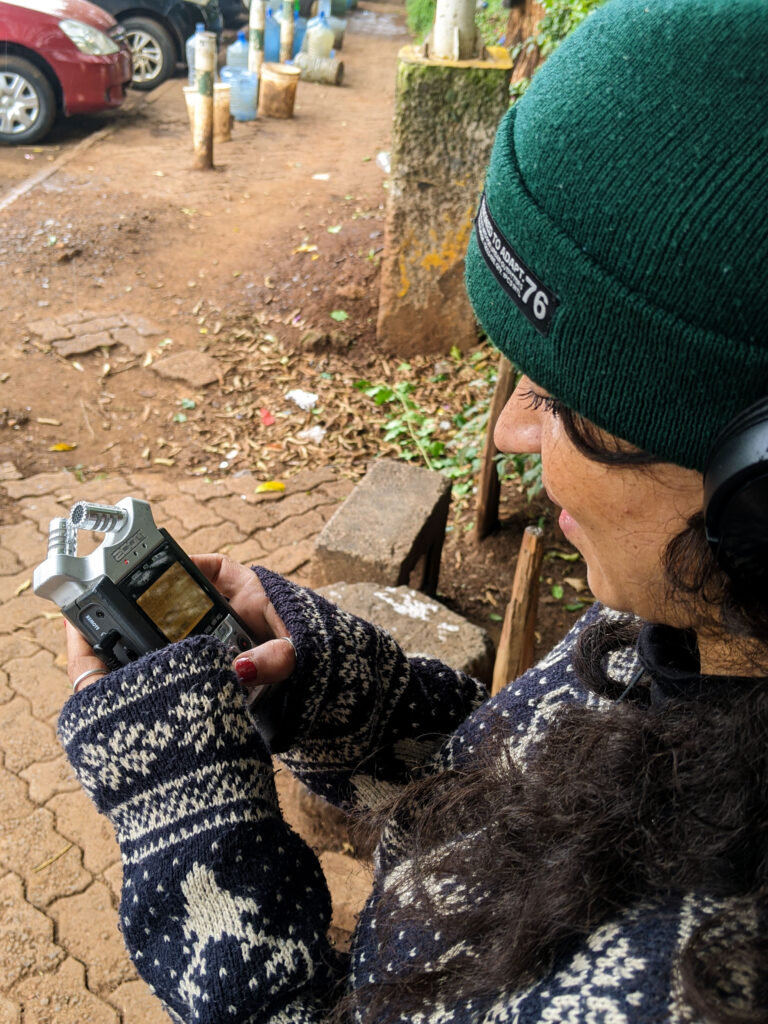
PSP: How important are the type or quality of the mics you use for the archive project?
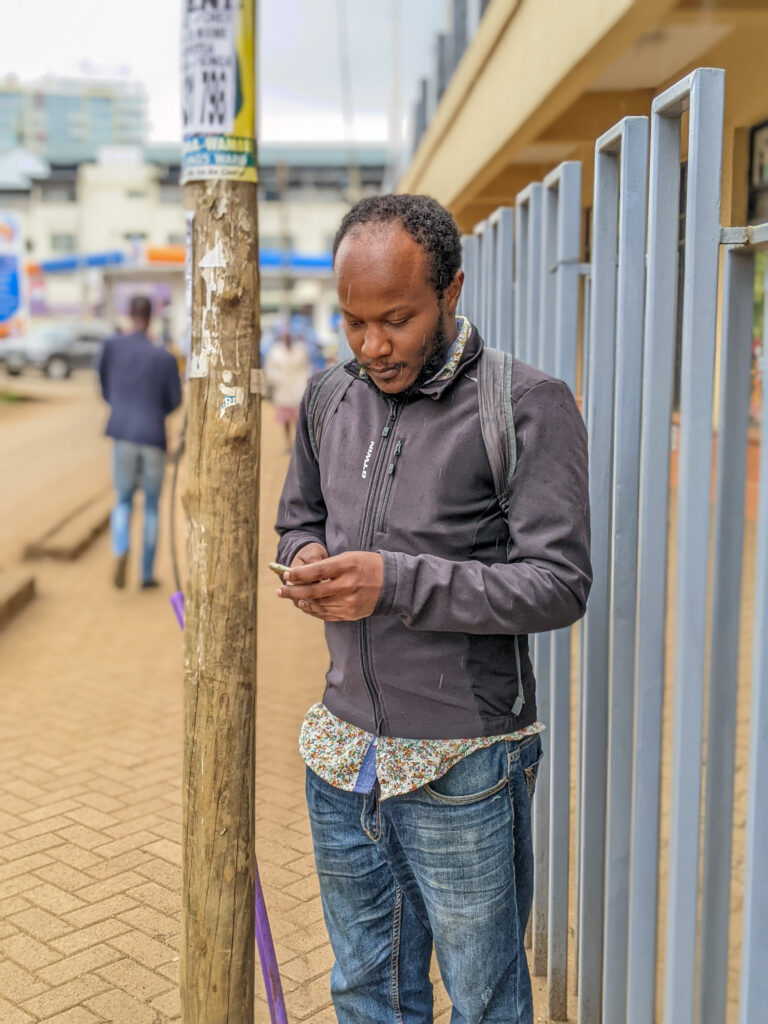
Sophia: In Nairobi we’ve got two sets of microphones and recorders and we lend them out, but everybody can use their phone and contribute their sound. That’s the most immediate at the moment, although we are thinking about a way to build an in-app recorder that would (geo) locate you in time and space so you could walk, record, and then it would feed into the archive. This could lower the hurdle a little bit so that it’s much easier for people to use.
PSP: You’ve also developed the EARMAP project for listening walks?
Sophia: Yes, it’s very open. You can download the map and do it. I think Brian, you’ve scheduled two walks in the past?
Brian: We did them in a span of two weeks. Both of them were in the middle of the city, so we were walking through the Central Business District, River Road … It’s really nice actually. One of the inspirations is to find more spaces and more roads that are interesting, to create some valid sounds that people can actually go and listen to … and then go back to the recordings and actually realise that their listening experience is different. The options are very open.
PSP: I like the way your ideas are coming as you’re speaking. With all the layers involved, do you think of yourselves as artists, or is that too general a term?
Brian: It’s one of the words I use, and I think it’s the same for Sophia and Raphael. The fact that my work comes out of Nairobi is definitely linked to the fact that I love making music. I take that super seriously so I have to call myself an artist because of that; I can’t get away from it, even if I wanted to, but I like describing myself that way.
Sophia: Yes, I also identify as an artist, and Sound of Nairobi is definitely thought of, produced, developed and rooted as an artistic project.
PSP: Would you say that archiving is growing as a sector within Nairobi, or Kenya in general, particularly among artists or those who are engaged in culture?
Raphael: Yes. There are other archival projects now running – I can immediately think of the article by the writer Furaha, who is also a big contributor of recordings to the SoN archive, highlighting a few in her newsletter. There are others concerned with visual media and literature. How can I forget Headstrong Historian?
PSP: And are there specific ways that you’d like to partner with organisations … or with individuals?
Raphael: We have been having this conversation internally and would like to pursue it further. We need to solve the digital infrastructure challenge – a partnership here would obviously help a great deal. We’ve discussed further ideas in sound art and research, but we first and foremost need the basic core of the project – the archive – to get back online.
Also worth reading: