
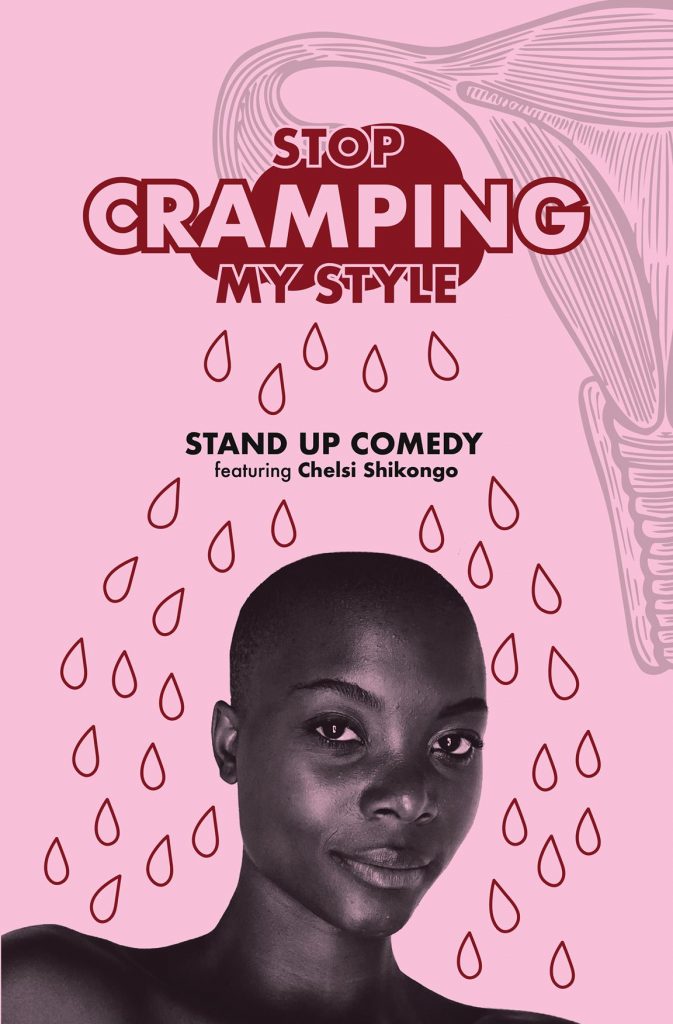
Chelsi Shikongo (they/them) creates comedy that’s meta in some regards. Working from a space that understands the nuances that only lived experience can provide, Chelsi’s work brings Namibian women in on the jokes, rather than have them being the negative focus of cishet male misogyny. Instead, women are invited to participate rather than cringe in response to any negative stereotypes that so often positions Black womanhood to be on the receiving end of thinly veiled sexism that comes under the guise of comedy.
The first of six children, Chelsi remembers how laughing through the pain and trauma of a tough upbringing was therapeutic. “I feel I grew up the way most Namibian children do, around a lot of rules and never questioning anything. I never really had time to be a child. I was a loner. My family isn’t perfect, but I hope one day they can learn to be accountable human beings. What I do appreciate though, is how we can all laugh together through the pain – and of course, having my parent’s genes!”
Passionate about social justice, as well as being one of Namibia’s most successful models, Chelsi recently opened up about the devastating effects the pandemic has had, as well as why they think their Instagram persona –Jennifer – has become one of the country’s most relatable online comedic figures.
Your bio on social media states “model, activist, comedian.” Which came first?
Activist. I started my own campaign I Can Say No Namibia in 2015. At first, its objectives were to promote abstinence and prevent unwanted pregnancies in Namibia. However, it’s grown into more of an empowerment campaign promoting inclusivity, comprehensive sex education and mental health. Right now, I’m currently figuring out how to make the Learner Pregnancy Policy in Namibia more inclusive. I want to create a legacy.
How did you start modelling?
It just fell in my lap. I entered a competition on Facebook. Truworths SA were looking for a brand ambassador and Boss Models Cape Town was scouting. I didn’t make it into the competition because it was only for South African citizens, but the Boss Models agency wanted to sign me anyway.That was about four years ago, and I am still working with them.
…and comedy?
People were always laughing at whatever I said, and I was flattered, so in early 2019, while I was modelling in Milan, I realized that comedy was something that I could do. I wrote down a couple of jokes and did an 8-minute recording of them on my phone. I posted a skit of a funny situation between friends growing up in Walvis Bay and it blew up to the point where the WamboesBeLike memes and videos page reposted it. The more I got into it the more I realized that so many people related to Jennifer – the main character of the skits – so my NamibianGirlHumor channel was born.
In what ways do your different careers influence each other?
My activism influences both my modelling and my comedy. I’m passionate about all three of these things and I enjoy doing them. They complement each other.
So, has the pandemic altered the way you work?
Because of the travel restrictions I am currently unemployed. It has made things very difficult. I’m grateful that I have an understanding and supporting family but transitioning from being completely independent to being dependent has been very difficult. I had to sell everything I had to survive. My diet also took a drastic change. I have celiac disease and I suffer from gastritis. These things hit me all at once during the first lockdown.
Your Instagram skits were very popular during Namibia’s lockdown. Are there themes that typically show up in your comedy?
Relatability and representation are some of the themes my comedy tries to address. For instance, Jennifer, deals with a lot of things people don’t really want to talk about. When people think of NamibianGirlHumor they either think it’s funny, rachet or it’s relatable, but the main thing is, it represents an authentic Namibian story.
Which skit has resonated with people the most?
Of all the ones that went viral, it had to be the skit I did on the N$750 emergency income grant that the government issued to households in Namibia because of the pandemic. I also did an Afrikaans voice over on the episode of Keeping Up with the Kardashians when Kim and Kourtney fought. It was so hilarious because the fight was so ridiculous. The Afrikaans added something new and different to a video we’d all seen.
It’s interesting to watch a dark-skinned Black woman do comedy skits in Afrikaans. There are a lot of negative associations with the language, but you really lean into it. How do you reconcile with these ideas – and why Afrikaans?
Why Afrikaans? While I understand there is a painful history attached to it, it is also the language I speak at home with my family. It’s a part of my life and my craft. Afrikaans is also a huge it’s part of Namibian culture. If I did my comedy in English it would be inauthentic.
Have there been any moments where a joke didn’t quite land, or was perceived the wrong way? How do you deal with that?
I’ve learned that people will always have something to say, but my job is simply to put my work out. I am not on social media to please people. There’s more to my brand than what I’m currently putting out. I knew what I was getting myself into with the kind of content I make. I have had moments of being misunderstood but that’s the joy of comedy. For me, some people get it some people don’t.
In what ways does stand-up comedy differ from doing sketch comedy?
With stand-up, I can really talk about whatever I want, whereas my skits are mostly theme based. Both do take a lot of time, practice and planning.
How do you come up with your skits; especially your characters?
Coming up with a character is the easy part. The work really comes in building them up and fitting them into the theme of the skit. Sometimes I write the script, but I usually improvise a lot because I already know what I want my character to say. I then look into preparing the set and wardrobe. Only then does the shooting start. I base my characters on real people, but I don’t use any of their real names. Jennifer is the kind of girl I wanted to be when I was younger, and the character Jonas is based on an ex of mine.
Who are some of your biggest comedic influences, local or otherwise, and how would you describe your own humour?
I’m still a beginner. I have a lot more to do when it comes to stand-up so I’m still working out ways to describe my humour. I haven’t found anyone that influences my stand-up comedy specifically, but, my favourite comics are Trevor Noah, Liza Shelsinger and Dolce.
What are some of the misconceptions that people have about you being a model and a comic? How do you navigate that?
Being a model and being a comic are two very different jobs. Modelling is considered luxurious and can be glamourized way too much. People don’t think I can be a comic and still get paid to be good looking. They don’t connect the two. I enjoy shattering stereotypes and creating a space in comedy for people that have something new to bring to the table. How do I navigate the misconceptions? I just show up and do what I love.

All photos were contributed by Chelsi Shikongo.