Words by Zenas Ubere
All photography by @omodudumoshood
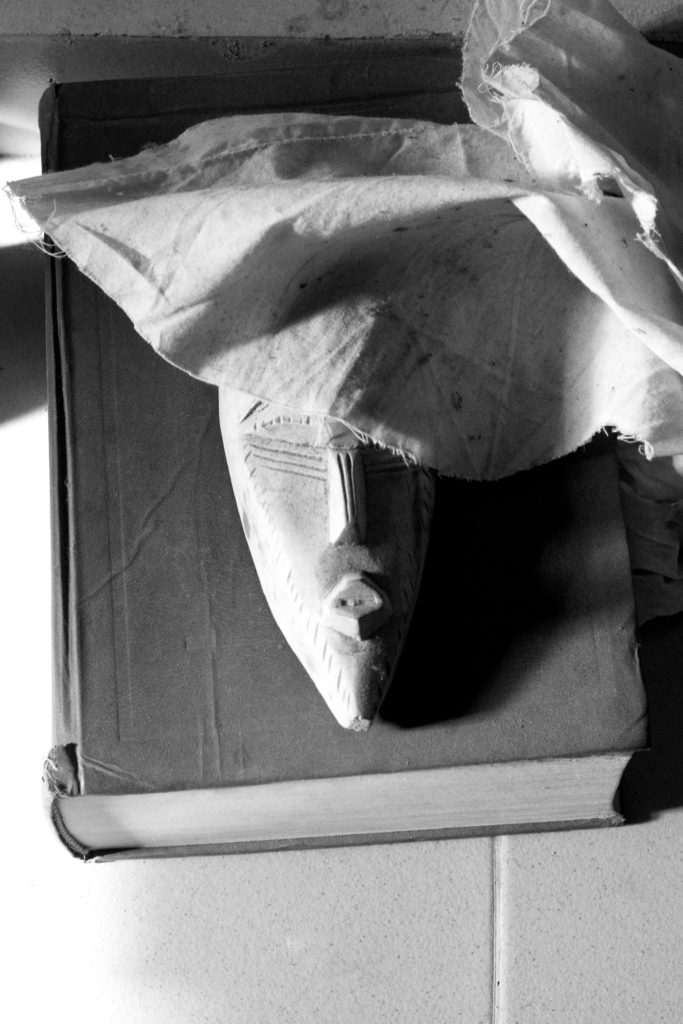
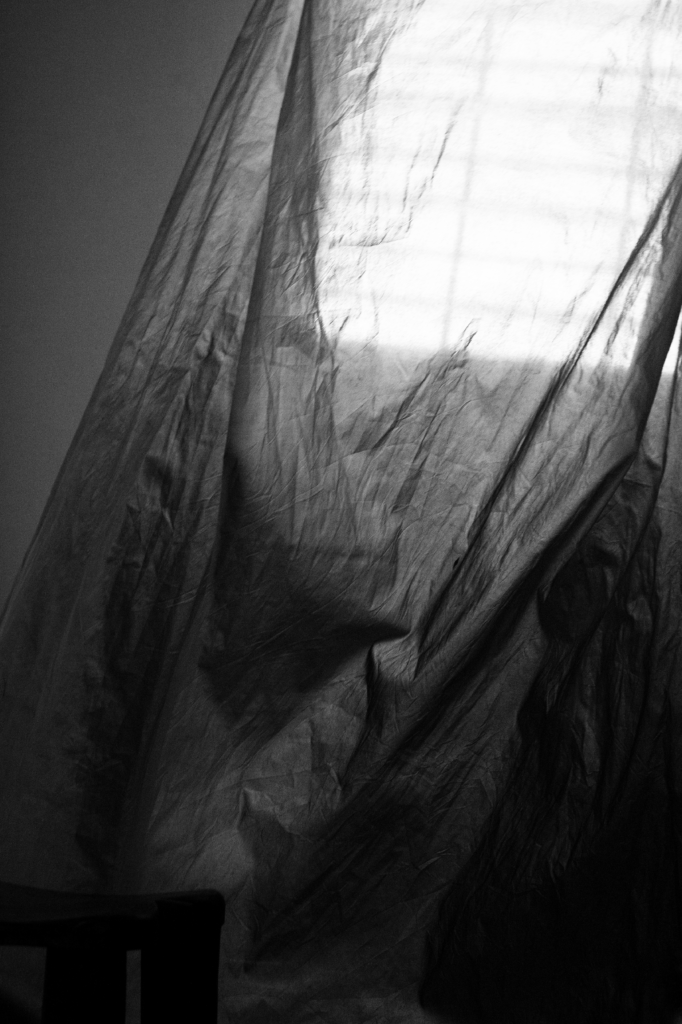
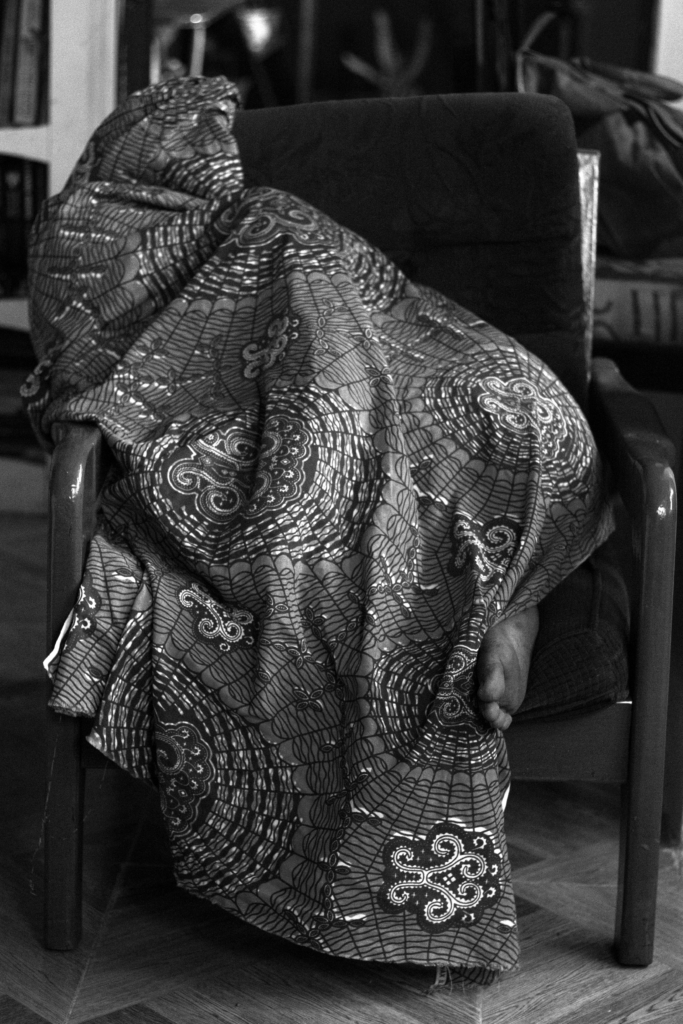
Things that fold. Like fabric. Like the roots of a tree. Like a person curled on a chair, covered with a cloth. Things that hide. Like a head in a scarf. Like what lies beyond the bend in an unfamiliar path. Like the face of a person photographed from behind, the sway of their shawl echoing the onrushing waves of the sea.The sea – what better place embodies obscurity and folds?
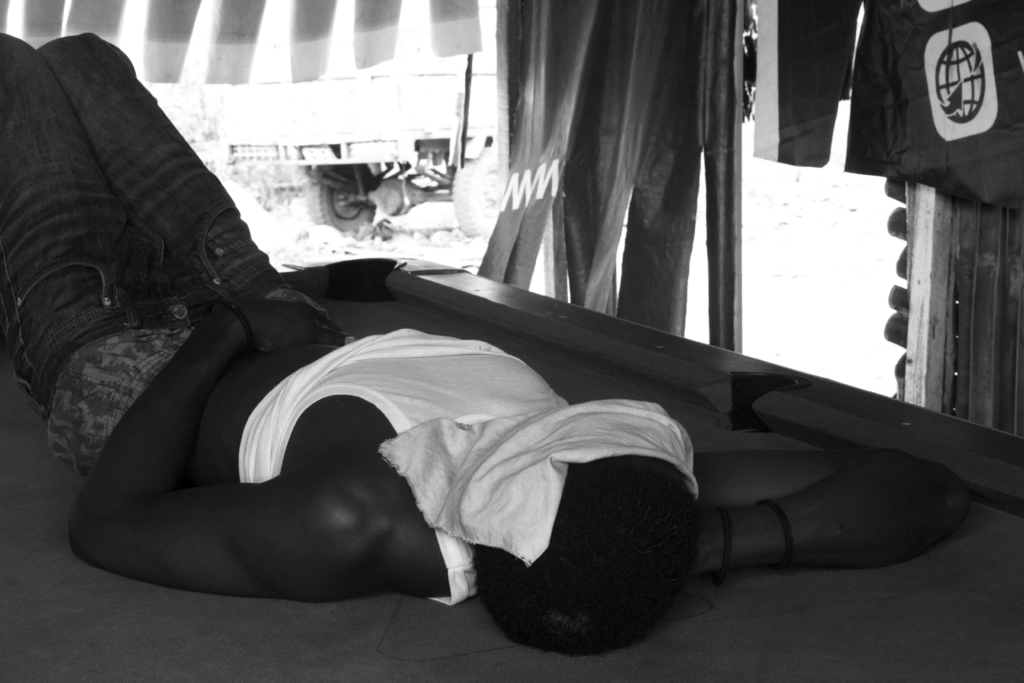
A man is presumably asleep on a snooker table. His singlet is rolled up to his chest. One of his hands rests on his belly, and the other is folded to pillow his head. A small white fabric has been kept on his face, perhaps to shade his eyes from the sun, like a curtain would for a house. But this keeps away more than light. And so we see that a man is there, but we cannot identify him because his features are hidden behind a shroud. He is visible and invisible at the same time – the way shrouded things, as moshood notes, “simultaneously invite and keep at bay”.
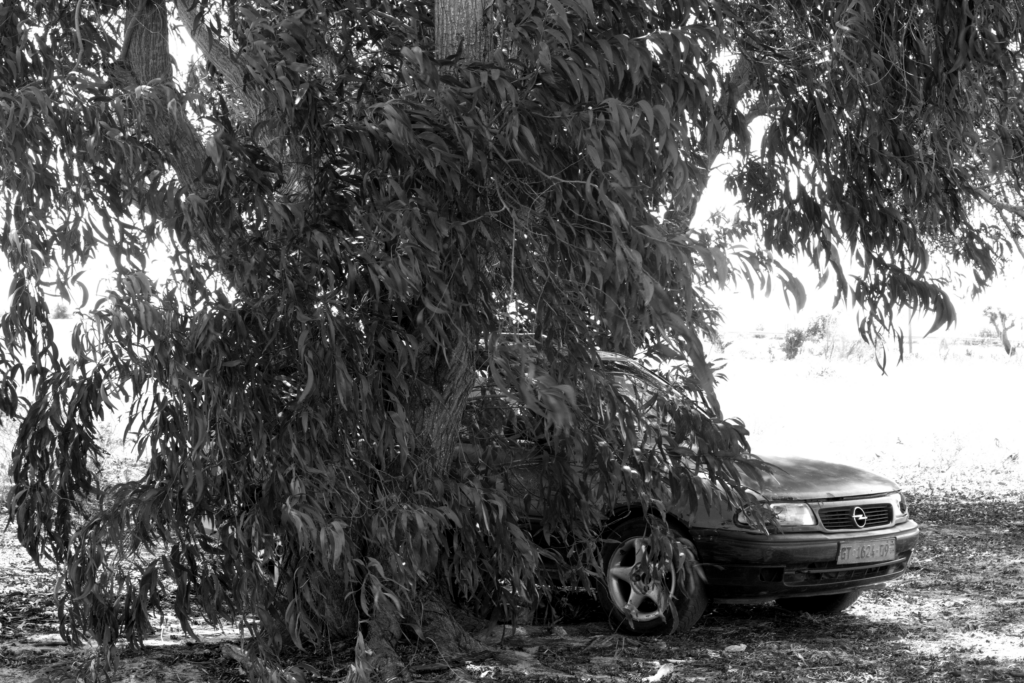
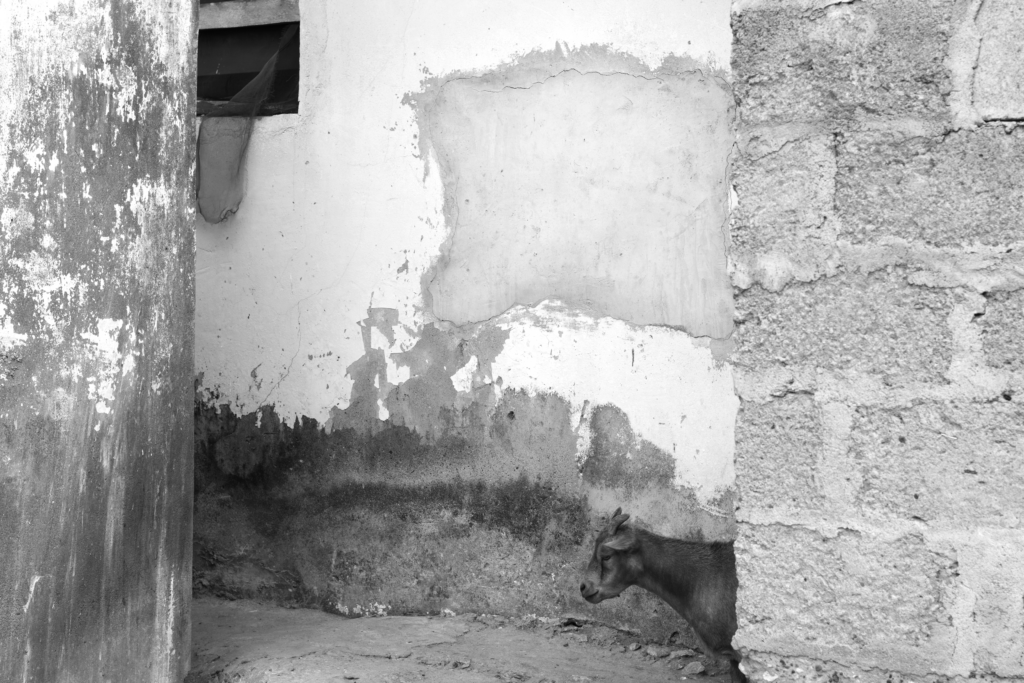
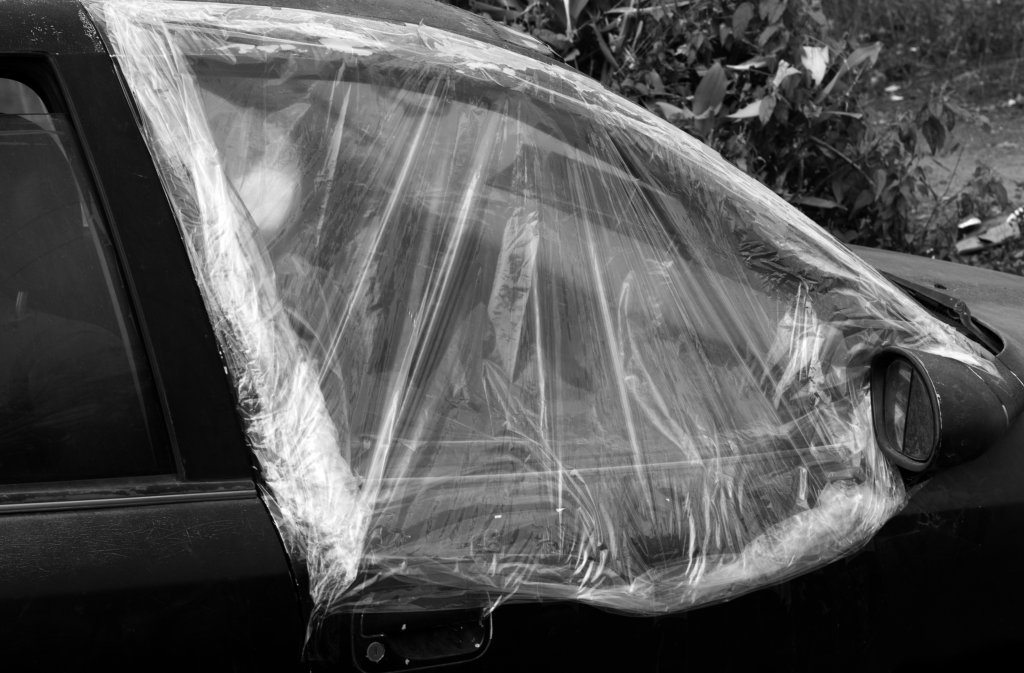
What is seen appears only partially. Like a car behind a tangle of leaves. Like a goat beside a concrete wall, seen from the neck up. Like trees in the distance, enfolded in fog.
The word shroud, both as a verb and a noun, can be etymologically traced to the Old English word scrūd, meaning cloth or garment – something that covers and conceals. It can also be traced to the Proto-Germanic word skrūdą, meaning cut – what is enshrouded is cut off from view.

I am drawn to the photograph of a body in mid-run. One foot is planted on the ground, and the other is raised behind. Both knees are folded in a way that suggests the compression and release of a spring. The upper body is cut off from the frame. But the body’s shadow, on the sand, appears almost in full, such that one can mark out the outline of this person’s form. I am drawn to this photograph for how it points directly to the other meaning of shroud – to cut off something from view. In twi, the word for photography, moshood notes, is mfonintwa, which translates to photo-cutting. A photograph cuts from the fabric of the visible world. What appears in the frame stays open to a viewer, and what is outside it, what has been cut off, is covered with a shroud of omission. The act of photographing is an act of enshrouding.

In …as a bend in an unfamiliar path, moshood engages with the limits of shroudery, the possibilities it makes and unmakes. A concrete wall becomes, like a garment, a thing that covers and conceals. Shadows are turned to material, and what stays in shadow is covered in an intangible shroud. The Ghana-based writer and photographer understands the layers of enshrouding, and he shows this in the different ways the photographs are captured, the different ways things are concealed or in the process of unveiling.

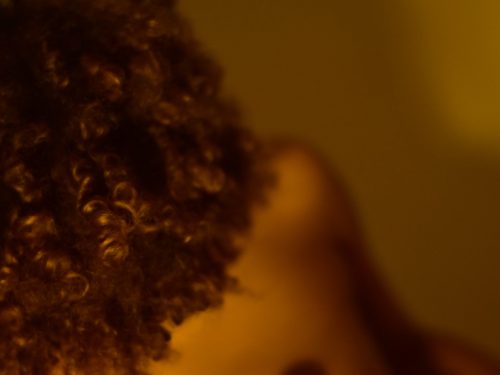
In both cases, a shroud heightens the mystery of what it covers – be it a person, a domestic animal, or an inanimate object. And by playing with different materials doing that work of covering or cutting off, moshood shows that shrouds are more pronounced in our lives than we consider. A pregnant belly is a shroud, for we know that underneath its swell a growing life is concealed and will soon be unveiled. The sheets shroud our beds, and clothe our bodies. Hair shrouds our heads, and beards our faces. In addition to mystery, a shroud can be a kit for beauty.
Aside from concealment and beautification, a shroud also protects. Like the tarpaulin that covers a car. A shroud protects not just from sight but from touch.
…as a bend in an unfamiliar path is an ode to shrouds. It is poetry made visible.