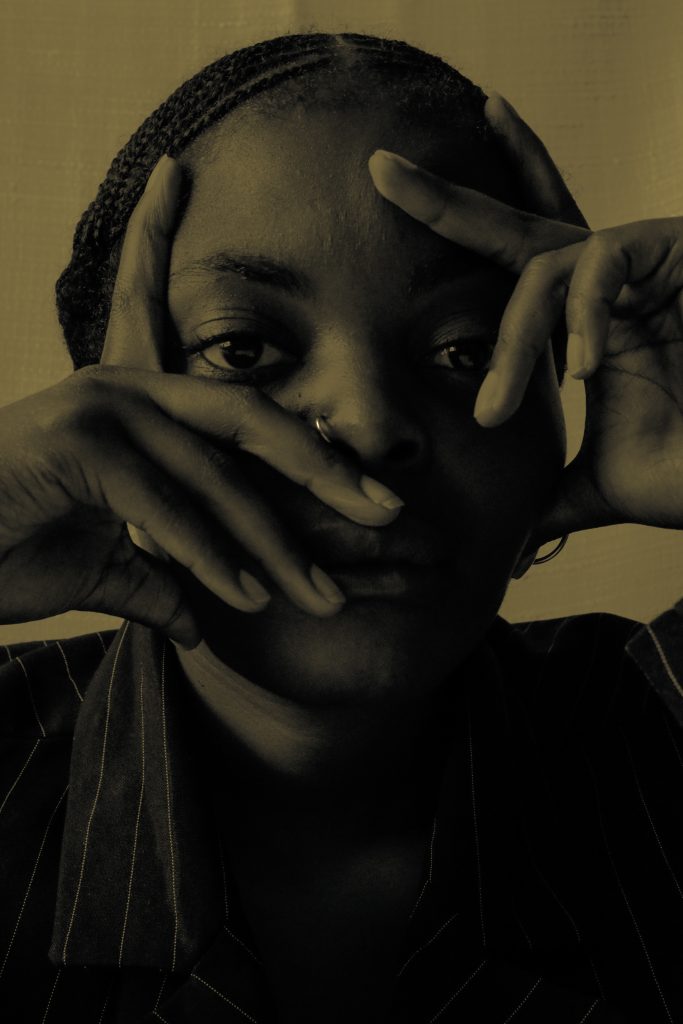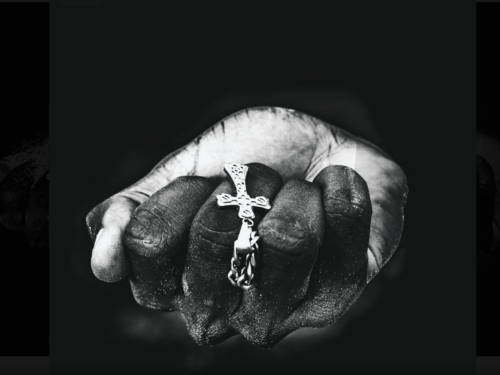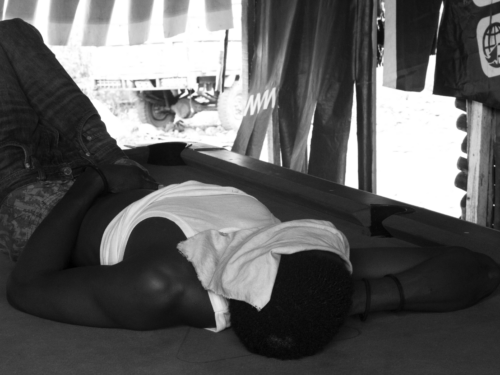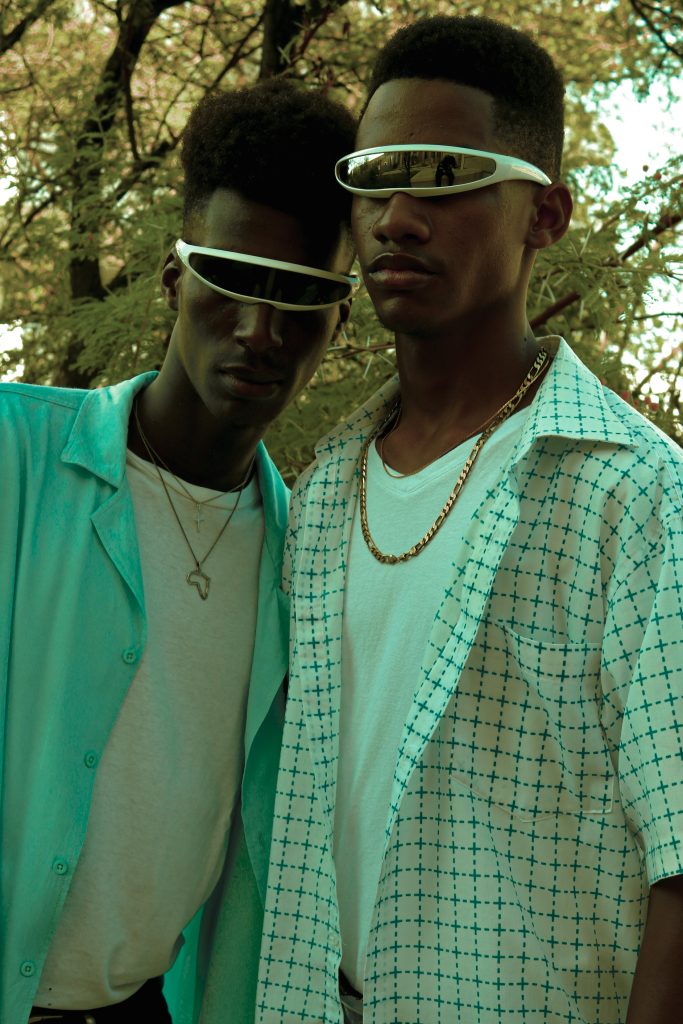
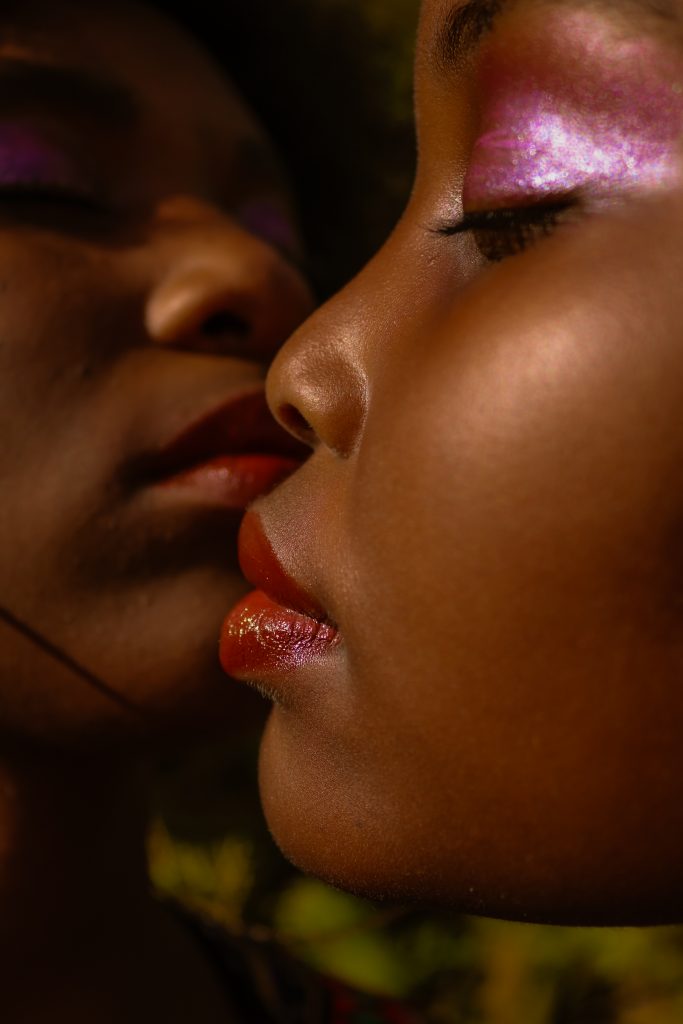
In a sea of digital waste, one-second attention spans, obnoxious pop-up ads and chunky collage posts, a Namafu Amutse photograph is arresting. The twenty-one-year-old’s work tethers you to the spot, only snapping you out of this state when you realise you need to see more.
What makes Amutse’s photography astoundingly brilliant is its almost hauntological ability to tug on elements of the past, and to summon traditional Aawambo aesthetics in ways that create new intersections between history, feminism and Afrofuturism. Her photo series Afrofuturism Meets the Ovambo People landed her a spotlight on the international Black culture and art website Afropunk; a move that positioned her as one of Namibia’s most interesting multidisciplinary artists to watch.
Amutse grew up in Walvis Bay, a port town on Namibia’s coast. Her childhood, as she describes it, was filled with violence and trauma, “…sometimes I feel like I didn’t get to be a child. I had too much responsibility from a very young age, which translated in me being quite hard on myself,” she says. Shy and quiet, she found pockets of peace in moments spent with her brother Bernhard. “I liked making vetkoek (fried dough bread) from sand and water with my brother. I climbed trees and I enjoyed singing a lot.” The artist then moved to Windhoek for school and it was only as recently as September of 2018 that she began to take photographs.
I had a conversation with Amutse about the importance of centring Black perspectives in her work, how she confronts trauma, making her first film Mukumo and how she really feels about that viral #VogueChallenge…
In what ways has your upbringing influenced the way you create? Do you find yourself working through any particular themes frequently?
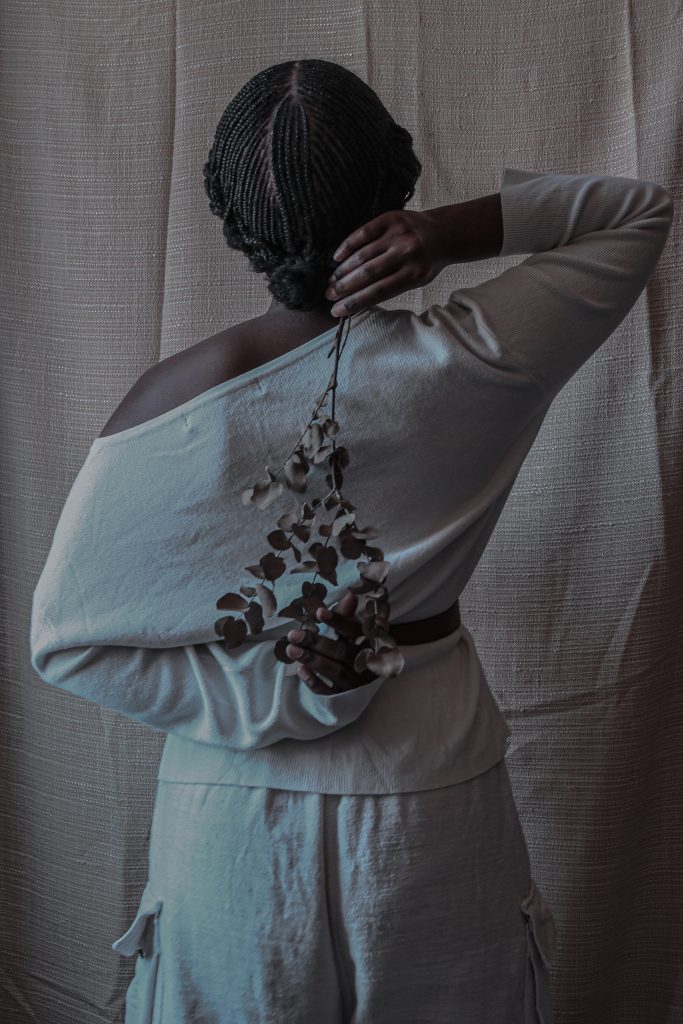
I think my upbringing has influenced the way I create because I specifically speak a lot to my identity and experiences as being both Black and a womxn. With regards to my photography, I work more on themes of celebration of Blackness. When it comes to my writing however, I often find myself [expressing] the violence and trauma I have personally experienced and seen experienced by the people around me; I’d like to believe that expressing that pain, somehow helps me heal and hopefully it helps others heal too. If there is one thing we can all relate to, it’s pain. Interestingly now when I reflect back on this, I realise that I use the one medium mainly to celebrate and the other to speak on pain.
Walk me through your creative process. What goes into capturing an image for you, and what do you look for when creating a scene?
Many of my concept ideas come from seeing materials, designs, jewelry and make up. As soon as I have one that gives me an idea, then I can easily build onto it and at the end have a full concept. When it comes to capturing an image, I usually let the scenery guide me as well as the muse. Sometimes someone will move a certain way and it’ll be perfect, so I capture that. I also always have a list of poses I compile that I think would allow for the creation of a more interesting image or angle. I enjoy outdoor photography more than I ever will studio photography. Usually I’ll just have the concept and then I’ll pick a location and somehow it all comes together. I tend to gamble a lot especially with my photography. I pretty much photograph and let the images decide what they want to become.
With regards to filmmaking and creating a scene, production design plays a huge role in the tone, but for me, performance wins over everything. Sometimes you don’t have the budget to create a scene that aesthetically looks the way you want it to and so you rely on the performance to save and take the audience’s attention away from the surrounding and instead have them focus only on what is being done or said.
You describe yourself as a scriptwriter, filmmaker, director and photographer, how do you use each of these mediums to work through your ideas? Do you find that you gravitate to some mediums more than others when you’re working on specific things thematically?
So, my first love is film, but funnily enough it’s the one I not only work on the least, but also the one that takes the most time process wise. That’s why the majority of what is out there is my photography. However, I like to incorporate my filmmaking by creating a one-to-two-minute short film of whatever photography concept I do. So, yes, the medium I gravitate to most is photography.
‘I think we all need to do some introspection as to why we want to be acknowledged by traditionally white institutions to convince ourselves that our work has value and is worthy.’
Do you consider specific aspects of your work to be social or political?
My photography work comments on current social or political issues through empowerment and celebration. I want to believe that my work seeks to uplift and amplify, and I think most, if not all of my work, is political because of the simple fact that my entire existence and experience is political.
There’s a lot of conversation around the #VogueChallenge. A lot of Black creators participated, but a lot of other Black creators criticized this apparent need for acknowledgement by traditionally white establishments. What is your position on this ongoing dialogue?
I remember when this challenge started, and I took part in it. Then as the days went on, I came across comments that reminded me that there are institutions that celebrate us every day without question and I personally had to do some introspection as to why I chose to take part in the challenge. Did I take part because everyone was taking part? Did I take part, because I was desperate for Vogue to see me and to see my work? Did I take part as a form of self-hate and the desire to be seen and acknowledged by institutions and people that really couldn’t care less; that never cared. In all honesty I took part, because I thought the process of creating the cover was cool. I had just started learning how to use PicsArt and I just thought it was so cool how I was literally making it look like my picture was on a magazine cover. I had never tried incorporating text in my work so it was just so interesting to me. As for the conversation on #VogueChallenge, I’m with the folks that say, “fuck Vogue!” We don’t need Vogue when there are so many institutions that celebrate us (as Black folk). Also fuck diversity and inclusion. A lot of the time we tend to forget that even when a few of us are brought into these (white) spaces as the “tokens”, we are still minorities and tend to be met with micro-aggressions. All in all, I think we all need to do some introspection as to why we want to be acknowledged by traditionally white institutions to convince ourselves that our work has value and is worthy. This is not only with regards to Vogue, but also in all aspects of our lives.
You are very deliberate in your Afrofuturist leanings. What does Afrofuturism mean to you and how did you discover the concept?
Afrofuturism to me is about intentionally (not ignoring) but instead seeing past the current trauma, abuse and violence inflicted upon the Black body and psyche. It’s about seeing a future in where all Black lives are not only celebrated, but we are healed, we are whole and we are able to live without fear; fear of judgment, fear of belonging and fear of living and openly expressing ourselves. As well as showing that we too are in the future of science, that we too are in post-apocalyptic worlds, space, outer universes and galaxies etc. I discovered the concept through artists such as Trevor Stuurman, Manthe Ribane and you, Masiyaleti Mbewe.
Your film, Mukumo. What’s it about and what does the title mean?
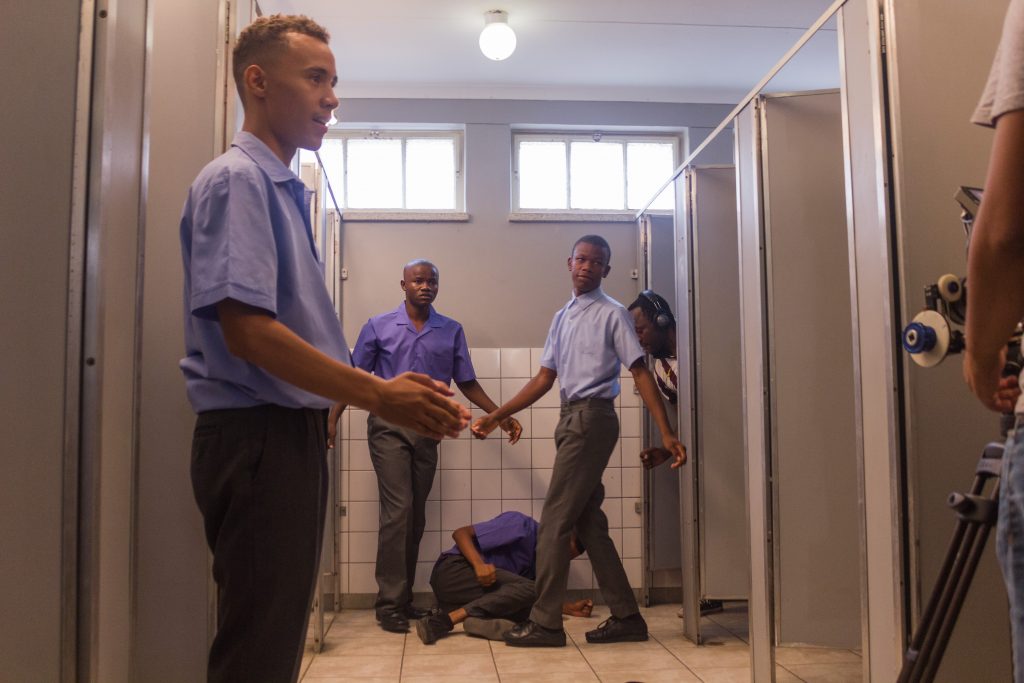
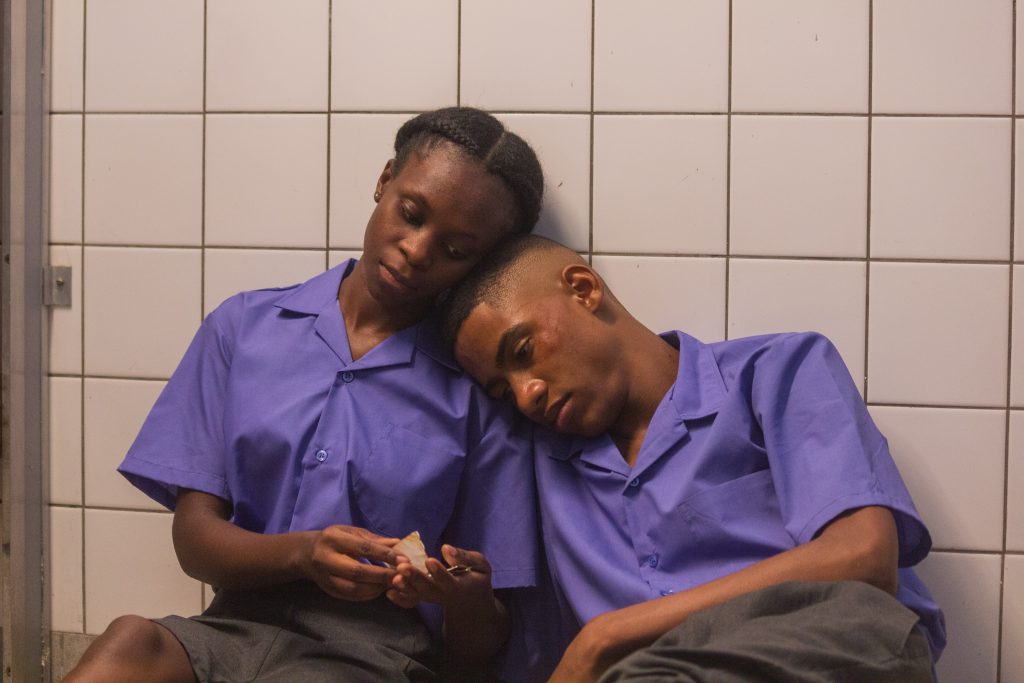
Mukumo is the story of a queer boy who is being bullied at school for his sexual identity and also being abused by his father at home because of it. With the help of his best friend Kahewa, he comes to the realization, that at some point he has to stop running and take a stand. Mukumo means courage and bravery in Oshikwanyama.
One would think that your first film would be some ambitious Afrofuturist narrative but you made Mukumoinstead, why the deviation from the content you are known for?
The thing is I enjoy creating and speaking on different themes within different mediums. For photography, the majority of what I do is Afrofuturistic, which makes sense as to why anyone would think that my first film would also touch on an Afrofuturistic topic. However, I can tell you now, that a lot of what I create with regards to film will not only deviate from what I photograph, but it will also deviate from previous films. What will tie most of my work together is that they will fall under a form of activism. I made Mukumo, because I wanted my first film to allow and give me the courage to never be afraid to speak up on where I stand. Mukumo is me screaming, “This is who I support. This is who I stand with. This is who I protest for, fight for and protect!” I will always intentionally speak on where I politically stand within the intersections that I personally have to navigate as well as the intersections that many other minorities have to navigate. I say most and not all of, because I will not always create work that is activism. It might still intersect with some things thematically, for example representation, but, it might not necessarily speak on a current social or political issue.
Talk to me about the process of making Mukumo, from the writing stage to filming. What were some of the highlights of the process for you?
The writing process was fairly new to me, seeing as this is my first ever script. However, it was fun. I was writing a story I wanted to tell and that was all that mattered. Most of what I knew about script writing I learned from YouTube videos and books. I had also attended the script writing class by Victoria Naholo and that too was very helpful. She also gave continuous feedback regarding the script which pretty much helped me to finalise it the way I did. The filming process started off on a rough note. Our initial shooting day was rescheduled and on the day we filmed it started raining. But in all honesty, I didn’t let any of that get to me. I always trust that things happen for a reason and so regardless of the rain I kept focused to get the shots we needed. I was very happy to be working with a crew that already knew how things went down, because that made everything so much easier. We were pretty much pressed on time seeing as we had only one day to shoot, so I personally felt I wasn’t doing much directing. It really just became a thing of, if we get the shot then be satisfied because again, time wasn’t on our side. This was all part of the learning process. One of the highlights was coming to learn that the thing that takes most time when it comes to filming is lighting. So, gather all your patience for that in advance if you are set on stepping into the film industry. Everyone cares about their job and I loved and appreciated that.
Who did you work with on this project?
The project was funded by the Goethe Institute of Namibia and the crew I had the pleasure of working with consisted of Senga Brockerhoff (Executive Producer), Antonius Tsoub (Director of photography), Kulan Ganes (Production design, makeup and wardrobe), Errol Geingob (Editor), Sonja Majewski (Original Score), Michelle Namases (Project manager), Vernna Murongo (Assistant director), Jaco Strauss (Lighting design), Kauna Hoebeb and Christiaan Strauss (Camera/sound assistant), Brandon Namaseb (Production driver), Mhudi Simana (Runner) and Victoria Naholo (Script consultation). And of course, my incredible crew, Ashriff Feris (Mukumo), Iyaloo Melchior (Kahewa), Armas Shivute (Tate Peter), Timothy Strauss (Bully leader), Isdor Kamati (Bully 1), Wensley Richter (Bully 2) and Mhudi Simana (Bathroom extra).
What was the trajectory like from taking photographs to making a film?
When I photograph, I am pretty much in control of everything. Most of the time I am the stylist, the make-up artist, the director, the editor as well as the photographer. So, when it came to making a film it was a relief as well as a leap of faith. A relief, because I didn’t have to do it alone. Making a film is not easy and it was just amazing knowing that everyone had their role to play to make what I saw in my head come to screen. I took a leap of faith, because I had to trust that everyone would bring their A-game and it was beautiful to witness how each and every person took their role so seriously. For example, as a director I would be happy with a certain take, but then my director of photography would be like “It’s a good take, but the lighting wasn’t right, let’s take it again”. Little comments like that reminded me that people were invested and wanted to make what came to screen look as best as possible.
Mukumo deals with a variety of different issues. Why was it important to put together a narrative that explores such complex themes and what did you want your viewers to take away from the film?
It was important for me to put together a narrative that explores such complex themes, because people have been killed and people are being killed. The LGBTQIA+ community has been going through so much and we forget that even we contribute to a lot of their suffering whether intentionally or not. Mukumo specifically targets three types of people, 1. The LGBTQIA+ community, to you I say you are seen, you are heard and we will do what we can to ensure that you are protected; 2. The Allies, we need to make sure that we are doing all we can and using all forms of activism we can to shine light on what is happening around us and the experiences that are being faced; 3. To the folks who are problematic, I want Mukumo to let you know that we need to do some introspection ASAP, because time has been up. This is not about you and what you think and feel. This is about people’s lives!
‘I was overwhelmed with all the feedback; especially from members of the LGBTQI+ community who rang me up, or sent me a message or embraced me saying “Thank you!” …’
Mukumo as well as some of your photography centres queer Namibian people and uses queer references. Do you view your work as a form of pro-queer, archival and activism?
Absolutely. Most of my art is and will always be a form of activism. My work aims to always centre Black and brown people of all spheres of life.
What type of feedback have you had about the film?
Mukumo was well received. I was overwhelmed with all the feedback; especially from members of the LGBTQI+ community who rang me up, or sent me a message or embraced me saying “Thank you! Thank you for telling this story. It’s so important. I went through something similar and seeing it on screen feels like I can finally be heard and seen.”
How has the COVID-19 crisis affected the way you create?
The crisis has made creating quite challenging. I haven’t been photographing a lot lately and so I’ve mainly just been working on conceptualizing. I do plan to however work on a couple of concepts soon, keeping of course social distancing regulations in mind for the safety of myself as well as the folks I photograph. My writing hasn’t been affected at all. I have actually been writing more often during this crisis. I also don’t plan to bring any of my writing to screen any time soon. So, for now I’ll just pile up on it.
For your photography work as well as your film making, which creators have been influences on your work?
This is quite a challenge to answer, because I don’t have just a couple of creators who not only influence but also inspire my work. From the top of my head though, for photography it’s Yagazie Emezi, Ronan McKenzie, Rasharn Agyemang, Teff Theory, Campbell Addy, Trevor Stuurman and for filmmaking it’s without a doubt Ava DuVernay, Spike Lee, Jimmie Fails, Nikyatu, Mbongeni Ngema, Shonda Rhimes, Barry Jenkins and the list goes on.
Who do you think you make art for?
I think I make art for Black and Brown people as previously mentioned, from all spheres of life. I make art that speaks to our different experiences and identities for us, by us. My art is for my brothers, for my sisters, my mothers, my father’s, my friends, and for myself.
Are you working on any new projects at the moment? If so, is the project an extension of the work you’ve produced already or a departure from it?
Yes, I am currently working on new projects. Some of which are an extension of the work I’ve created already; others a slight departure and I say slight, because although they might not touch on the same themes, they still speak on topics that I feel are necessary to explore.