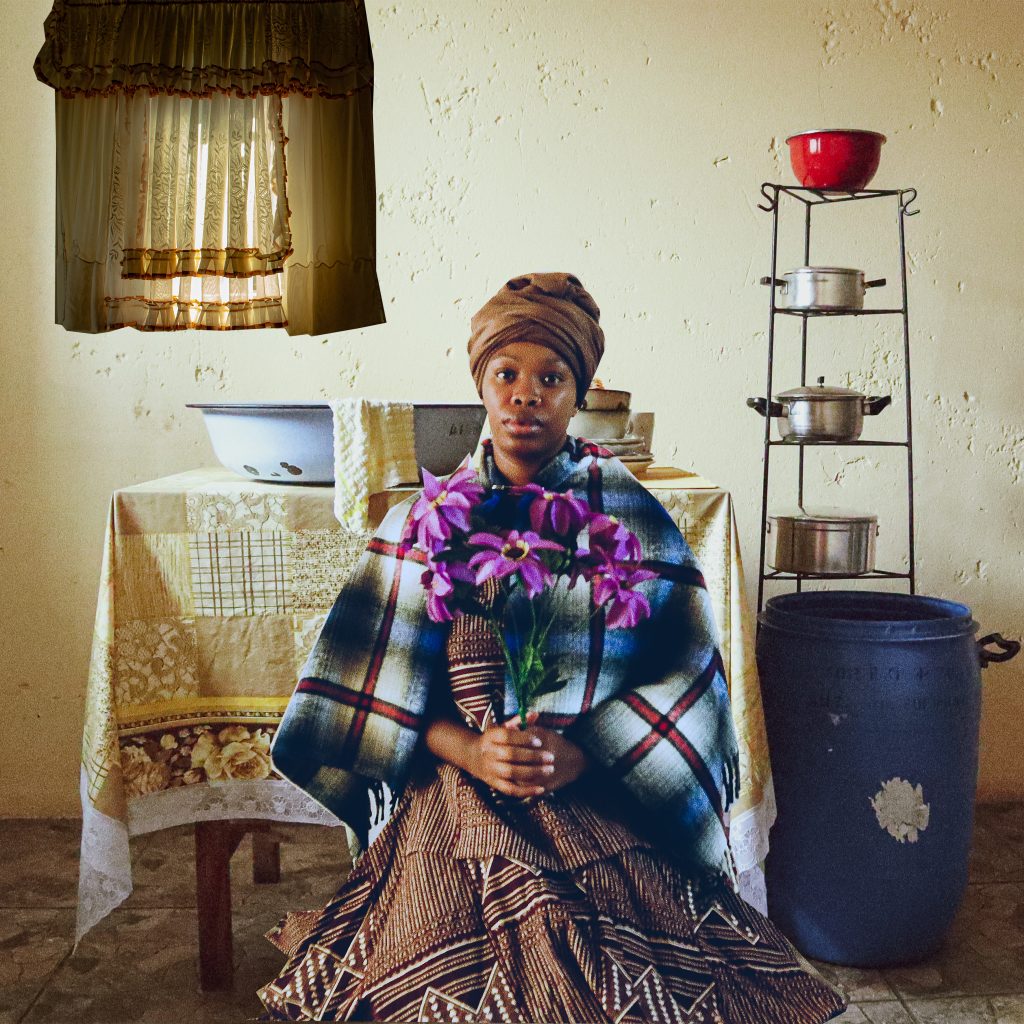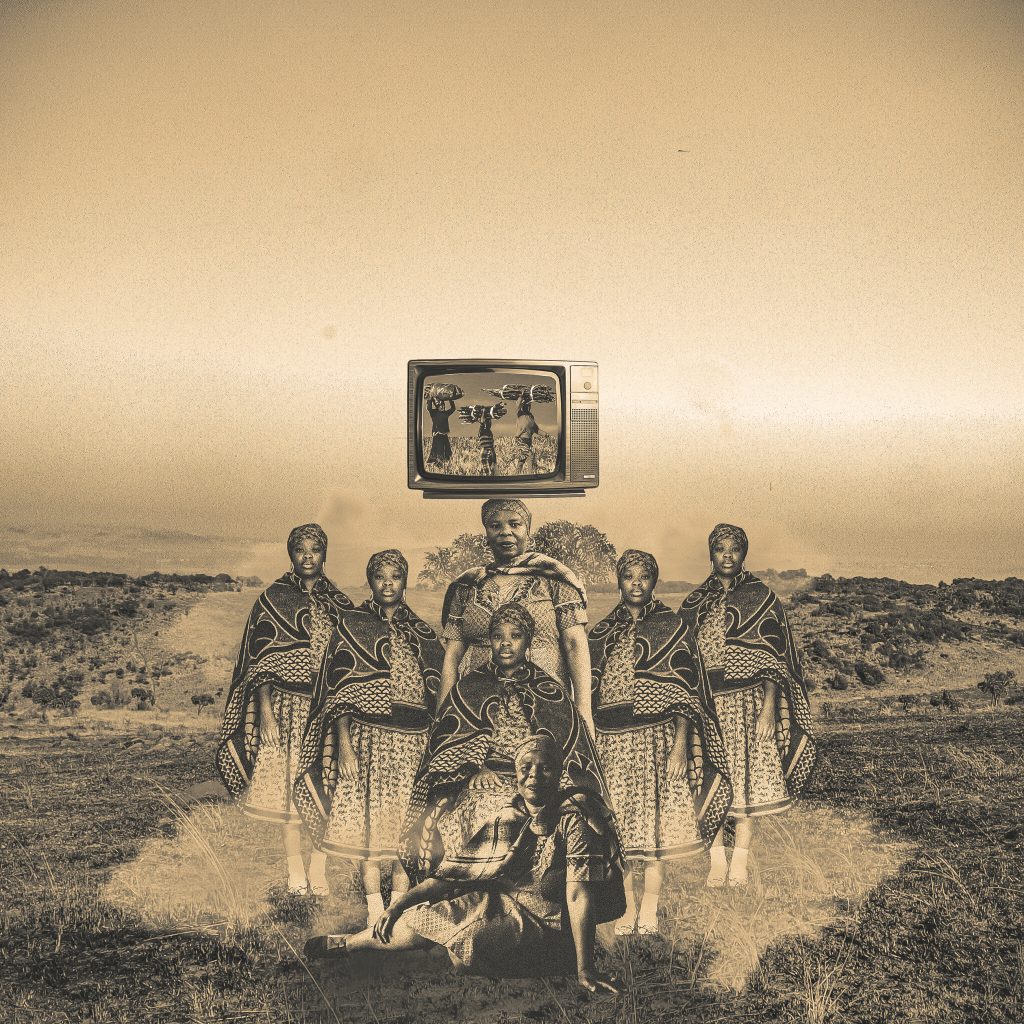
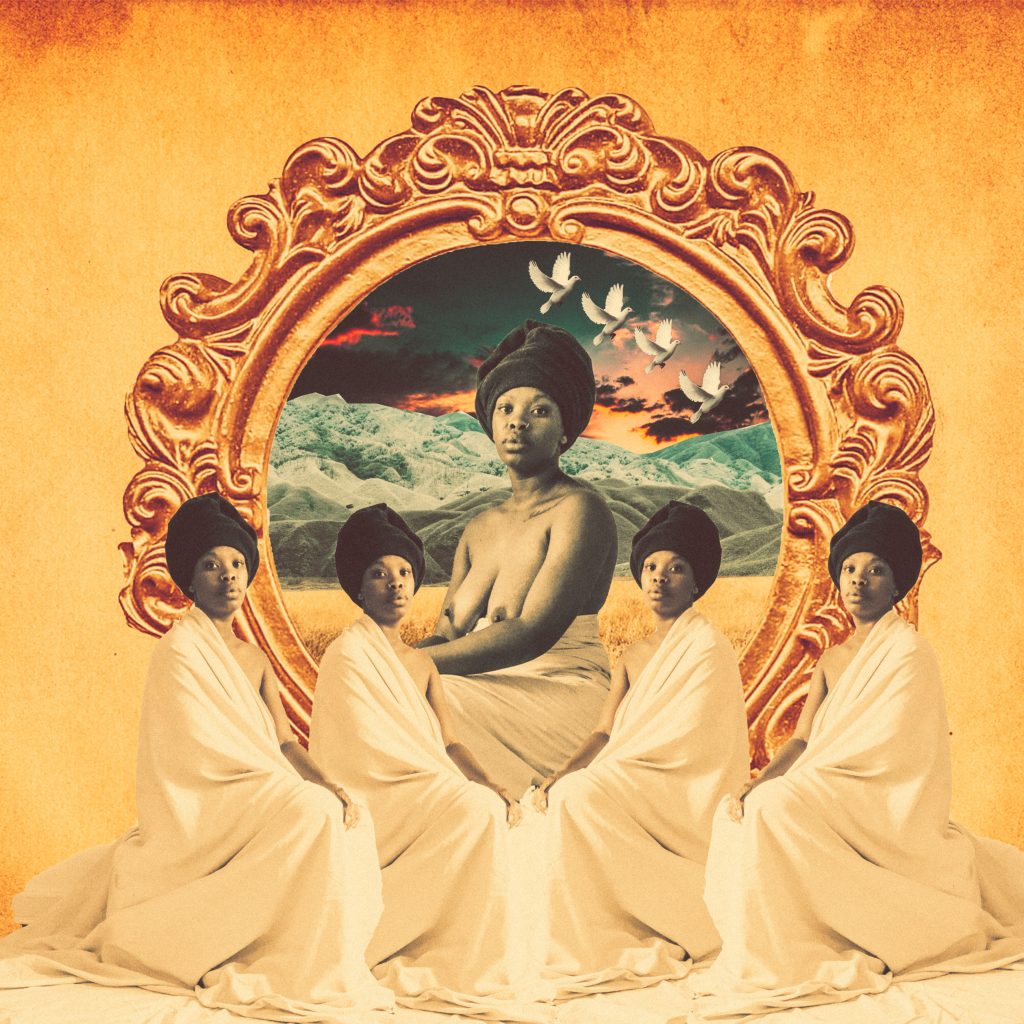
‘Collages allow me to travel between time and recreate a new existence for old photographs. I don’t have to tell a single narrative as I would have if I was a traditional photographer. The beauty of it is I can merge old as well as new photographs and tell many stories in one collage.’
It’s been barely a year since Puleng Mongale picked up a camera, and already her name is flashing along with some of South Africa’s favourite photographers.
For me, the Joburg based collagist and photographer’s work evokes nostalgic memories of my grandmother’s house in the ’90s, with its iconic porcelain dog figurines, a vintage television set made from fake mahogany perched on her white room divider – that was also a treasure chest filled with her expensive Fine Bone China Tea Set collection – which was reserved for special visitors… when and if they came by.
My memories of doyles draped over sofa arms and headrests are probably shared with many other black South Africans who can recall their childhood living rooms in urban areas. The tapestry of Puleng’s work has offered a home to these collective memories and many others that are similar to them. From tales of domestic workers to the narrative of black working-class South Africans and multi-generational facets of womanhood; they all find refuge in Mongale’s collages.
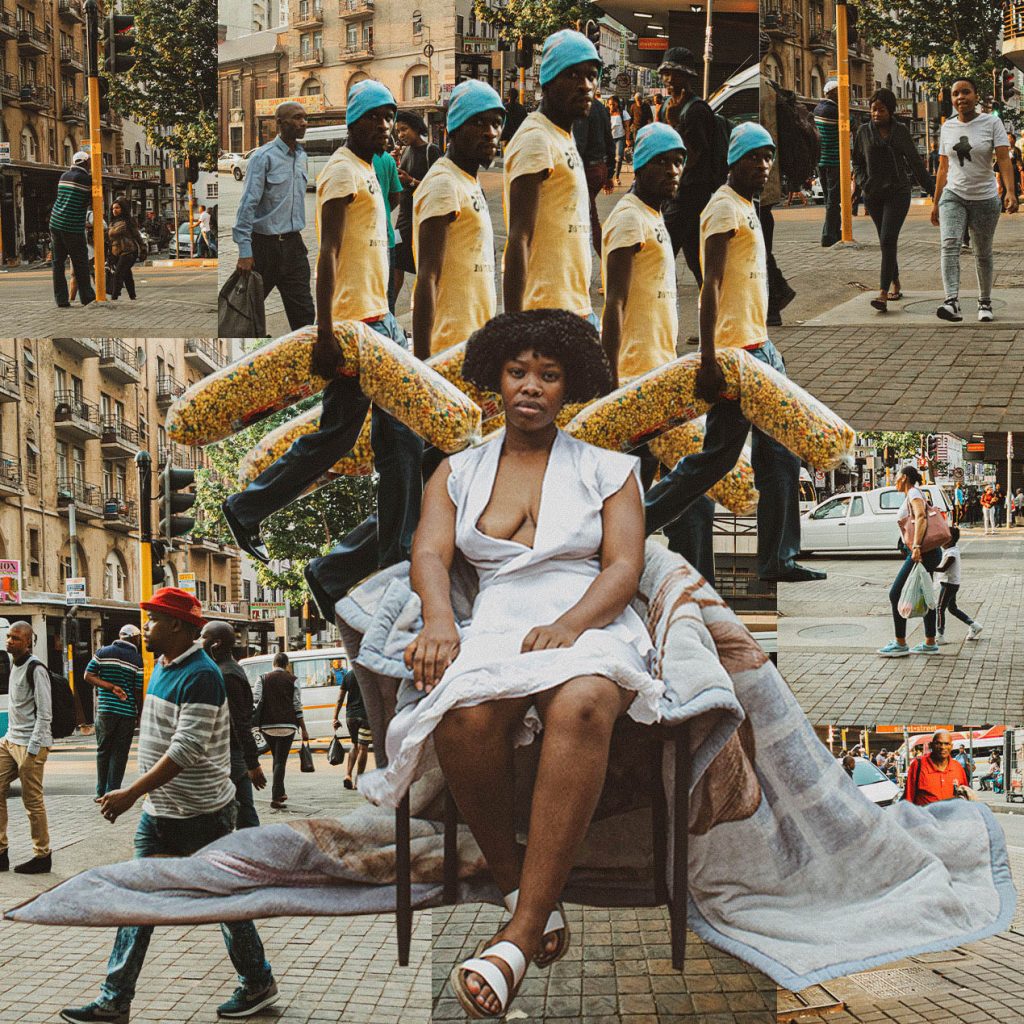
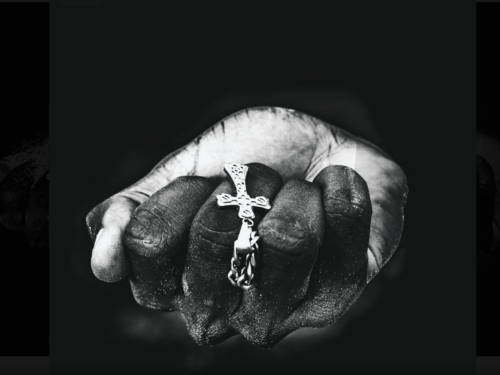
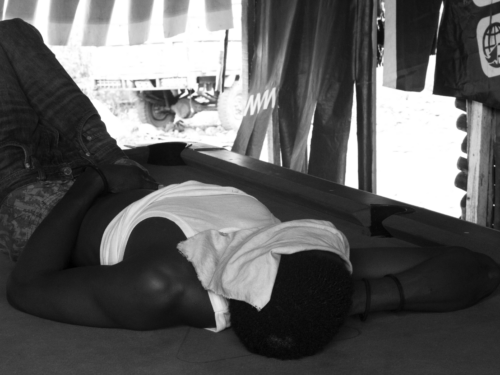
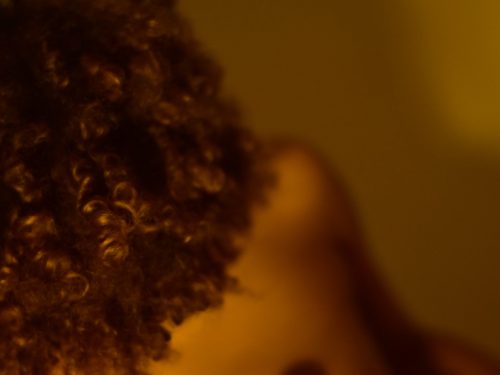
For Puleng, 2016 was a significant year. This was when she conceptialised, directed and stylised a four-part photographic series titled Intimate Strangers, which accented stories of South African labour relations, brotherhood and friendship as well as spirituality.
‘It was an idea I had after seeing several strangers who looked alike and I thought it would be good to photograph portraits of them together’ she says. ‘When I started I knew that I didn’t know much about the creative world, but I was eager to learn, so I quickly recognized the value of collaboration and started working with some of my friends who were creatives. I pitched the idea to my partner and our photographer friend Kgomotso Neto Tleane, and they liked it. The idea expanded and I wanted to add more thematic context to the photographs, but Neto wasn’t initially sold on the idea (laughing) but because kea foster (I am persistent), he eventually came around and we expanded the idea to what it became, incorporating props and themes such as domestic worker relations in the country.
Self-portraiture is an important practice in visual art, and for Puleng it’s worked as a crucial form of visual language.
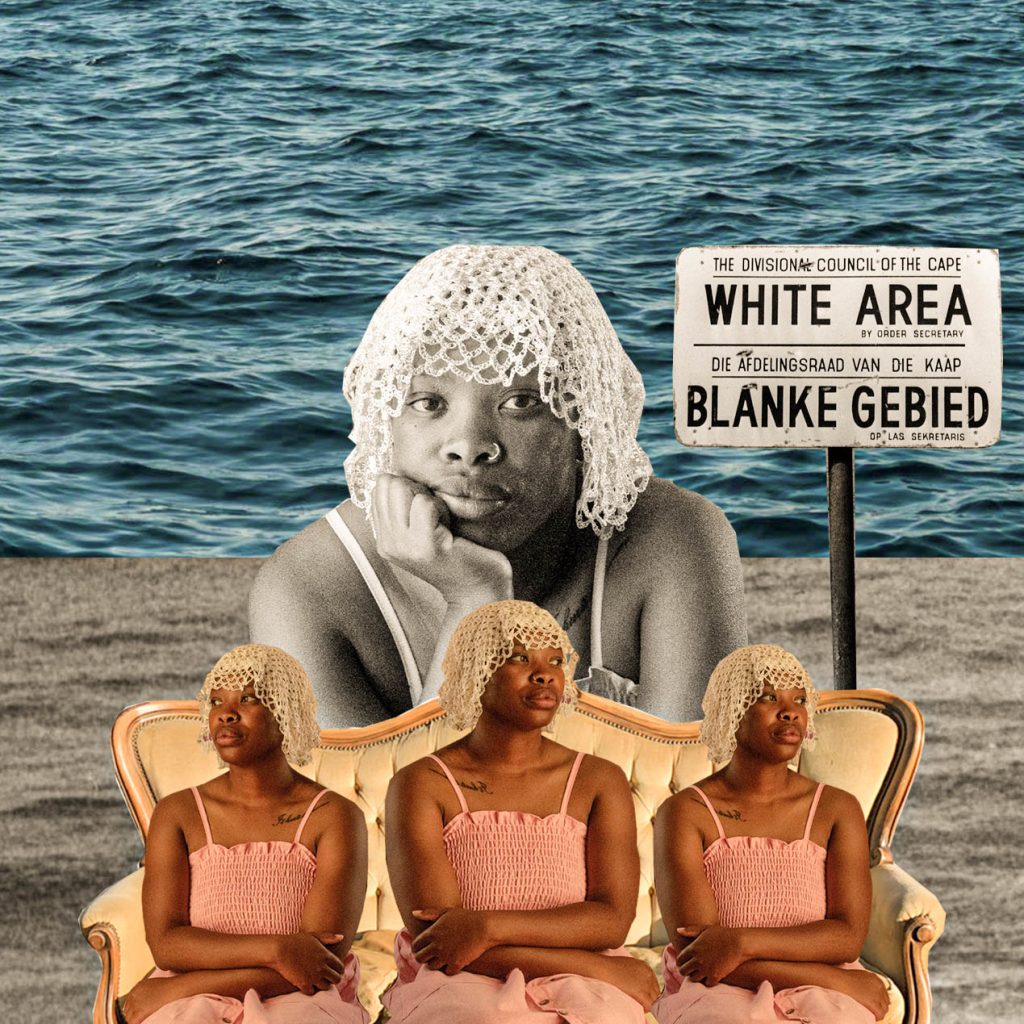
Puleng: ‘I got retrenched from my copywriting job last year. I began experimenting with the camera and became my own test subject. It was a safe space to play without having to worry about being too technical. The portraits started reflecting my state of mind and feelings because I wasn’t happy in the advertising world, and that took a toll on my mental health.’
Her relief at stepping away from copywriting took her to a whole other road of expression.
‘The portraits became an outlet to express my emotions and find healing. Around the same time, I discovered the collages of Natalie Panengs and that opened a whole new world for me. I started learning how to make collages with Photoshop using existing images and later old family photographs.
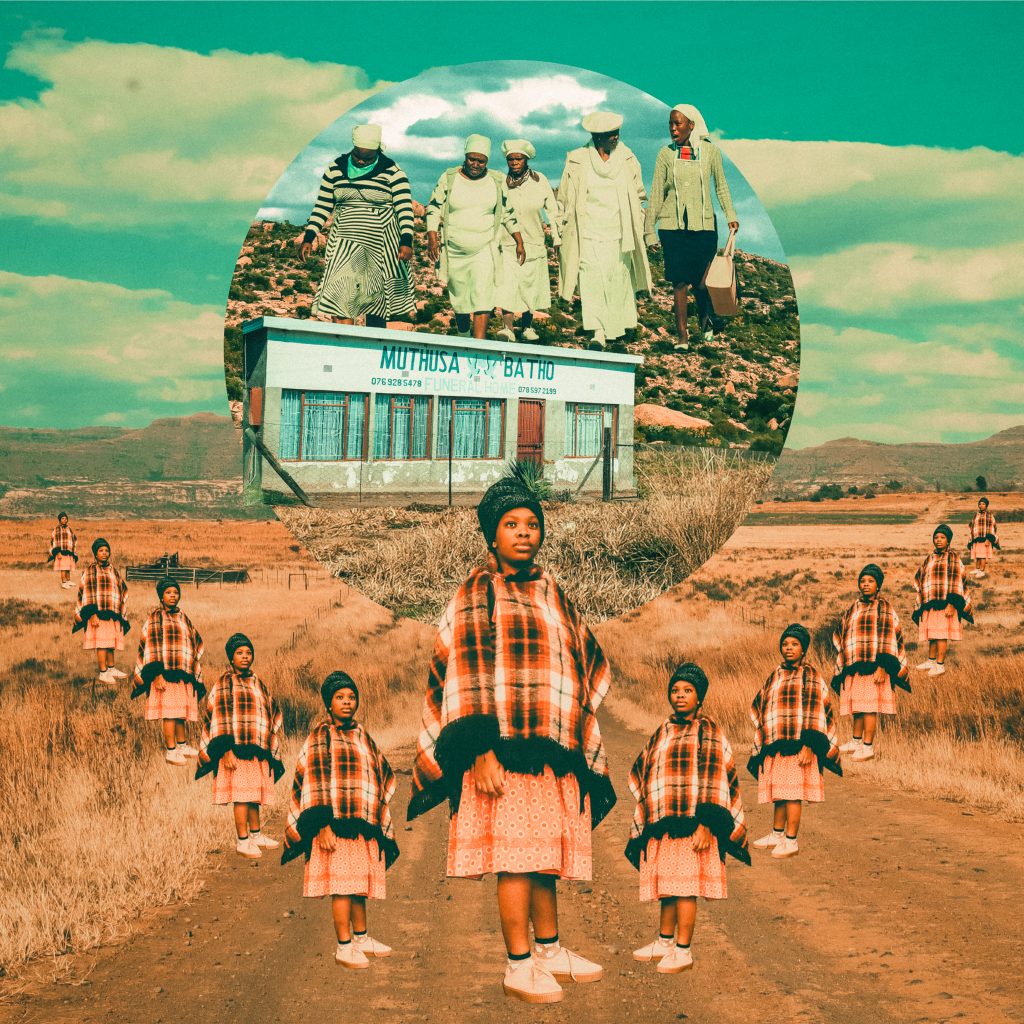
Puleng’s latest instalment Home is a Feeling, is a plural, yet very personal series about how she discovers all the treasures that she hadn’t noticed at her family’s house in the rural Free State province of South Africa.
‘I was born in Johannesburg to a Motswana father and a Mosotho mother who was born in Paul Roux, a town also known as Fateng Tse Nthso. When my grandmother moved and settled in Johannesburg she ran a shebeen, often frequented by the then black middle class. Even till this day my aunts still have shebeens and taverns. This bred a sense of classicism between them and those who stayed behind in rural Free State – some stupid bullshit nje! So naturally as a kid, I never really looked forward to visiting the Free State because I somewhat looked down on my family from there. It was only in my recent visits as an adult that I started appreciating Fateng Tse Ntsho and realizing that each time I was there my family was always warm and loving. The place hasn’t changed much since I was a kid, so I could revisit my childhood instantly.
A funeral parlour features in one of Puleng’s works; a venue that has been part of the Free State community and a strong memory since her visits as a child.
‘That is what inspired the installation. Home is a beautiful place and a great source of one’s history. Unfortunately, my mother and her sisters are renovating my grandmother’s house and they are erasing all those memories and nostalgia. At least I have photographs of its former state and used some in Home Is A Feeling to pay homage to the place.’
Puleng has a great sense of artistic purity in her; a purity that allows her to unreservedly immerse herself on this voyage where not knowing everything is okay, and being aware that you don’t know much is greater, as it creates an appetite for adventure and constant seeking.