Interview: Nana Ocran with translator Sofía Riveros.
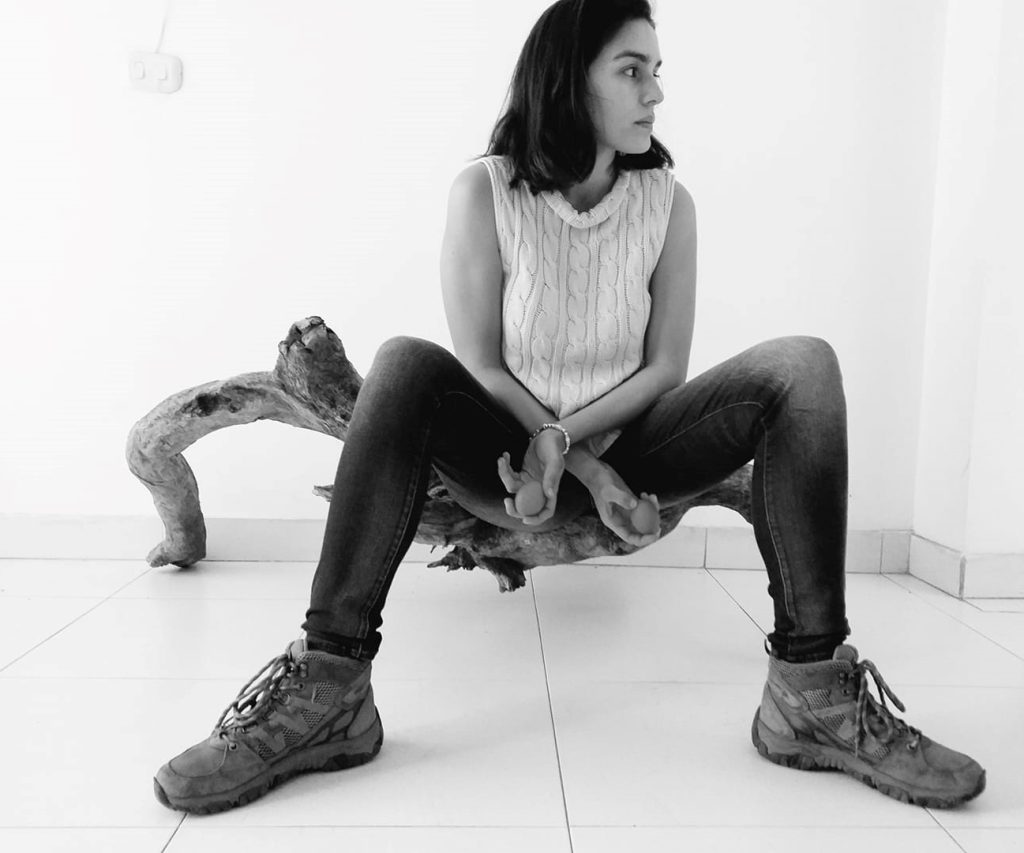
‘This photo was taken by my daughter. She is 12 years old and a girl who doesn’t like the fact that women are stereotyped. At the time she decided to cut her hair because of the story that she’s not the only child in Latin America whose parent has left home, and whose mum has been alone raising her.
The picture lets me get all my feelings of anger out, almost like a drug that I would use, but I transformed this onto a photograph. There’s a lot of injustice with single mothers, and I feel that we’re not protected. The system rewards men, while as single mothers we have to work really hard…having three shifts a day.
I’m sitting on a root that was at my house that wasn’t wanted. I’m there as a woman that sits how she feels. For me, spreading my legs is like giving birth, feeling free, with strength and freedom. I’m a woman and a man, but a man with breasts that had to be inserted in a paraphysical way. I handle the eggs the way men’s testicles are. They are hanging, and they are fragile, but with a lot of life.
‘ …we as women are not recognised for the constant labour that keeps us in private spaces most of the time.’
I consider myself to be a life giver in everything I do – even giving breakfast to my daughters – so I believe that my vagina is a portal, and those eggs that are fragile give me strength.
Using black and white is more appealing as it’s like being two people in one body; Natalia and Marcela – as I have two names – like two personalities. I will be mother and father, worker and student. I will be a vagina and eggs.
For me, this photo is an art piece that also expresses activism. How to be a single mother and how in the name of love and care we are constantly manipulated by a patriarchy in which most of the men that forget about their children rise within the public sphere. They work and are professionals, and we as women are not recognised for the constant labour that keeps us in private spaces most of the time.
The Man Who Forgot His Eggs is in recognition of all of us single mothers who have to be dads and mums at the same time. The ones that care, work and study. All those that don’t have the privilege of shared custody of their daughters and sons. All who struggle each morning to look for somebody trustworthy to take care of their children, and who pay for a very expensive life that is imposed on women by capitalism and patriarchy. It is for the ones who cry in silence. We shout at home because we are the main caretakers of a society that most of the time names the men as the ones that write the stories of history.’
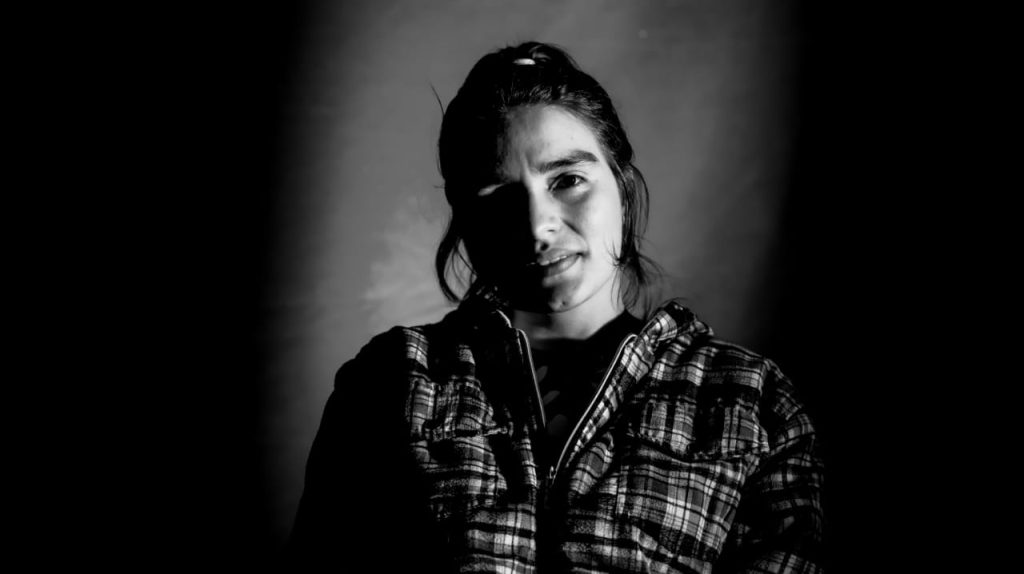
City El Carmen de Viboral (Antioquia), Colombia.
How would you describe yourself? I am a woman who experiments with art, through personal experiences that go through the feminine being.
What does the word ‘art’ mean to you? Art is the power to transform and deform circumstances of real or imagined life, without the purpose of telling the truth.
Creative influences: Actually, since I was 20 years old, the performing arts opened their doors to me to be a spectator and, over time, a creator. It is there that I have met many artists who have taught me different perspectives of life. I like to look through numerous lenses at the situations that accompany me and thus transform or deform them. My mental lenses are of various shapes; some are coloured, others square, rhomboid… I spend a lot of time imagining.
(Photo by Fabian Rendón Morales)
[IN MY WORDS] is a series of short, first-person essays based on a conversation between People’s Stories Project and an artist, whereby the starting point is a single piece of their work.