One only needs to experience it firsthand a handful of times to realize that capitalism actively discourages those who engage in it from organically pursuing expansion and growth beyond its set parameters. It frowns upon lateral growth (job hopping is more socially frowned upon than cheating, let’s be honest) while dangling the carrot of internal growth (within an organization) as the Big Prize. Employment can sometimes feel like being on a Netflix dating show where you’re trying to impress someone who clearly has eyes for everyone else but you, while trying to convince them to not only date but marry you as well. It’s like Perfect Match and The Hunger Games in one and as women of colour, we’re often limited in our options.
An employee’s value is not the value of a human being, it’s but a sliver of one’s actual potential. To be globally viewed as being intrinsically lacking in potential by virtue of one’s gender or race undoubtedly translates to the workspace, where value is at the centre of basically every action and interaction. We’re often underpaid and overworked and that takes a toll on many of us psychologically. We subsequently find ourselves bargaining with and accepting never getting what we deserve in any and all areas of our lives.
Building a portfolio or professional reputation often goes hand in hand with breaking one’s spirit, and it’s a cruel irony how expansion in the workspace is supposed to come from compression in one’s personal life. The ‘best’ employees are often required to be self-sacrificing; giving their all to their work and helping their companies get ahead at the expense of their own health.
For Mbali Khanyisile Sikakana, Alyx Carolus and Phomello Montoedi change isn’t a daunting thing, but rather a necessary part of their personal and professional lives. Between the three of them, they’re award-winners in publishing, digital marketing and entertainment – with one having recently won a Grammy. They’re a trio of women who put the “excel” in “excellent.”
We spoke about navigating capitalism, how they’re determining their own value, being their own catalysts for change, and the practices that help them preserve their peace in and beyond their professional lives.

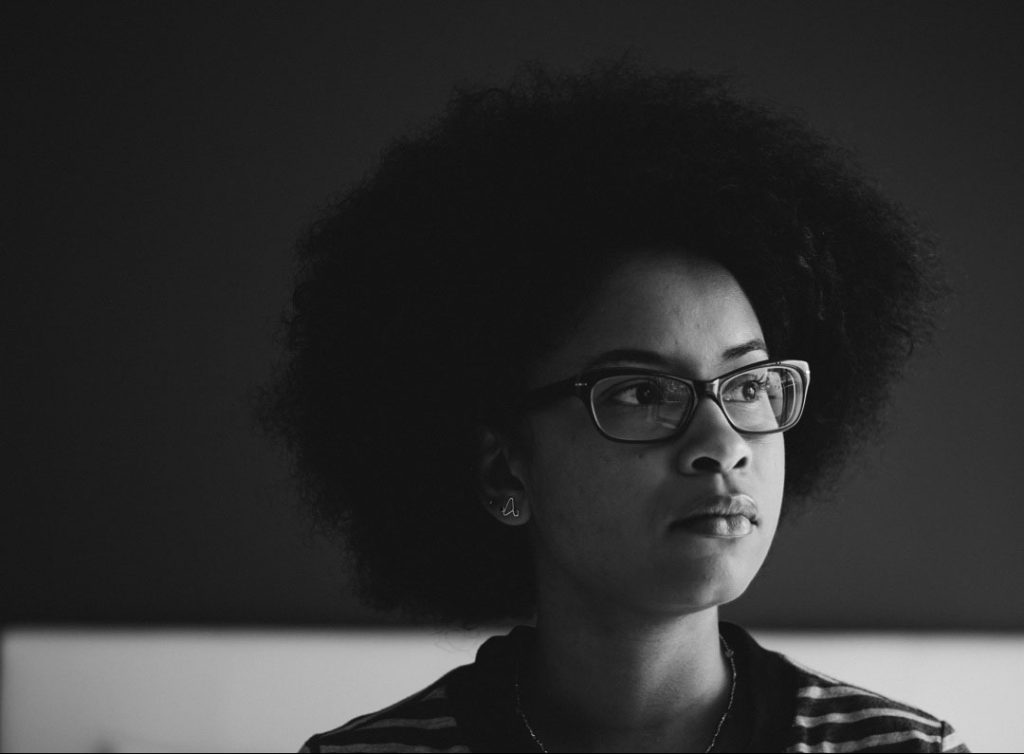
Bakang Akoonyatse: What was your first job and what do you do now?
Alyx Carolus: In terms of my career, I started working as an intern at popular online publication Cape Town Magazine.com. Currently, I work as the Digital Editor for House and Garden SA, so over the last 8 or 9 years, I’ve remained in the online space, whether it’s social media or content creation and digital strategy.
BA: How has your concept of “the value of a dollar” evolved between now and then?
AC: When I entered the workplace, I definitely struggled with the higher cost of living in my city. As much as I wanted to think I was savvy, I didn’t realize the value of my money until my 30s. I have had to unpack why I spend when I’m in a dip or stressful space and put some things in place to amend that.
BA: What’s been your biggest challenge when it comes to navigating capitalism?
AC: Working in the marketing industry for almost a decade comes with a few stark realizations. At the end of the day, you’re selling a product, you’re collecting data on your audience to push more products and sales are your metric for success. I am surrounded by capitalist behaviour and beliefs, so it’s easy to get sucked into wanting more and more. I’m not immune to a well-placed Instagram ad and specifically knowing what it takes to pull off a successful campaign. It can be easy to lose yourself in the silliness.
BA: In what ways has your concept of your own personal value evolved … either as a member of a team or as a contributor to something greater?
AC: As I’ve gotten older, my own value systems have changed. I want less and know that ultimately, I don’t need many material items to have a content life. I am working on crafting better boundaries, as my industry has often meant working irregular hours and being contactable at all times. Eventually, you become used to being available and not switching off. I love teamwork and have had the opportunity to work with incredible minds, but I have also learnt that a job is just a job. I am more than a title.
BA: What practices or measures do you have in place to help maintain a healthy work-life balance?
AC: I believe in community care. I’m about a pared-back life filled with things that are intentional. It’s directly against what I’m usually doing in my day-to-day job. In order to remain sane and connected to my beliefs, I’ve tried to get involved in community work, from volunteering for organizations to running my own donation drives. Recently, I’ve taken a leaf out of my Catholic upbringing and made Sundays my day of rest. My phone is on do not disturb mode and I take time to savour the day. Time is luxury.
BA: Do your spiritual practices or interests play a role in how you navigate decision making regarding your career path?
AC: Not to be dramatic but diving deeper into the world of astrology and spirituality has provided me with clarity that I could have never predicted. I set aside time for the new moon, full moon and new month rituals. It often means drawing some oracle cards, cleaning my space and making time to journal with intention.
My decision making is 80% gut and spiritual signs and 20% logic, which might sound absurd to most, but it has served me well. I have quit jobs that no longer serve me because a tarot reading reaffirmed what I was already feeling. I consult one or two esoteric practitioners regularly to see if I’m on the right track.
BA: What’s been your greatest professional accomplishment to date?
AC: Becoming Head of Social for digital community All the Pretty Birds and being promoted to Digital Editor for House and Garden SA. I have also run successful social media workshops for one of Africa’s biggest attractions … which still feels unreal.
BA: If living was your one and only job and money wasn’t an issue, what would you spend your time doing?
AC: Picture this. Life on a plot of land. I have a cottage and beautiful blooms around me. I churn a bit of butter; life is slow and meaningful and quiet. I hope I get to see a slice of that.
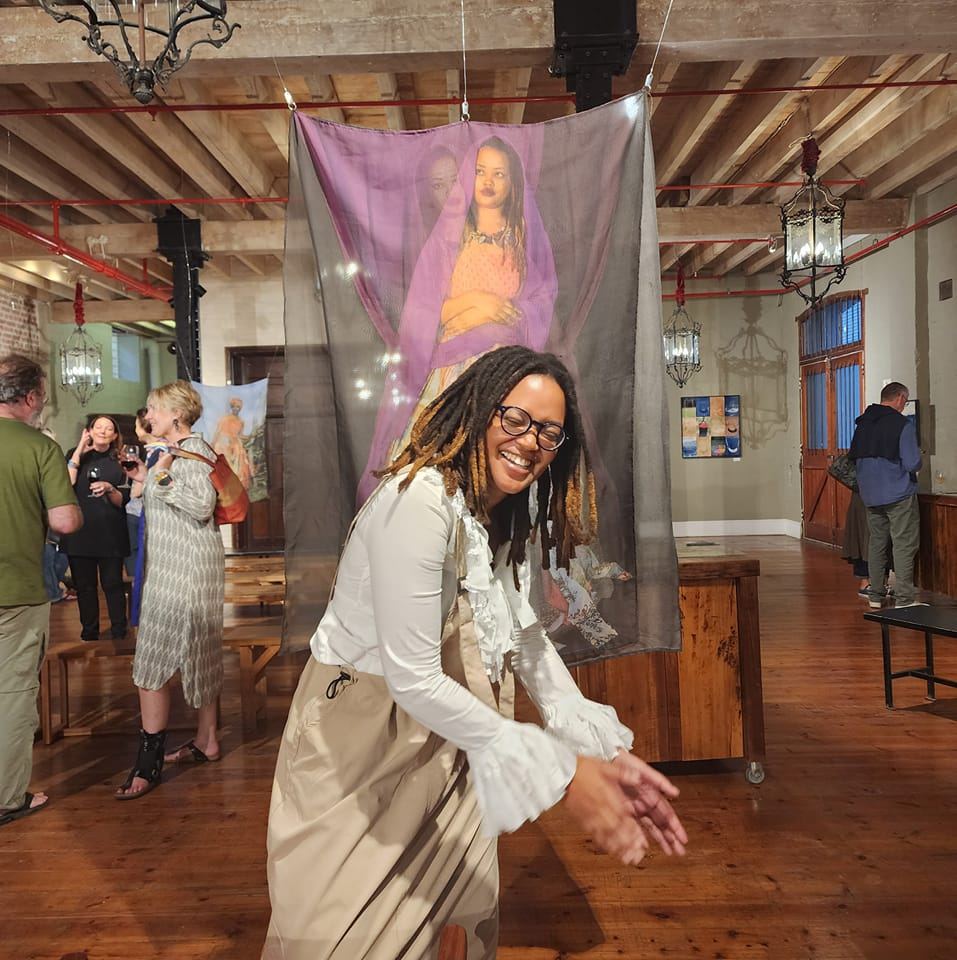
Bakang Akoonyatse: What was your first job and what do you do now?
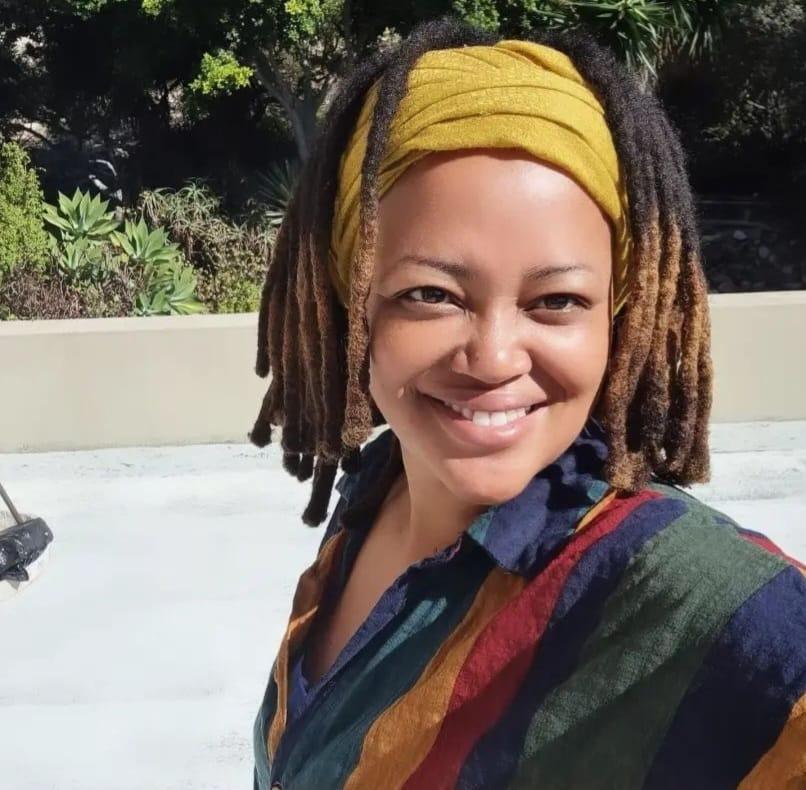
Mbali Sikakana: My first job was as an article clerk at an audit firm and now I publish books.
BA: How has your concept of “the value of a dollar” evolved between now and then?
MS: I used to live way below my means because I believed in not being tied down by anything and having an escape hatch if necessary. What a way to announce commitment issues and trust issues to my own subconscious! Now I understand each ‘dollar’ as an expansion of experience, and I try to enjoy that as much as possible. Since I have to participate in an economy, I am reversing the idea of it being a perpetually negative experience to part with money.
BA: What’s been your biggest challenge when it comes to navigating capitalism?
MS: Having to ‘earn’ things as opposed to just using my interest in a task as an indicator that I can do it immediately. I want to learn on the fly and use the tools at my disposal to possibly find fresh approaches as I go. Capitalism, however, thrives on either credentialism or nepotism; both ways of ‘earning’ a shot. Credentialism introduces delays that make uncertain your continued interest in a task. Nepotism is just using your forebear’s names as a credential and is necessarily elite. Related to that is the divorcing of feelings from results. I like to feel things out. Capitalism says there is no time to feel, only to do. Doing without feeling detaches you from yourself so that even your accomplishments feel out-of-body and not integrated into your life experience and path. I actually believe that’s why people are hardly satisfied. They do and amass a lot of things that actually don’t matter to them or mattered to a version of them that is long gone.
BA: In what ways has your concept of your own personal value evolved … either as a member of a team or as a contributor to something greater?
MS: Again, there is the concept of ‘earning’ a voice and a spot. If you are a black woman in the workplace, people ‘need’ a reason to respect you. Often it follows the same script as out there, what class markers indicate about you, your ease or confidence within corridors of power and your output. Whether or not you do work of any significance to yourself is something you ‘earn’ by giving the space or team what they need to achieve their overall goals. You balance numerical metrics with social capital metrics to achieve something close to a value proposition and hope for the best. It’s a moving target because so much is tied to interpersonal dynamics, which you must manage with wisdom that sometimes takes years to learn and build upon. Then you hope that you do enough work of personal significance to remain motivated and that you earn enough and have enough time for yourself to be able to build a life you enjoy.
BA: What practices or measures do you have in place to help maintain a healthy work-life balance?
MS: For one, I try to integrate my current work into my life, so I maybe take the opposite view. My work is very people centric. On paper, it is acquisition, creative direction, project management and quality control. It also operates within the parameters of what is considered a lonely and arduous art form – writing. There are real people on the other side of that – authors – who do not follow my daily rhythms because they have their own 9 to 5s and other obligations that come first. I tend to entertain [them] after hours some of the time because that is when they are usually doing the work I need from them, and when they most need my clarification, update, encouragement or a kick in the butt. If I took a rigid view, it would actually make my work more difficult to manage and introduce unnecessary delays and anxieties.
BA: Do your spiritual practices or interests play a role in how you navigate decision making regarding your career path?
MS: I pick up practices that correlate with the stage of life I am in. When I was more fearful and anxious, I worried a lot about the future or how to unknot the present. I didn’t see the correlation between my mind state, which sometimes included a learned helplessness, and how overwhelming life felt at times. External practitioners (reiki practitioners, tarot readers and astrologists in my case) made more sense then, because trusting myself was very difficult. I had the self-awareness to know that I was generally too ungrounded to see things as they were. In that state, even meditation was of little benefit to me, except to manage anxiety. I was not getting the transcendental benefits. This is generally the stage where many end up with terrible experiences because they cannot take a hold of their own spiritual development. Now when I am ungrounded, I know what to do for myself.
I avoid a fatalistic worldview and sometimes these practices (when practiced ungrounded) can reinforce the idea that destiny is static and unchangeable and that you are a passive observer of the inevitable.
I am of the view that the world is some kind of simulation, and within it are infinite possibilities I can choose to experience. It’s not as simple as that of course. It is terrifying work to shift from familiar scripts, even if they make you miserable and especially when they feel justified. But, if I didn’t believe this, I would not have shifted from a career that takes 7 years to qualify for and after 5 years of practicing as a professional, to start a new one by doing a master’s in a completely different industry. I knew that there was a version of myself that could do it, even if I didn’t know that person at that moment. The serendipity I experienced through that transition was powerful evidence of what I believe about life. I also see this in the myriad of things I have experienced that have not been career changes but have proved significant. I just wanted to be that person for a time and a part of me I didn’t know existed opened up to embrace that desire.
I haven’t always been intentional about my inner dialogue and beliefs. This of course creates an uneven, discordant trajectory because the positive inner work I have done is in community with all my unexamined selves. As women, and as black women, we pick up from the womb, home and the world unhelpful messages that hinder our ability to be happy whether it’s because of what we’re told about ourselves or how people treat us. We are often braced for the worst and some lessons come later than I would like. I am at the stage in my life where examining how I see myself and the world and consciously developing the beliefs I want is more important than any actions I take. My aim is to influence my actions organically from the inside out.
BA: What’s been your greatest professional accomplishment to date?
MS: Whew. Anything I have done to challenge a pernicious narrative or excavate important histories out of obscurity.
BA: If living was your one and only job and money wasn’t an issue, what would you spend your time doing?
MS: Something to do with the body. I have spent most of my life in my mind.
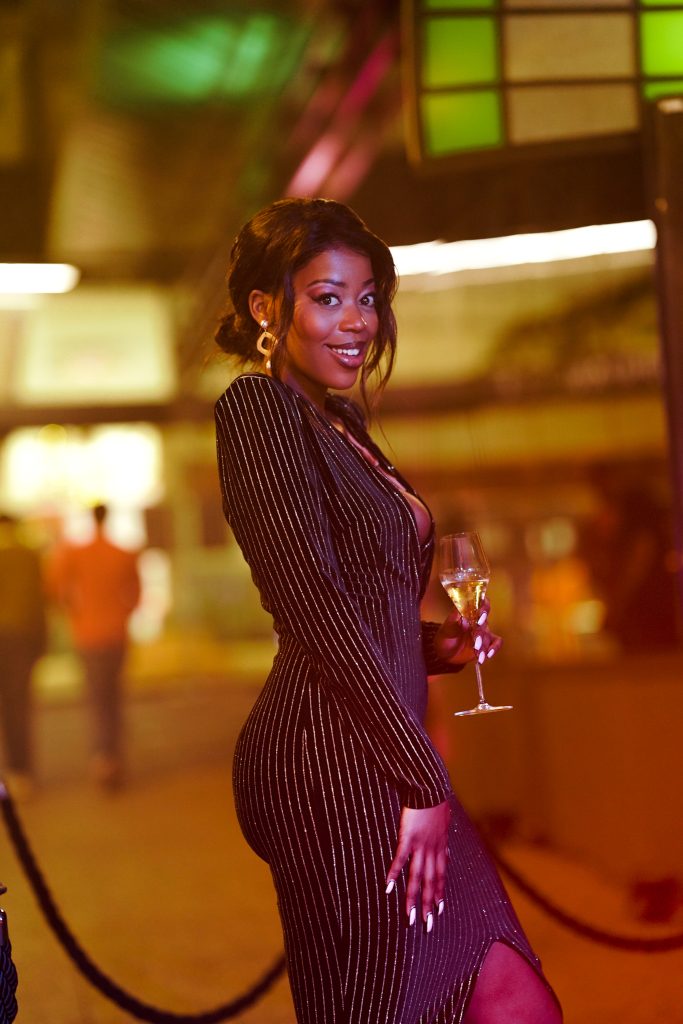
BA: What was your first job and what do you do now?
Phomello Montoedi: I was a hostess at a market research venue while I was studying towards my degree. Now I am working as a Lead Designer-Art Director for a GRAMMY award winning talent management agency … and I freelance for a few clients.
BA: How has your concept of “the value of a dollar” evolved between now and then?
PM: When I started working, I thought I’d rise up the ranks easily and wouldn’t need multiple income streams, but through some guidance I found in my mentor, I’ve learned how to capitalize on the talent and expertise I have. One income stream is not enough in this world. I needed more, especially from the situation I grew up in. My mom did the most, even as a married woman, and I wanted to give back to her. I wanted to build before even having children, and this drove my work ethic. I learned I could actually earn in a stronger, foreign currency and this opened up so many more possibilities. Now I can put myself out there especially with social media. I don’t just have to apply for work here in SA. I also have the option to work remotely.
BA: What’s been your biggest challenge when it comes to navigating capitalism?
PM: Feeling like I’m constantly being undermined or that I’m inexperienced when I have the qualifications as well as the experience. Even after nine years in my career I still have recruiters messaging me for Junior roles when I see myself as a senior with an impeccable portfolio. I’ve also been turned away because of my appearance. Being undermined because of my age or looking younger than I am I’ve also felt I’ve constantly had to do more to show I’m capable, but it’s also left me feeling like I doubt myself at times because I’m not taken seriously or feeling heard. It has been challenging but it taught me to find my voice and express it.
BA: In what ways has your concept of your own personal value evolved … either as a member of a team or as a contributor to something greater?
PM: I can’t pour from an empty cup, so when I am feeling burnt out or underappreciated, I communicate it to the people I work for. Also being delusional has helped a bit because our other counterparts apply for jobs they’re not even qualified for, so I now have the audacity to position myself with people I want to work with. I use my LinkedIn as a tool to put myself out there professionally, especially now when I’m not the conventional graphic designer, I can be so much more than that. I learn from the seniors I work closely with to upskill myself as the industry is forever changing. I have to evolve with it. It has built up my confidence to also have people back me and compliment me on the work I’ve done. It’s put me in rooms I could never imagine. I’ll keep moving until I get to where I belong, and I NEVER burn my bridges no matter how many times I’ve been challenged.
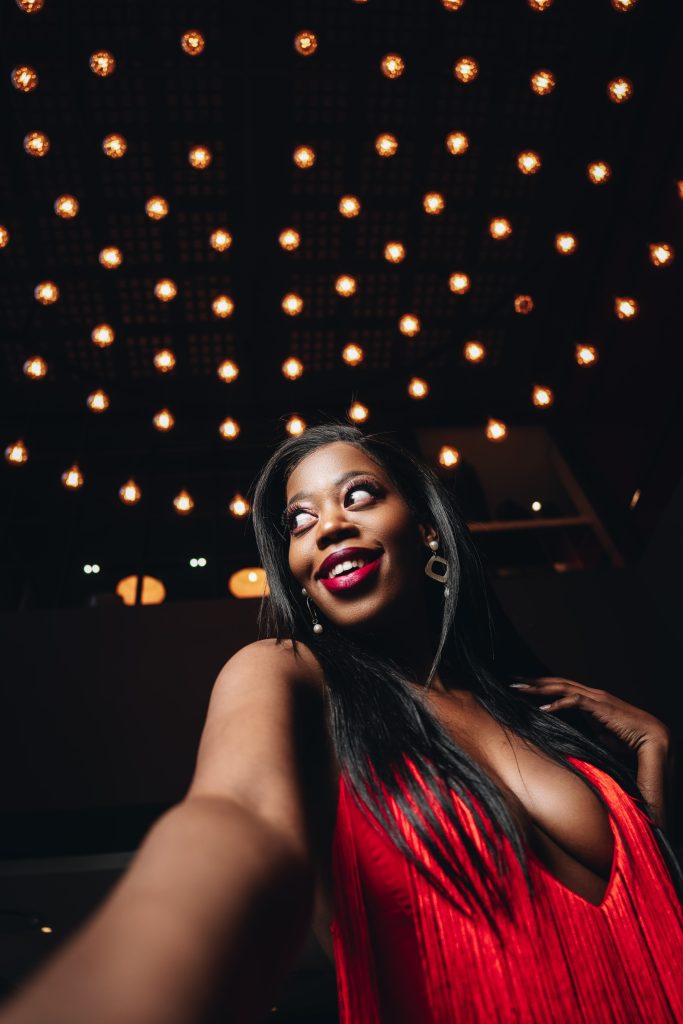
BA: What practices or measures do you have in place to help maintain a healthy work-life balance?
PM: I used to be in an environment that I’d be working from nine to nine with no acknowledgement of my boundaries. Now I make it a point to make time for myself after work. I also go to gym and see a therapist to keep my mental health in check … and I try to take leave days.
BA: Do your spiritual practices or interests play a role in how you navigate decision making regarding your career path?
PM: Lately I’ve gotten into therapy to better navigate my relationships, even the ones I have in the workplace, but my gut has always been that girl to tell me to “get out”. I’ve lost weight, I’ve lost my hair, I’ve lost my confidence because I allowed people who felt intimidated by me to walk all over me. My mentor earlier on in my career put me onto personal development, that was my morning motivation a lot of the time but now I have affirmations, I pray, I meditate, I cleanse, and I ask my guides and ancestors for assistance because I realized I can’t do it all. My eyes and heart have been opened up. I know that God and my ancestors have a greater plan for me. For two years I have prayed with tears in my eyes half the time to keep doing what I do but with something that truly spoke to my soul and that was music. I wanted to art direct, design, be part of the big concepts, but in a music or art industry and not so much advertising. I am living an answered prayer all because I followed through and listened when it came to my spiritual journey.
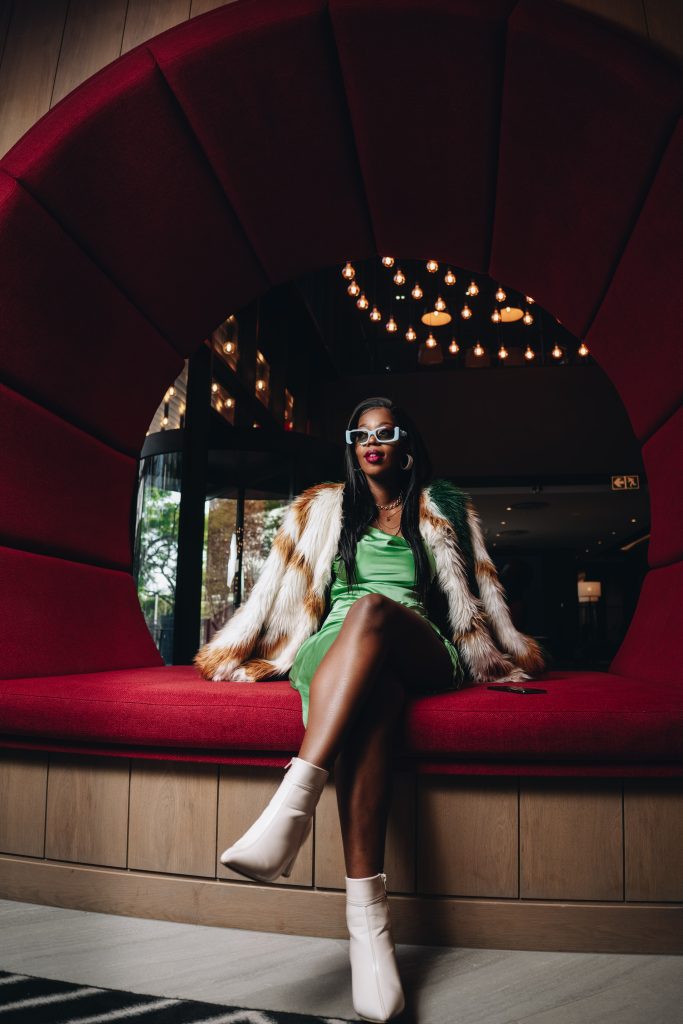
BA: What’s been your greatest professional accomplishment to date?
PM: We won a GRAMMY award, as South Africans and it was a HUGE deal! I had my first billboard in Cape Town on one of the busiest roads. For the longest time I was so miserable working agency jobs. I prayed to keep doing what I do but with music and I got introduced to Zakes Bantwini’s talent agency where they hired me for my expertise. I get to direct and put together photoshoots. I take the lead on design projects, and I’m being recognized for it.
BA: If living was your one and only job and money wasn’t an issue, what would you spend your time doing?
PM: I’d be traveling the world with the love of my life (hopefully he’s out there somewhere), eating at the finest restaurants, rocking my own fashion line, and with the surety that my family is taken care of, I’d have a property in Brazil, on Clifton beach in Cape Town, holiday occasionally in the South of France, and I’d own artwork from the biggest artists in the world. I’d make sure my mother has the best health care when she needs it, and I’d be collaborating with big names in fashion and the magazine world (Vogue, VISI, i-D). Rihanna would be my best friend, I’d have a full life outside of work, with my own family, and I’d have peace of mind and work when I want to not because I have to.
All images supplied by interviewees.