Around a year ago I was in Accra, Ghana with Bonita Darkoh, Arts and Culture editor-at-large for GUAP – the UK media platform for young creatives. We were there to photograph an event she had produced for International Women’s Day. I took a couple of 35mm disposable cameras to capture the week-long trip, as well as my DSLR to take portraits of the women we met at Bonita’s event. While there, we linked up with two creatives, Shace and Joey, from Free the Youth – a Ghanaian collective and streetwear brand.
One night, we were chilling at a quiet, late-night bar near Joey’s place when I brought out my disposable camera to take some snaps. As I was taking photos, Shace told me how shooting film in Ghana was near impossible.
I was surprised but took this information at face-value and we carried on with our night.
A couple of weeks after arriving back in the UK, we went into lockdown and like everyone else I had to find ways to keep myself sane.
It was during this time that I had the idea for the Film Frontier Project. What Shace had explained about shooting film in Ghana came back to me and I was inspired to pay it forward. I shared my thoughts with him, and he agreed that the idea would be feasible.
I came up with a plan to buy five disposable cameras and send them to Ghana via anyone I knew who would be making the trip there. They would deliver the cameras to Shace who would then distribute them to a selection of Ghanaian photographers that we worked on choosing together. Once the Photographers received the cameras and used up the 27 exposures, the disposables would be brought back to the UK for me to develop. Once the film was processed, I would WeTransfer the images back to each photographer.
To be honest, this wasn’t the most efficient plan, but it worked. The Film Frontier Project has now undergone two cycles with five disposables being sent to Ghana successfully each time – despite us so far managing to lose one camera per cycle in transit.
The second time around, I found the photographers myself and communicated with them via email, WhatsApp and phone calls. I found that contacting the photographers directly made for a far richer exchange, with a better connection and understanding on both sides.
Some of these in-depth conversations gave me a deeper understanding of why shooting film in Ghana is non-existent and what being a photographer is like for my peers across the globe.
The first photographer I spoke to was Carlos Idun-Tawiah, who was meant to receive a camera, but due to availability, couldn’t collect one in the end.
Regardless, we had a great conversation. He told me his dad was a banker, but was interested in photo documentation.
He’s use a lot of disposable Polaroid cameras to take family pictures whenever they were dressed up for church or other gatherings. His dad had also worked in London when he was young and he loved to keep the prints with him whenever he was away. It was Carlos’s father who had bought him his first DSLR camera, days before he passes away, so he was familiar with film and the process, growing up.
We spoke about how renowned photographer James Barnor had, at one time, built a photo lab in Ghana but had struggled to run it because water, which he needed to develop his film, wasn’t readily available in the location he chose. He had to walk to a communal water stand that was not conveniently close. Also, there was barely any electricity at the time, so he mainly shot using natural light.
‘It has never been easy shooting film film in Ghana’ adds Carls. ‘It was at one time the most predominant medium, but the conditions for using were still difficult. It’s greats such as James Barnor and Felicia Abban and the like, who kept pushing it. That’s how we have enough visual references that we can bank on, as contemporary photographers doing editorial work.’
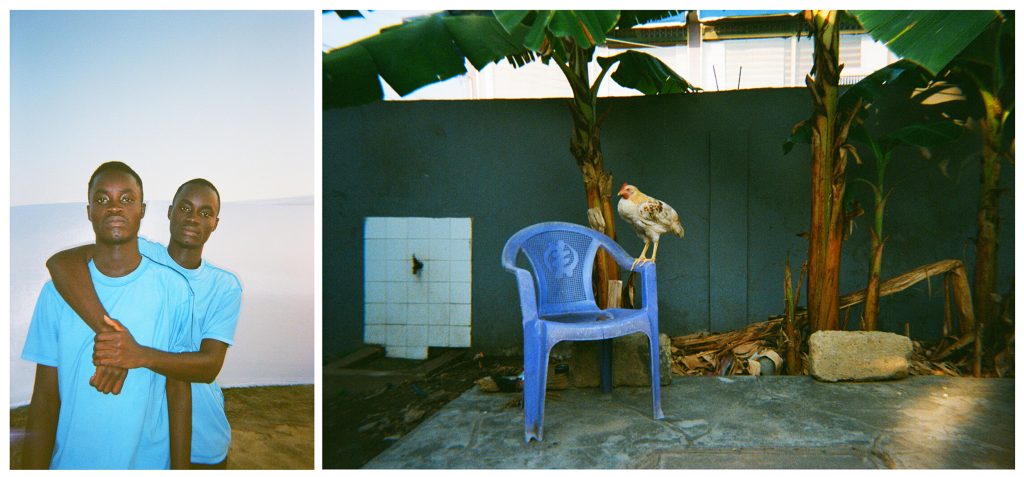
When digital took over, young photographers abandoned film as the new technology was more accessible, cost effective and provided far more room for error.
I was told that in Ghana the photographers have far more control over their work than we do in the UK, especially when working with clients or publications.
This is something photographer Prince Cartiee reiterates. He was one of the photographers on the second run of this project. He had also never shot film.
Prince shares a parallel experience to Carlos. When he was younger, shooting film was a lot more common and he also saw the elders around him using it – especially in church spaces.
He also confirms that digital is the preferred medium for young Ghanaians, as film is just not affordable or easily accessible to buy, develop and scan.
Prince, as well as his good friend David Ansah tell me that the nearest places to buy film beyond Ghana are South Africa or Kenya.
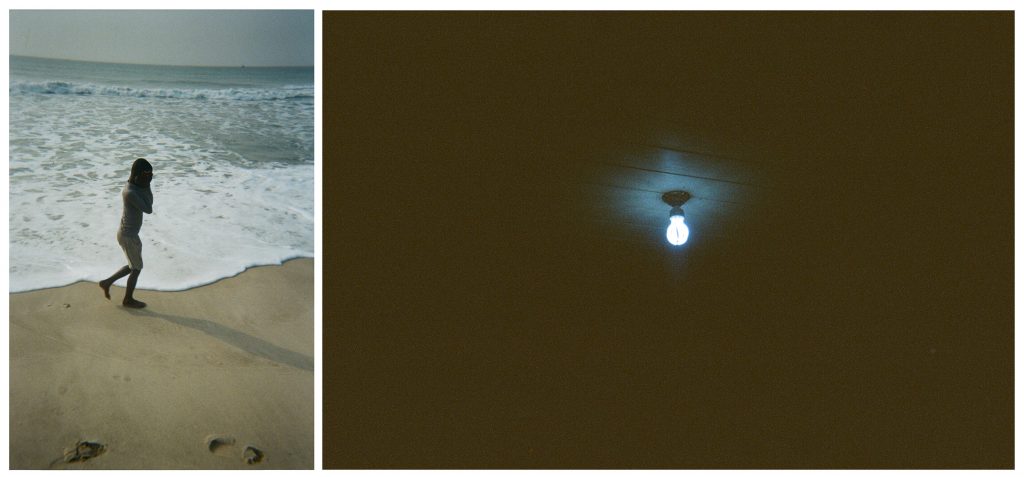
They both say all that is needed is a small Ghanaian place where you can buy film, develop it and scan it for affordable rates. As young artists they are not asking for a lot. They just desire something that will hopefully be within reach in the next few years so that they can participate in the modern resurgence of shooting film that’s popular amongst young photographers today.
“You can’t quite replicate that film look or the colours it produces” I say to Carlos on our WhatsApp video call, and he vehemently agrees.
I ask Prince if he knows many woman photographers in Ghana. He pauses for a while and struggles before he mentions Kafui.
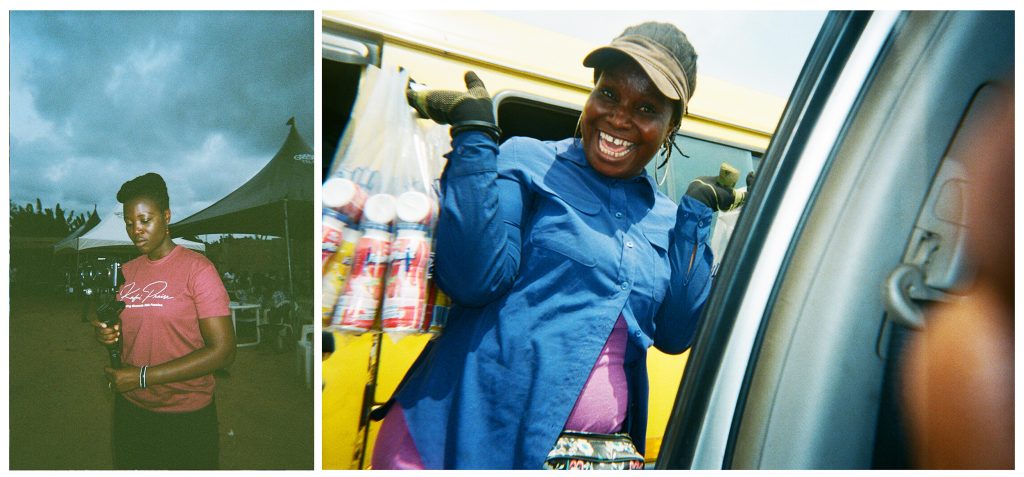
She was one of the women photographers Shace helped me reach out to on the first run of this project.
She too had never shot film before and finished the 27 exposures on the disposable camera she received on the first day she used it. “I wish I had more” she direct messaged me on Instagram.
For a project that was started for fun, the reward that I get from the Film Frontier as the facilitator, is the surprise element of seeing the photographers’ images for the first time, along with them, when developing the film – “mistakes” and all.
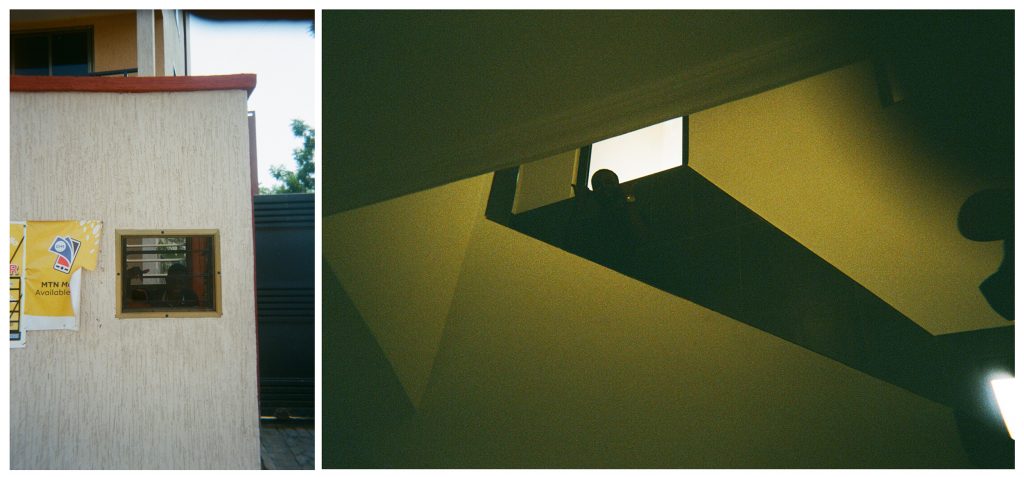
Having the opportunity to shoot editorial and fashion photography is relatively new in Ghana, Prince tells me, particularly in terms of young photographers being approached by publications to shoot on a freelance basis. He also shared the fact that it’s still hard to make a full-time career out of practicing photography in Ghana – unless you’re a wedding or event photographer.
Our conversation ended with us encouraging each other on our uncertain journeys as young creatives aspiring to leave a lasting impact and envisioning a better future.
A special mention and thank you to Bonita, Shace and Felicia for their patience and willingness to help me bring this project to life, and the photographers involved, for their help in editing this piece.
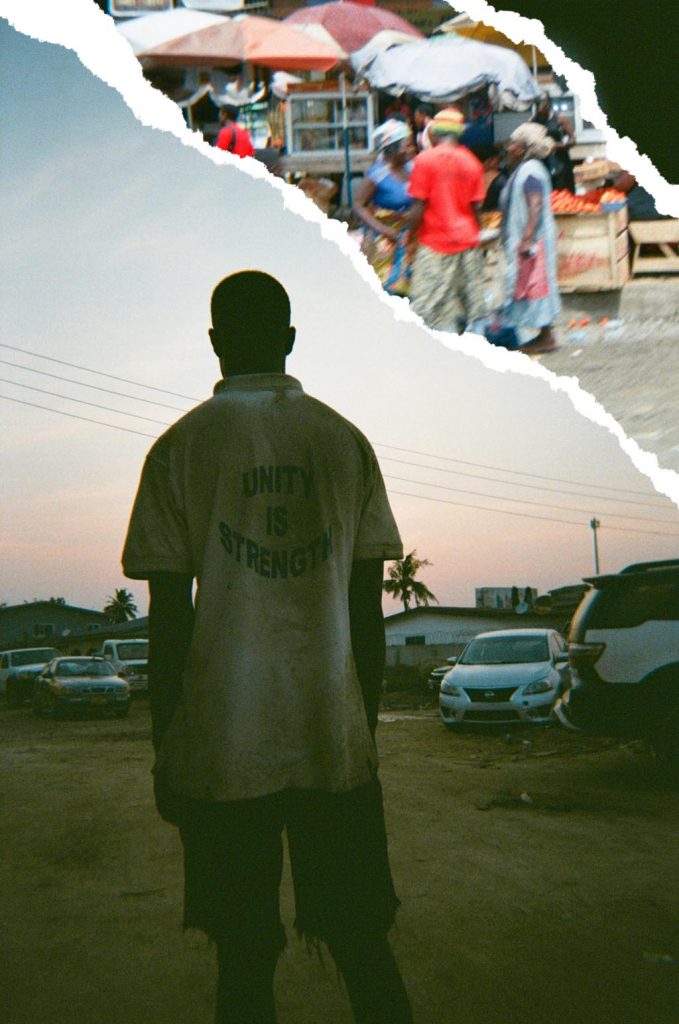
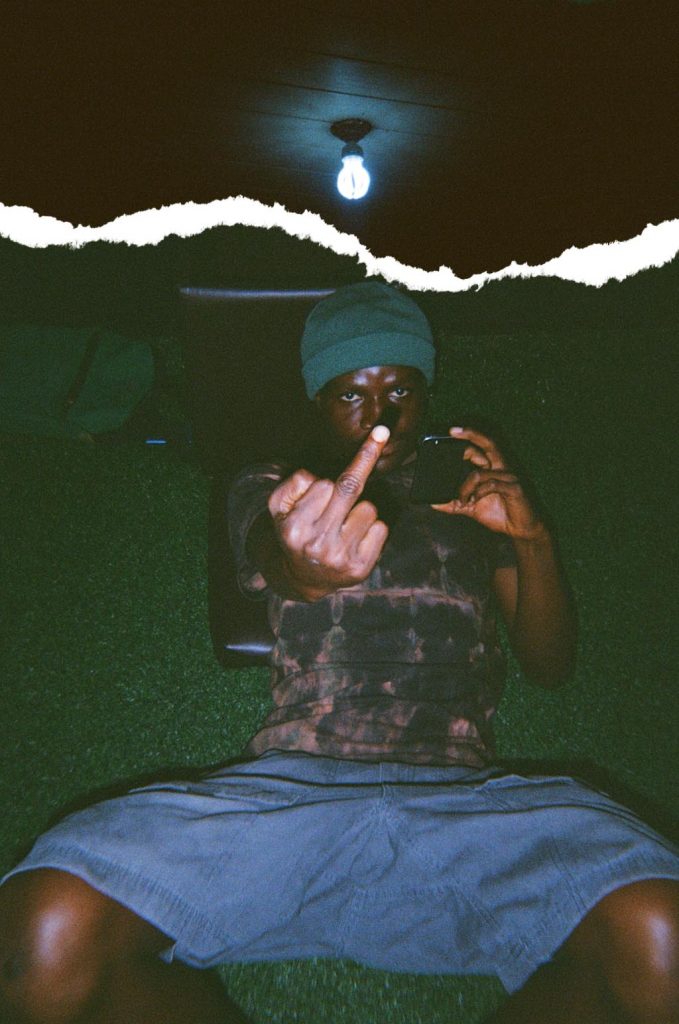
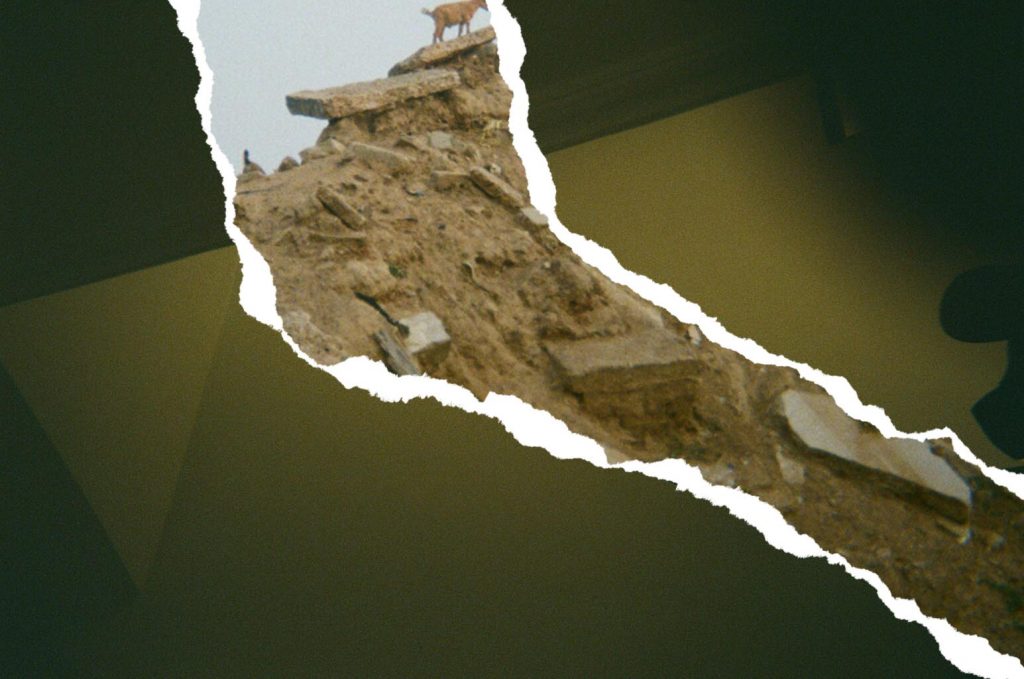
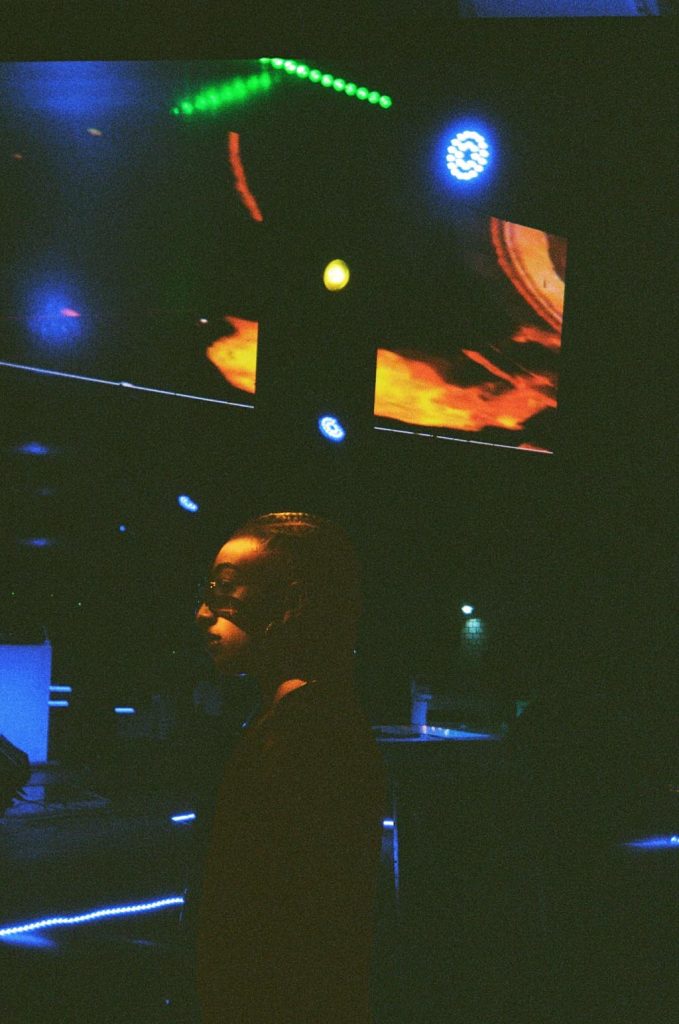
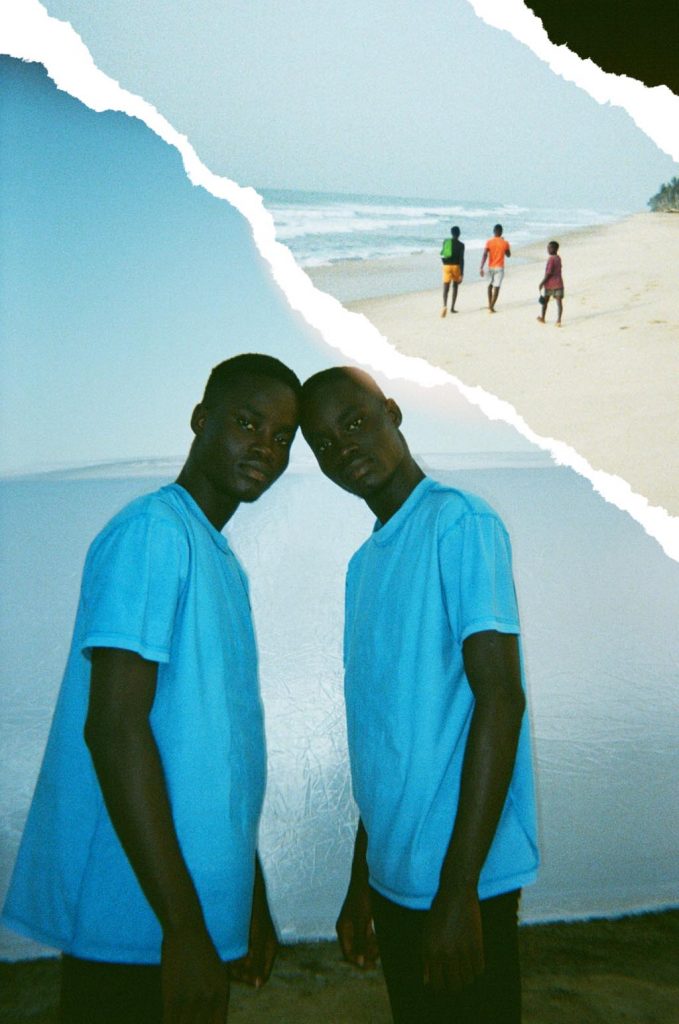
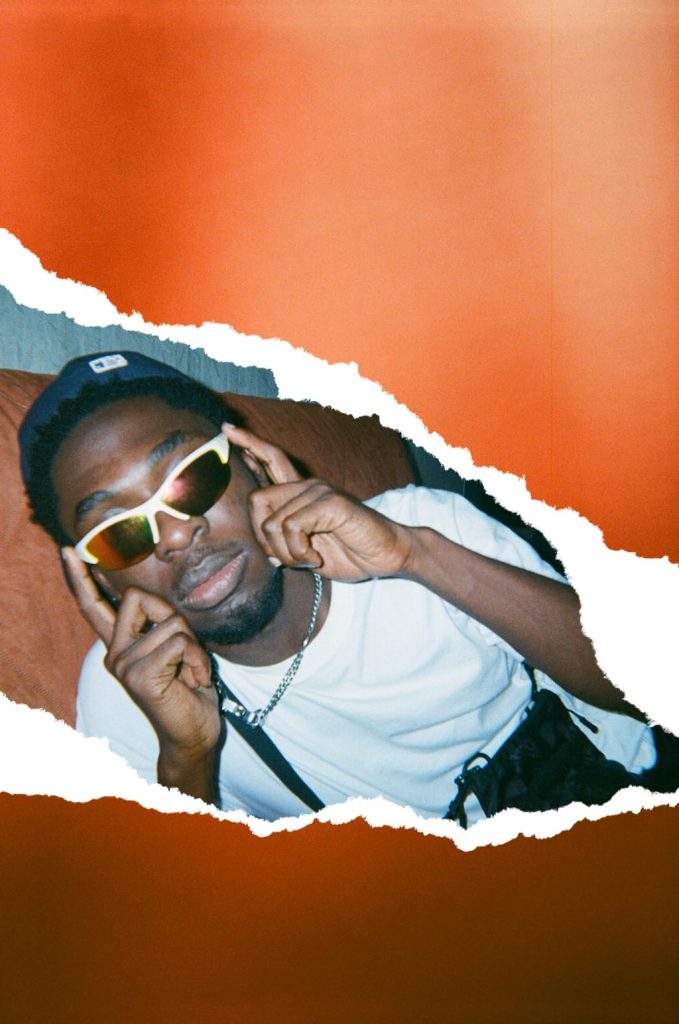
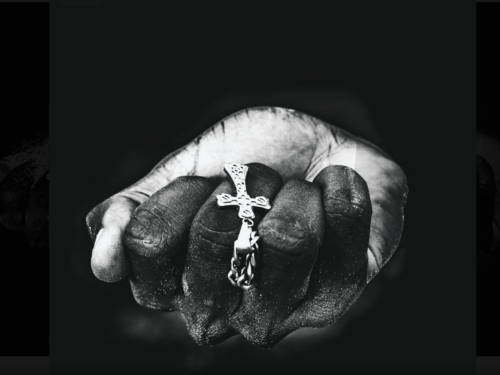
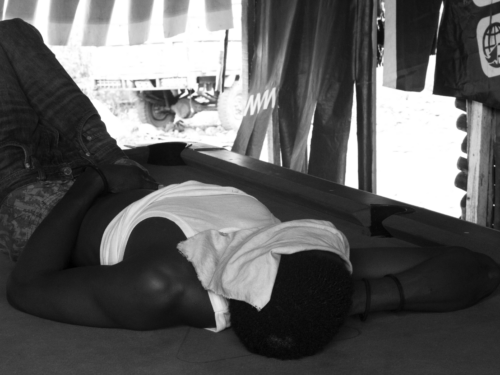
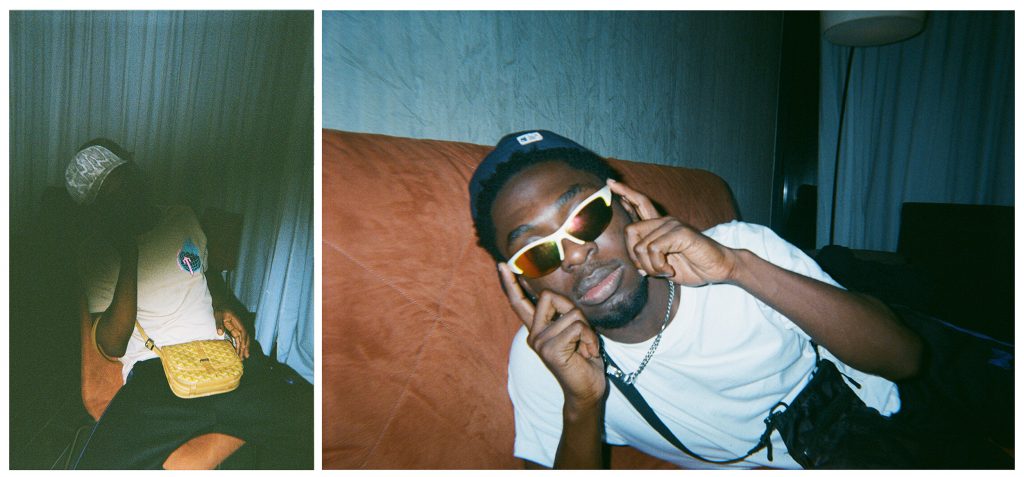
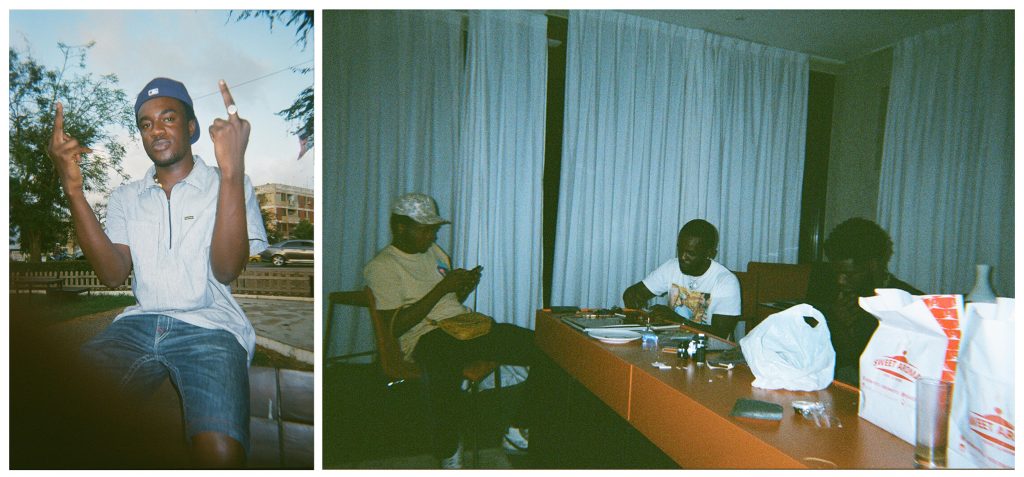
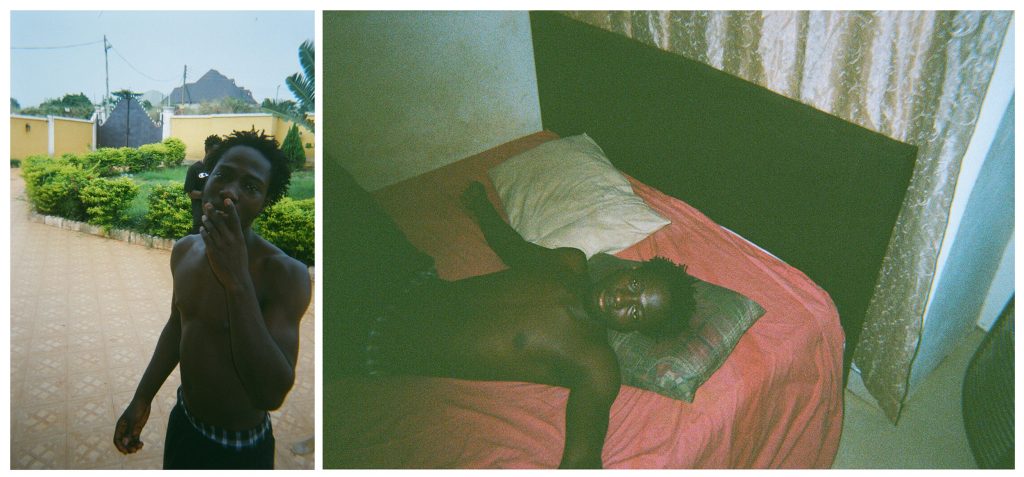
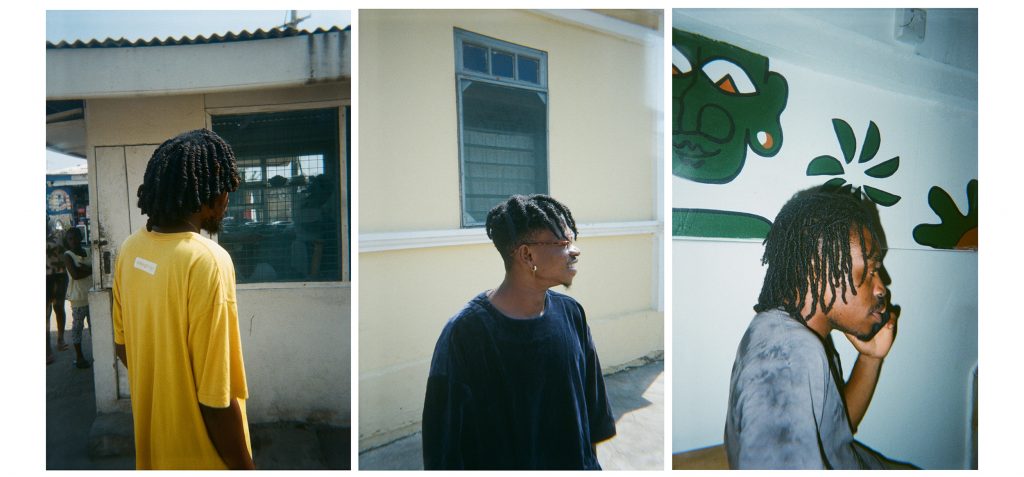
Terna Jogo will be posting the images the photographers took on the project’s Instagram page @filmfrontier. She has also created collages of their images (with their permission) to make this a collaborative effort. Below is a selection from her photomontage series…