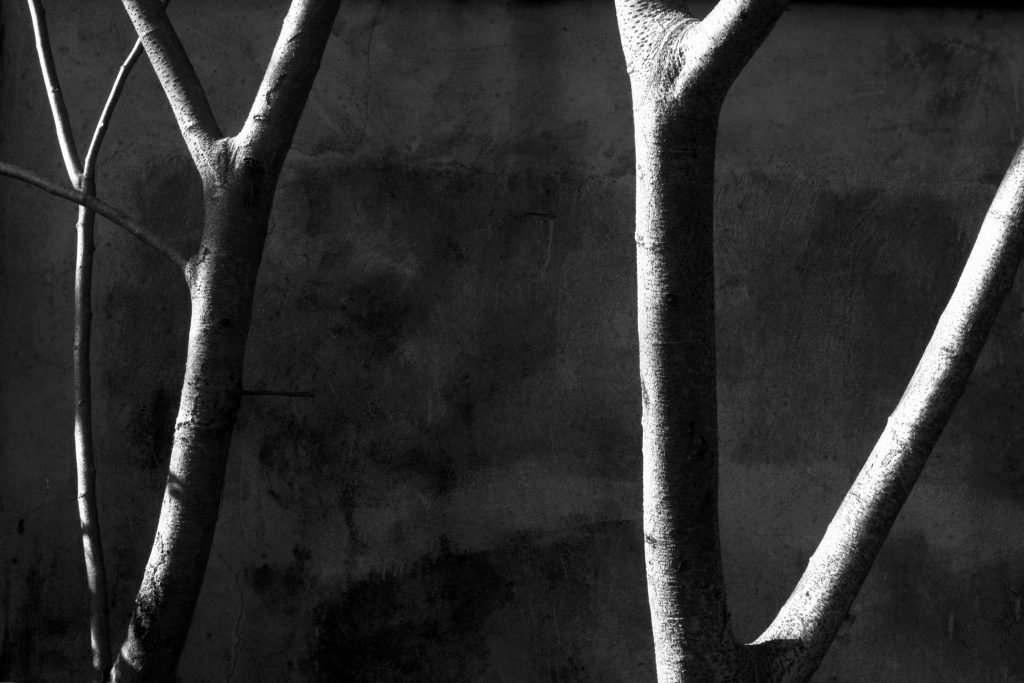
As I write this, the sun is slowly emerging from dense morning clouds. Time is stretching and so are the shadows. Shadows — products of light and dark, models of what’s possible, receipts of in betweenness, of projection, of the tangible becoming intangible, of the intangible layered atop the tangible. But, can shadows rightly be called intangible? What’s for sure is they can touch you, offering a cool respite from the heat. What’s for sure is moshood, Accra-based writer and photographer, has been touched by the shadows, gently consoled and enthused by their quiet presence during a desolate period in his life.
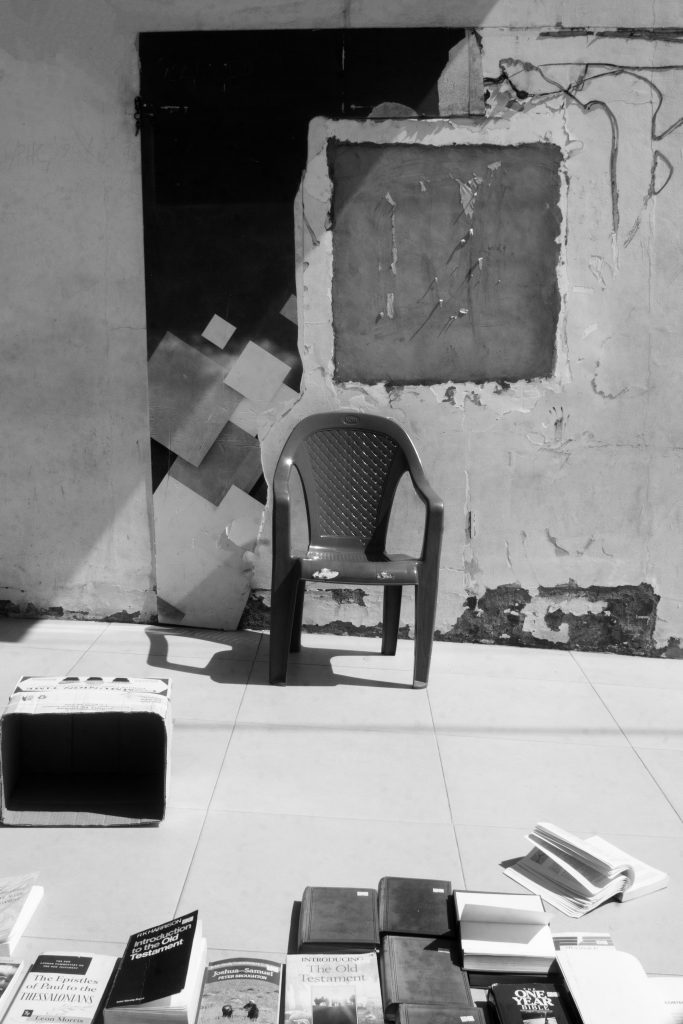
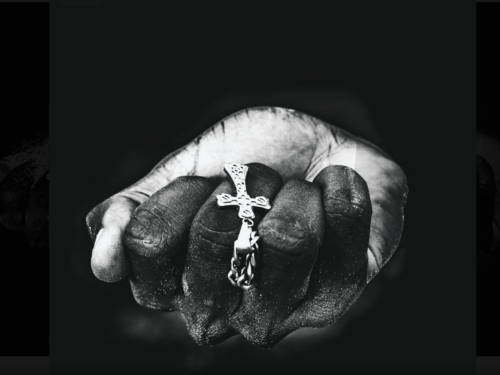
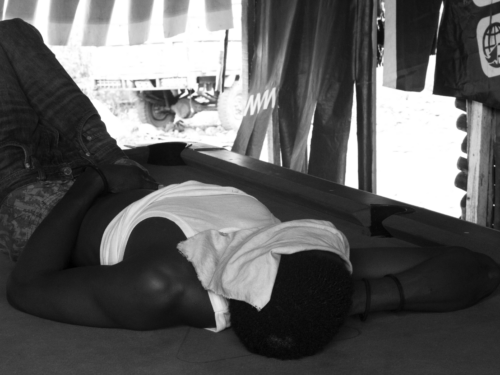
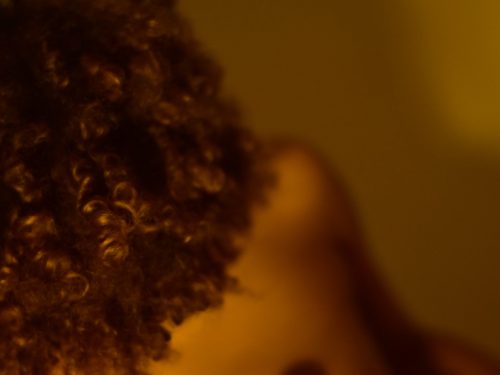
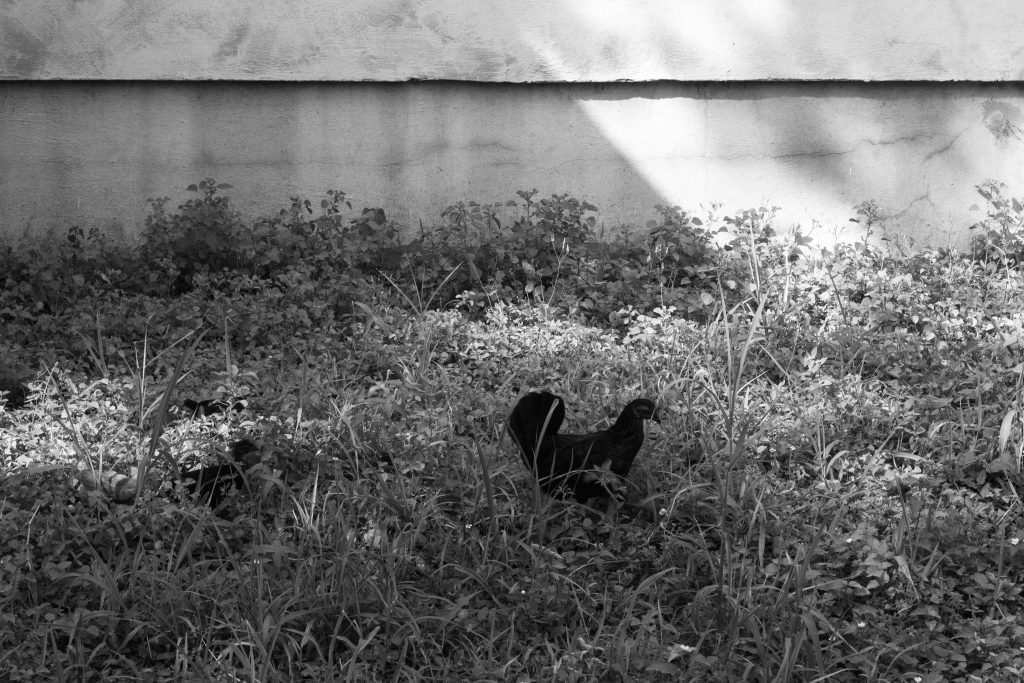
In his multimedia project entitled .slow., moshood explores the different meanings of “slow” through photography, writing, sound, and in person activations. Shadows are prominent in this work, and like a shadow, this work takes many shapes. The first part of the project explores the word “slow” as it is understood in Ghanaian pidgin, essentially meaning “unfortunate,” a sentiment which moshood feels accurately describes his 2021. The second part explores the word “slow” as it relates to pacing. Throughout the project, moshood engages with the question “can one story be the shadow of another,” and for me, each part of .slow. breathes into the next, like a shadow atop a shadow, highlighting interconnection, lineage, and relationship, across time, space, and medium.
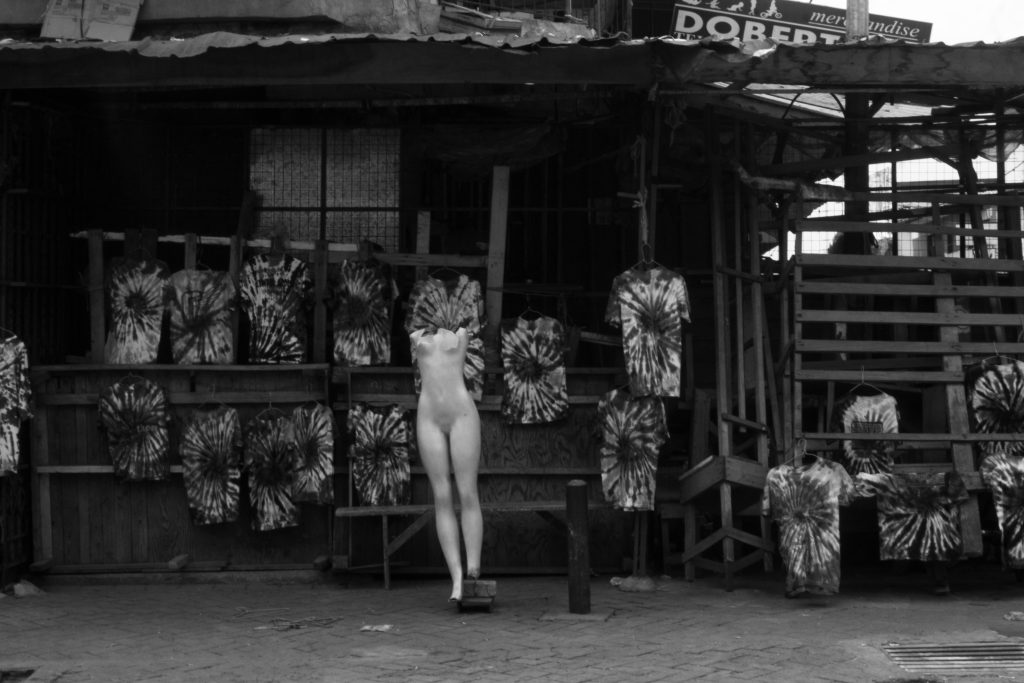
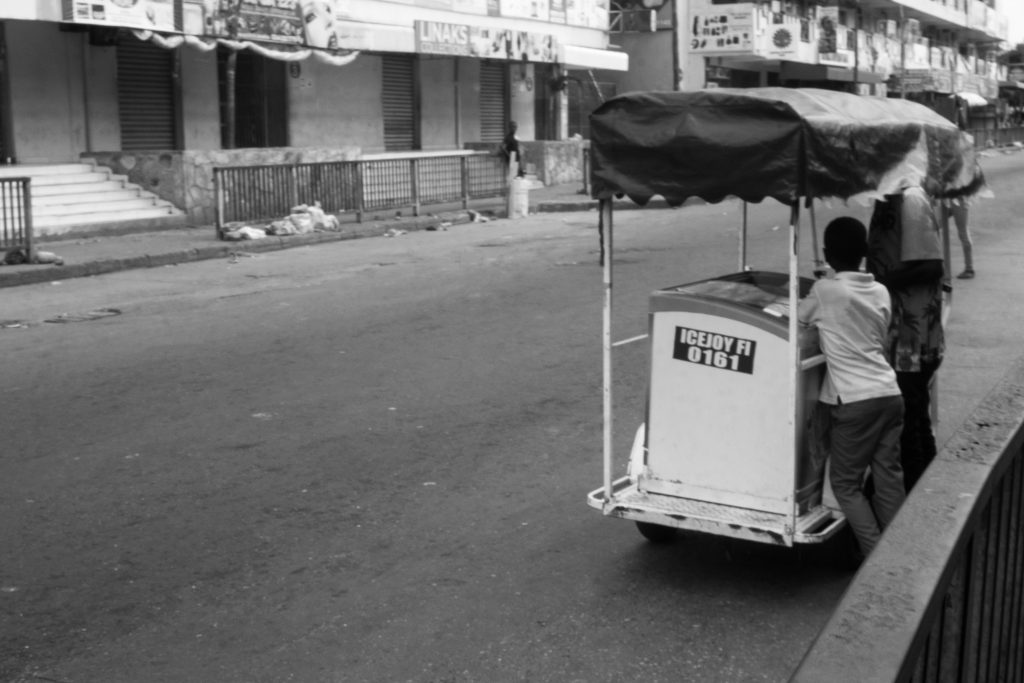
This work feels both vast and intimate. moshood takes us to his house, then to Accra’s Makola Market through images that depict what feels more like a whisper than the bustling marketplace Makola is popularly known to be. He shows us the shadows of colonialism reflected in the state sanctioned destruction of cannabis farms in Ghana’s Volta Region. Here, moshood focuses not on the economic oversights, but on the spiritual and ethical repercussions, writing, consider what it means to the rasta – that this herb, so crucial to her spiritual practice, is criminalised? what are the implications of such, in an apparently secular, democratic state?” We walk with moshood on Borla Beach, where he re-meets a man who becomes apologetic after mentioning that he hasn’t eaten all day. moshood writes, i am offended, not by his indirect request for chop money, but that we have to live like this. and really, how much can i, an underemployed young man, living in ghana, give him what would be enough for a significant while?
To me, this work is about dignity, about flow as much as it is about resistance, about light as it is about darkness — forces that are not good or bad but are in deep relationship to each other. This work comforts me, tells me that even when I can’t find love, love can find me; empowers me, illuminating an abundance of both passive and active forms of resistance; and slows me down, guiding me to deeper breaths, inspiring me to build deeper relationships to that which surrounds me. I am grateful to moshood for the gift of .slow..
The conversation
moshood and I had a slow conversation about .slow. spread over multiple weeks via WhatsApp texts and voice notes. The following conversation has been edited for clarity.
Natachi: Through engaging with the prominence of shadows in your work, I feel a sense of fluid borders and various ways of being. While considering fluidity and the possibility of no distinct beginnings, I would love to know more about the conception of this project. When did it feel born? When did it feel named?
moshood: one of the songs i’ve been listening to a lot right now is Black Thought’s Conception. at the end of each of the song’s two verses, he raps: no conception’s immaculate, man. we can never be able to tell the exact second that conception occurs, so, all i can tell you about the conception of this project is that i became preoccupied with the idea of slowness and quietness not later than the top of 2021. i wondered how i could explore slowness in things that i created. one of the ways that i arrived at this, was to switch from photographing in colour to black and white. this was influenced by photographs that a friend, Sel Kofiga, shared on his poetic photo book page on Instagram. i felt a consistent feeling of calm emanate from the photographs whenever i visited the page. it could be a very busy scene in the frame, but that feeling of calm and quiet was there. i wondered how he achieved that; wondered if his photographing in monochrome had anything to do with it.
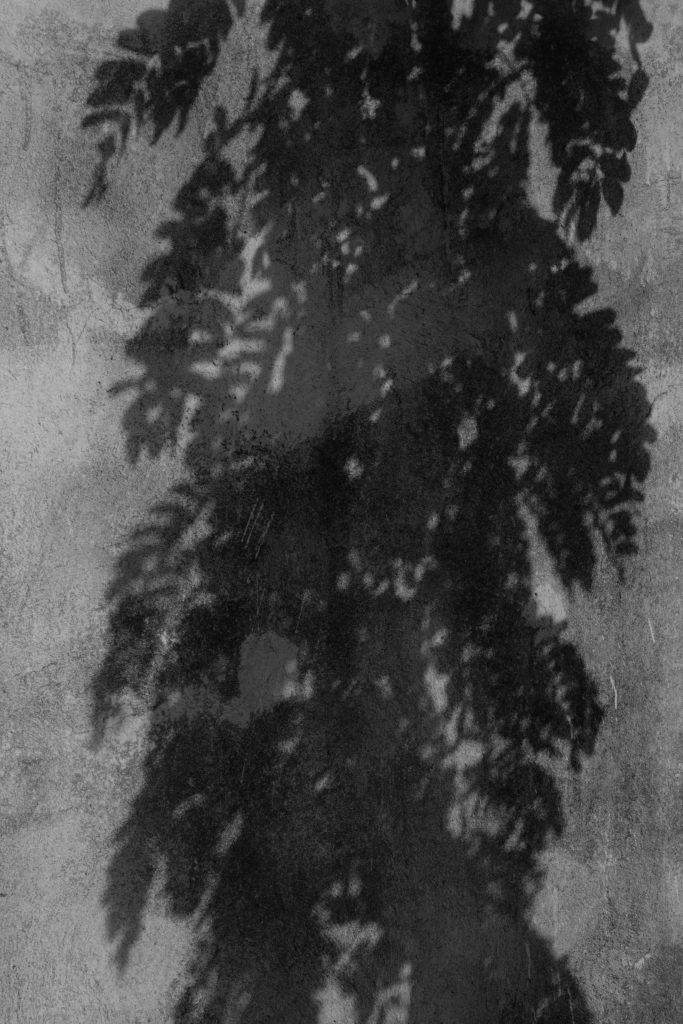
in this period of time, i’d inadvertently taken a significant amount of photographs that featured prominent shadows. i thought to not take that development for granted. the name .slow. came fully formed to me in the very early days of october 2021 – perfect in its simple mononymity, in its ability to easily accommodate the different meanings of slow that are relevant to the project. it was such a sweet gift from somewhere. i rushed to twitter to share two of the aforementioned photographs under the caption “.slow, 2021.” i think i did that as a way of establishing that: “yes, this is an endeavour i’m going to be embarking on.” i’d say that was when the project was born.
Natachi: How did the birth of this project feel?
moshood: wonderful in the most literal sense of the word. it was an experience of wonder, as in near-miraculous; but also in the conventional sense of the word, it felt so gratifying, truly amazing.
Natachi: .slow. is a project with different access points, including public activations, a zine, a music mix. Can you expand on how you hope for people to access the work?
moshood: i’ll answer this by going back to a preview event i held for .slow., where i showed the photographs, played some music and did some readings in between. just before my presentation started, i’d requested three things of the audience: their attention, their patience, and their quiet. those three things are, in my estimation, if not requisite to optimally experiencing the work, very compatible to the spirit of it. with these things requested and with the presentation done under the circumstances produced by them, i got some fabulous responses at the end.
one person said that they’d been transported into an idyllic realm; that they’d never seen makola in such a state; that they were traveling outside of accra the next day, and it was the first time that they were going to be leaving the city without holding anxiety in their body. another person later went on to send me photographs of shadows they’d taken and told me that they’d even written a shadow poem. another person told me that although they thought the whole presentation was dope, they felt the ways i’d photographed the shadows were rather boring. to be honest, it all felt so satisfying to hear. i guess my only hope is that, where possible, people see what the work brings to them, where it takes them to, what it relieves them of, what it inspires them to do. i have a personal agenda to prompt a reconsideration of largely imperial cultural relations to shadows and slowness. it is one of the major things about this whole endeavour for me: the reconsideration of various conceptions of the shadow.

now, an individual who’s familiar with the makola market and its temperament on monday through saturday will know that engaging with the work under the three aforementioned circumstances is next to impossible. the pasting of selected photos at the exact spots the images were taken is less about making the work accessible, than it is about me being curious in what sentiments could be brought forth by displaying photos of a slow makola at the exact spots on a typically bustling day. on the accessibility front, i’m going to be making posters of these select images to distribute amongst residents, buyers and sellers in makola.
on the variedness of access points, i’d just say that it is a convergence of my interests slash mediums of practice. i love and am deeply influenced by music. i used to be a rap artiste; now, i’m a writer and a fledgling photographer. it’s been opportune and gratifying to be able to bring all of these interests together in this way.
Natachi: You explain that the mix you are developing as a part of .slow. will structurally mirror a shadow. Do the other parts of .slow., such as the in-person activations and zine, engage with the structure of a shadow? If so, how?
moshood: there is an aspect of the shadow, either in fact, speculation, imitation or contemplation, in every aspect of the project — i’m making sure of that. i’d like to leave it with the listener to figure and decide on that claim after they spend time with the mix. with the textual aspect of the work, one question i’ve been carrying with me for nearly as long as i’ve been working on this project is can one story be the shadow of another? i think some answers are beginning to emerge for me. again, i leave it to the reader to figure out how i try to answer this question, and further, to answer the question in their own way if they are moved to.
[can one story be the shadow of another?]
Natachi: Part one of .slow. explores the meaning of slow in Ghanaian pidgin –roughly translating to “unfortunate” –a word you strongly attribute to your 2021. Can you speak more to your experience of the unfortunate in 2021?
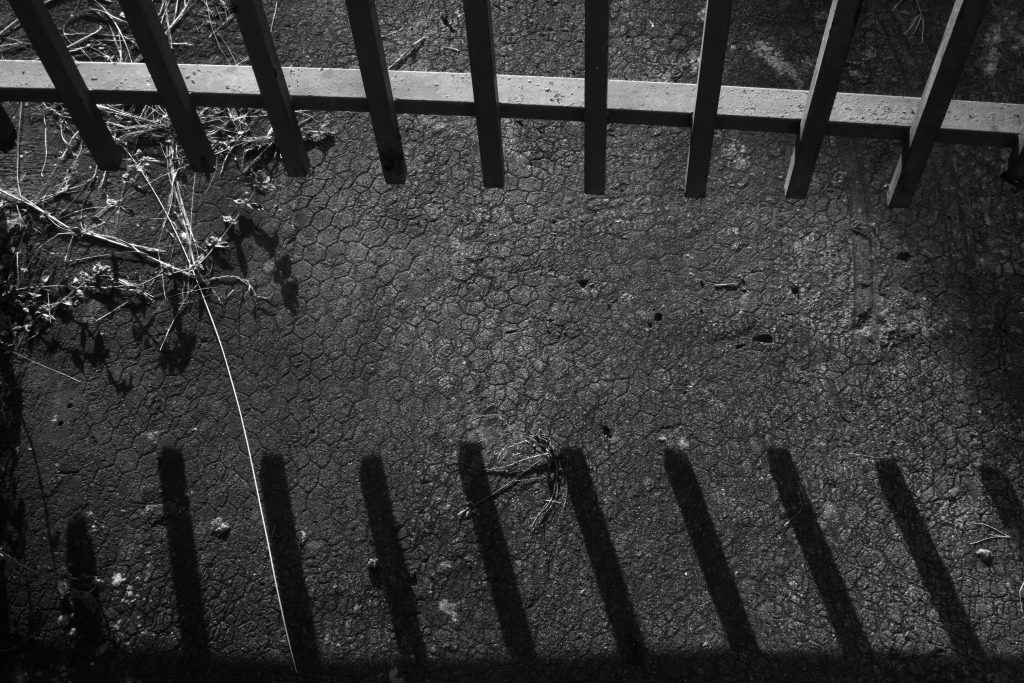
moshood: for a great chunk of 2021, I was virtually unemployed; underemployed at best. the nature of a significant portion of my work demands that I attend and write about events. with the cessation of such events due to COVID-19, a good source of my income was disrupted and my savings got depleted. this had a deplorable effect on my mental health, and i’d been in a miserable mental space for much of the year. further, a number of things had happened with writing that made me discontinue writing freelance, so there i was, not doing any writing, which was my number one means of earning an income, and still having to cater for myself and pay bills. additionally, against the dire financial consequences that the situation birthed, every other thing seemed just to go wrong. there were also really dope experiences in between —really, really dope ones, but the wahala just generally managed to outweigh the sweetness.
Natachi: The effects of .slow. via your preview event and in your own life make me think of attention and slowness as a sort of medicine, bearing transformative qualities. .slow. in part seems to document a transformation of loneliness, a transformation of misfortune. How did working on this project inform or transform the misfortune you experienced in 2021?
moshood: it is very true what you picked up on about the transformation of unfortunate circumstances into something essentially wholesome. for instance, i have gotten an entire project out of this, a project which has never ceased to feel deeply satisfying. i’ve, in turn, gotten awarded a grant for the project from the African Culture Fund, which is also a fantastic development.
really, they were desolate times, until the shadows came along. i did several things in that period that were indicative of the state of mild depression i was in. i moved from my room and king sized bed into the guest room that has only a small mattress and no furniture. i texted a friend, who at the time i talked with most, to say that i was going to be m.i.a for a while. i’d gotten so overwhelmed, that human interaction felt way too taxing. i spent so much time holed up in my room. right after i’d become aware of the shadows and decided to pay them attention, an ethos of slowness came to possess me. i started to wake up in the mornings with a new enthusiasm to leave the room, to go be with the shadows and photograph them. the shadows became companions in a near-desolate time. i’d lived in that house for about a year and a half and hadn’t seen the shadows in the ways that i began to see them in that period. it was as if they’d come to me, or been sent to me, with the message: since human interaction is way too much for you right now, and you need to step out of the room, here are some bearable companions, very fitting for this period.
Natachi: You mentioning that human interaction felt too overwhelming at that time makes me think about a passage in .slow. where you describe photographing people as an honour that [you’re] still very much anxious to accept. Can you speak more to the anxiety you experience when photographing people?
moshood: i’m still very much a beginner as far as photography is concerned, and photographing people is a big deal, something that has to be done with extra responsibility, especially as african/black people are concerned. these are people who have historically been disrespected and violated with the camera.
there’s also, to a much lesser extent, the issue of body dysmorphia, engendered largely by absurd beauty ideals, which makes many people feel not-so-confident about their faces and other body parts. i take on this anxiety as a learner photographer, worried about people unwittingly transferring some of their unease onto me.
Natachi: Can you speak more to the honor you feel when photographing people?
moshood: in terms of honour, i think how could it not be a great deal for a whole human being to say “yes you can photograph me,” or “hey, come photograph me.” those statements are pointing to their trust in your ability and their trust that you’re not going to do anything illspirited with their images. one has to realize the kind of society in which they live, and someone might call this superstition but they’re people’s beliefs anyway, and one such belief is that a person can harm you when they have access to your image. this is something that has been reinforced beyond traditional cultural beliefs, in popular culture as well. there are countless nollywood scenes where someone has taken another person’s photograph to do them harm. there’s also the historic relationship between photographers and the people they photograph, where the people that have been photographed may not even see the images or worse, may not see even one percent of the thousand or five thousand dollars that a photographer sold the image for. when a person, in the face of these things, still asks that you photograph them, how could it not be an honour!

Natachi: How much context do you want your audiences to have as they engage with .slow.? How do you consider yourself as a guide as it comes to .slow. and to curating spaces that seek to honor attention and slowness?
moshood: in terms of providing context as a precursor to engaging with the work, there’s only so much that i am willing to give away. beyond my context, there are multitudes of stories that the photographs, words, and sounds can bring forth. i’m very interested in those other stories that the work brings forth for others. for instance here’s part of a response email that i received:
I didn’t think [your project] was going to include the description and so before I [read] it, I noticed that most of what I had seen already had shadows in them. the first thought I had was of the expression ‘shadow of oneself.’ I think that initially it was merely the word bringing up the expression, but after a while I thought about how a series of unfortunate events [and] life being slow can quickly turn one into a shadow of themselves.
i think there was a certain desolation she read onto the image, but to me, these are not necessarily meant to be images of desolation, even if made in a period of such emotion. at least one other person has read them so. in english, shadows are conceived as ominous phenomena. with such a dominant idea around shadows, when you’re presented with this number of photographs of shadows and with such a brief as mine, it’s tempting to read the photos as images of desolation. in my context, although not explicitly stated in the description, these images in part one of .slow. are an homage to these shadows that came through for me.

these readings of desolation still offer valuable things to me. positioning my context as the only one would be an interference, so i don’t reject any additional interpretations. i will, however, address misquotations or misreadings of my own context.
Natachi: I feel like your work illustrates that the unfortunate doesn’t always have harsh boundaries between the beautiful, the nourishing, the loving. Life can be desolate and the shadows can still come through for you. Loving relationships with shadows, with dogs, with people, with the sky still emerge, coexisting along the tragic, the painful, the oppressive, the alive.
I’m thinking of part two of your project where slowness is explored through the concept of pacing. That type of slow can very well be read as unfortunate within a capitalist context: slow as antithesis to production.
moshood: of course! of course! of course! elsewhere i’ve written on how capitalist work cultures steal the act of dreaming from us. there’s also all of the verbiage about the “ability to work in a high pressure environment.”
here’s a passage from Ayi Kwei Armah’s The Beautyful Ones Are Not Yet Born that came to mind:
“He was one day moving cargo, pushing it with his giant hands across some deck when somewhere some fresh young Englishman sitting at some machine loaded too much tension into even the steel ropes on board and one of them snapped. The free rope whipped with all that power through the air and just cut Kofi Billy’s right leg away beneath the knee. He said for a long while he felt nothing at all, and then he felt everything a man could ever feel, and the world vanished for him. The Englishman said he deserved it: he had been playing at his work. Had he moved faster, he would not have been there when the steel rope snapped.”
i see so much capable of being unpacked here, but i just wanted to highlight that the workplace mentioned here can be described as a high pressure environment, literally (“loaded too much tension into even the steel ropes”) and otherwise, and then what did the englishman say? had Kofi Billy been faster…
Natachi: Can you tell me more about your editing process for photography? What conversations did you find yourself having with the images and how did that inform your editing approaches?
moshood: i have yet to develop an editing practice that i could speak on in any substantive way. as far as photography, i’m still very much a fledgling so there’s hope that as i learn and grow, a more peculiar and informed editing language shall come along. so far, it feels like i’ve been working with some intangible register that lets me know okay, i think we can go with this one. also, it was just very opportune that this project, being my first of this nature, asked to be presented in monochrome, perhaps arguably less complicated – though not necessarily easier – to edit as compared with a whole body of work photographed in colour.
Natachi: I’m thinking of the contrast between the circumstances in part one and part two. Your description for part two reads:
just around this time, i got called on to read for a short story prize – where i was required to read 300 stories within three weeks, each story having a 5000-word limit; which meant that i was going to have to work fast, after a year of slowness, partly due to doing no work.
Natachi: How did the sudden change of obligations and pace change your relationship to time and to the project?
moshood: at that time, the typical structure of my days helped because it was not regimented where I had to be at a certain place at a certain time. I also put a cap on the number of stories I read in a single stretch, which was 5, and I wouldn’t go beyond that without stepping away from my computer for a significant while to make sure that my mind was judging the stories as clear-headedly as possible. it was also to avoid getting overwhelmed and to make sure that this gig did not heckle me out of the general pacing of my days.
another thing that contributed to there not being any spectacular change to my general pacing was the fact that this thing that i had to do was something that i really loved. i was getting nourishment and even healing from reading those stories from all over the world, some of which were directly relatable to my situation. there was a wonderful transmutation that numbed any kind of rapturous change in my rhythm or spirit or relation that was brought on by this otherwise jarring situation of doing so much work within such limited time, particularly in that context of slowness and prior inactivity.
were it to be another thing that I didn’t really dig like that, the change would’ve been more pronounced, even beyond palpable, and I bet that the effect would have been way too unsavory. actually, I would have said no to the gig in the first place, as much as I needed the money, and it wouldn’t have been the first time.