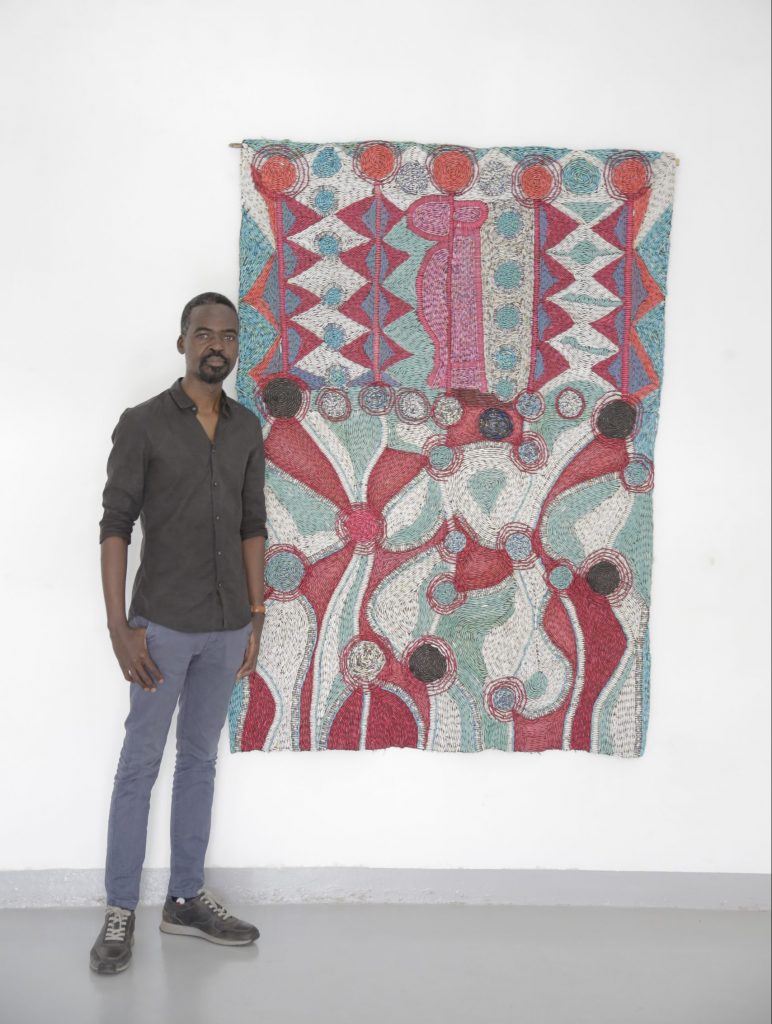
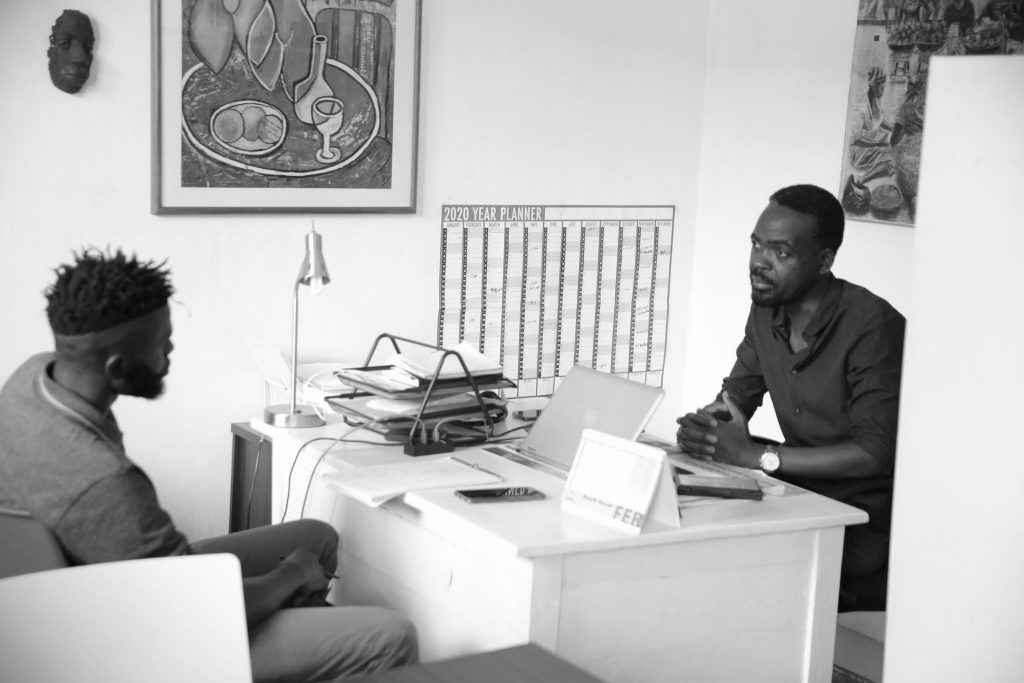
It’s a Saturday afternoon and after a few texts on Whatsapp, I managed to set up a meeting with one of the major forces on the Kampala art scene. Daudi Karungi is the director of the Kampala Art Biennale, Kampala Arts Trust, and co-founder of that organisation’s online START journal. He is also the owner of Afriart Gallery, which was recently listed among the top ten arts venues in Africa by South Africa’s online cultural platform – Briefly. The gallery represents the top contemporary Ugandan artists as well as the hot emerging ones – showcasing them in two arts spaces within the city. However, as a gallerist, Karungi has spent the last five years looking beyond Uganda. He has taken his artists to international art fairs including 1:54, Investec Cape Town Art Fair, FNB Art Joburg, Art X Lagos, ARCO Lisboa and AKAA Art and Design Fair,Paris. Clad in a black overcoat when we met, he ushered me into his studio where we sat down to talk, while framed by the works of Ugandan artists Ocom Adonias, Geoffrey Mukasa and Joseph Ntensibe.
Matt Kayem: You started out as an artist yourself. Why did you change to a career in art dealing and managing?
Daudi Karungi: Because no one was doing it the way I wanted it to be done. Also, you can’t be an artist as well as an art dealer or gallerist. The two are full-time jobs and the life of an artist is a 24-hour commitment. I’m more of a gallerist than an art dealer, but I’m an artist first, meaning anything can happen. Maybe I will pull out the brush sometime in the future, I don’t know. Most importantly, I have a job to do. I wanted the Ugandan artist and a Ugandan gallery known in the world.
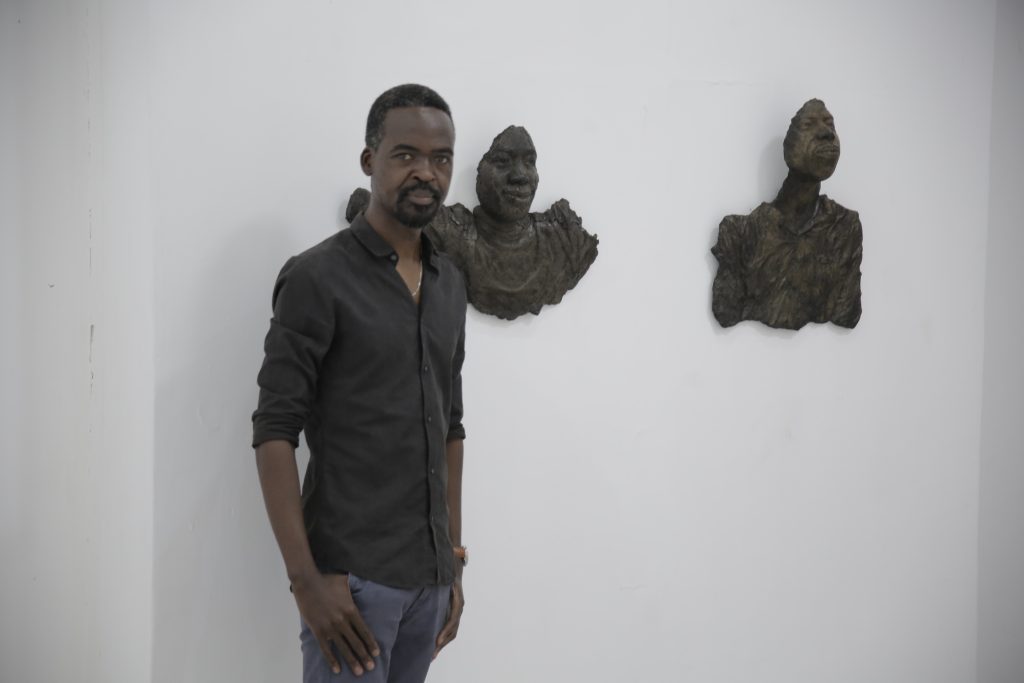
MK: You have built a successful gallery business in Kampala, a place where many would not expect to see a gallery on international standards. What do you think has made you tick as a gallerist that other up and coming white spaces should learn from you?
DK: I’m driven by passion. I do acknowledge the amount of success we’ve got and any art gallery starting out should do so with love and care, whether they are in New York or Kampala. Kampala is an example of what’s possible when you look at the continent of Africa and how much talent there is. There are great artists in Jinja, Gulu or Rakai that we will never know about, unless there are great catalysts like galleries that are passionate about what we do. The world needs to see what’s great about us. We need to continue showing it.
MK: How much do you think the African art market has evolved in the last ten years?
DK: The art market globally moves in waves. It started in Europe, then it was in America, then China, Latin America, India and obviously the last part of the wave came to Africa, which is now. Ten years ago, there was not enough limelight on art from Africa or art made by black artists and today I would say that we are at the centre of it all. It is important to be a gallerist because as Africans, we can tell our own stories without having somebody else do that. You can imagine places like Makerere art school used to be the centre of art, but if today you ask me to tell you about art from the 1930s in Uganda, you probably get nothing because we didn’t write those stories. Somebody else wrote them and could choose whether to share the information, burn it, or keep it alive.
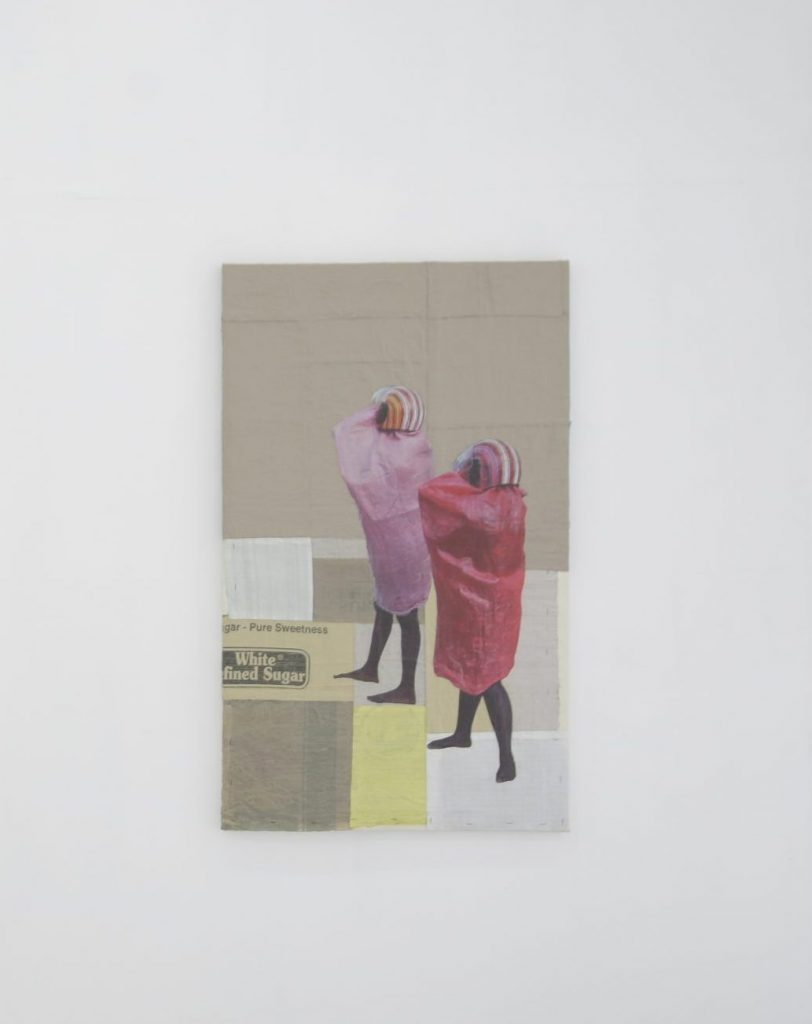
MK: We are still in corona-virus times and though the lockdown here in Uganda has been relaxed, it was hard for many businesses to stay afloat. How did you manage to sell a commodity like art during the tough times?
DK: I mean, there is money. When there is no money somewhere, there is money somewhere else and we are lucky that we sell to people with money who buy art. At any given time, art can sell unless there is no money in the world. But then also, we know that art is the epitome of taste, of possession. When you own a painting, you have something of a kind. People felt it was safer to invest their money during that economic crisis of covid. I think globally, art was not highly affected by the pandemic, but of course, when you are a blue-chip gallery selling million-dollar art works, you might have been affected because of the value of what you own. I felt like there was a lot of tension [during covid], so interest shifted to us. I feel that the world paused for Africa. Everybody stopped and 2020 was a “black” year, in relation to the Black Lives Matter movement.
MK: The Kampala Biennale, unlike other biennales, runs on a different model of the master-apprentice interaction. Why did you choose to have it this way and how long are you looking to maintain this ideal?
DK: The Biennale is supposed to be a support and educational platform; something that changes or makes things better. Some Biennales, like Venice in May or Dakar in June, will show the best artists, and then there is Art Basel, which is the biggest fair. The artists you saw in Venice, you will find at Basel. That model is the one that celebrates the great artists of the day. When it comes to Kampala, we can’t necessarily create a biennale that celebrates the best, but that shouldn’t be the point. It should be to build the eco-system. This means having artists, curators, gallerists, collectors, writers and so on. When you look at a scenario where young artists have no mentors, that’s where you see them doing what another person next to them does. In the end, we get this so called ‘tourist’ art everywhere. So, the master-apprentice program was needed because we wanted young artists to have guidance. Imagine if you were a young artist today and you are working with Tracey Rose, who was once a young artist, she could help you avoid the mistakes she made. Our model is to bring together the older or experienced generation and the younger generation to share and bond. We’ll keep it as long as there is a need. Maybe in the future, the Kampala Biennale will be celebrated like Venice.
MK: The Kampala Biennale opened in February this year as a virtual event. What were some of the positives and challenges of having such a huge international exhibition online?
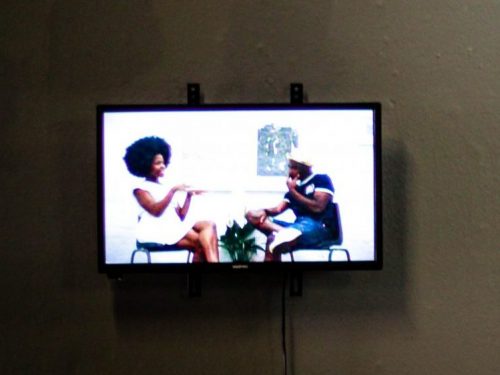
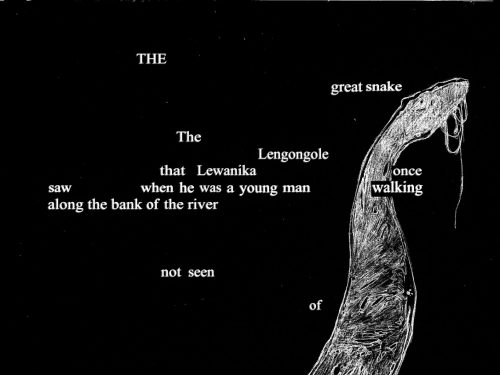
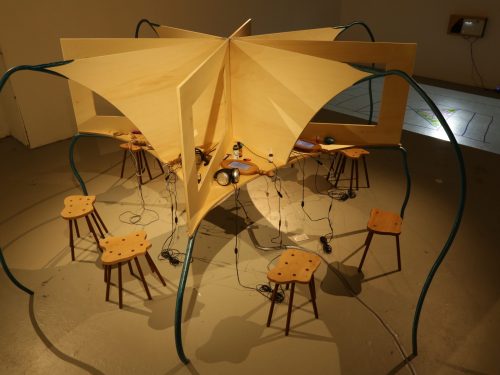
DK: There were many challenges but the biggest was to imagine the unimaginable. I remember when we decided to go online, the first question was how? Then we had to find who was going to do it. When you think 3D animation, you think of Europe and America, but we found a team based here that someone put together to work. The artists didn’t know how to do it; same for the designers and ourselves as heads of the project. Our next option was to close and postpone like everyone else, but we decided to go ahead. We created something … an experience. It’s not an exhibition, it’s not a movie, it’s like a thriller. Whatever it is, we are yet to give it a name.
Photo credits: Trevor Mukholi and Eric Mukalazi.