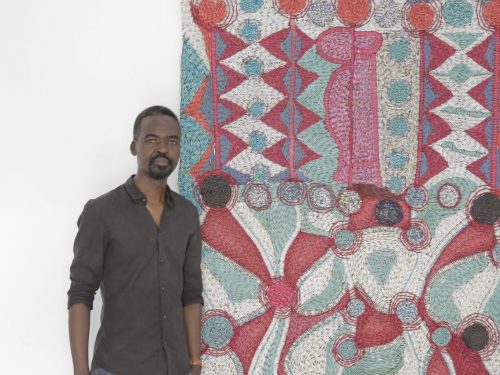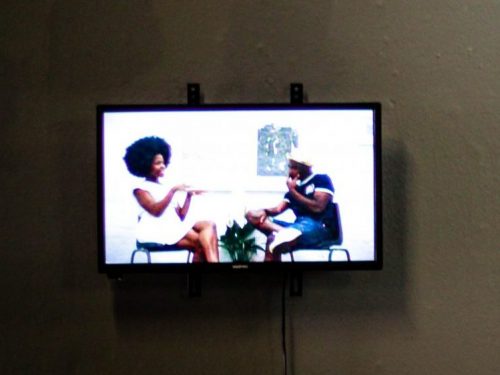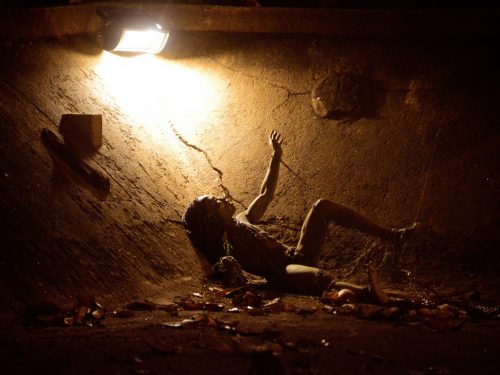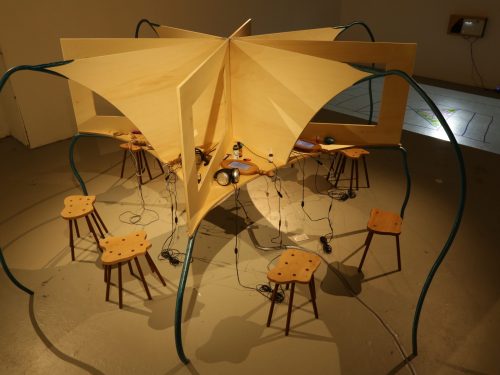
During a recent artist’s visits to Lusaka, Zambia, I managed to get to banker and artist Isaac Kalambata’s space in the western part of the capital city. Kalambata fascinated me as he has forged a creative career alongside counting people’s money. He has also made an unexpected transition from illustrating comic books to the world of contemporary art. Kalambata is also a 2019 Ngoma award winner for the best two-dimensional artwork titled “Nyami Nyami”. In March 2020, artist and curator Ebba Moi along with visual artist Helen Eriksen from Tenthaus, the Oslo-based contemporary art collective and art-run space, were invited by Zambian artist Anawana Haloba and Livingstone Office for Contemporary Arts (LoCA) to hold the second version of the workshop, Tuning In – Other Ways of Seeing. Isaac was part of this workshop which was almost stopped due to Corona. In 2016, he showed at the Livingstone Art gallery and last year, he exhibited as part of Voice In Colour, a group exhibition at the Henry Tayali Gallery under the Visual Arts Council. Based on what I saw on my first visit to his studio space and home, I tracked Kalambata down to discuss more about his practice.
When you were younger, did you always see yourself becoming an artist?
From a very young age, I enjoyed drawing and sketching. That’s what I did for play time. When I came across comic books I was fascinated by the different characters, so I started to draw my favourite ones with great details. As I grew older and conscience about my identity, it dawned on me that there was little to no ethnic African representations in these publications and this led me to creating my own comic characters and storylines in my illustrations. My drawings become popular among my classmates and by the time I was in college I managed to publish a comic book that was included in a local online magazine called +260. Word got out about my artistic skills and that got me a lot of commissions. I got a regular paid gig doing story boards for an advertising agency, which made me realise that I could create a career out of my talent. By the time I was studying librarianship at the University of Zambia (UNZA) I begun to read into mythology and indigenous African stories, imagining a future based on this knowledge. Using the mythical characters I encountered in folklore formed the basis for my painting work.
You’re an artist and also a banker. How do you juggle the two professions?
By profession I am a librarian but unfortunately, we do not have enough active libraries and I found myself in the banking sector when the opportunity presented itself – much to the delight of my parents who were both long serving banking professionals. I don’t look at art as “work” because it’s my life, it’s how I exist, so the day job is more of something I have to do, but I like it because it balances me out. A typical day would see me in the bank from 8am to 5pm and when I get home, I’m in my studio till late; sometimes early morning. I must admit I have met interesting people in the bank that have sparked certain thoughts or shared interesting information that I otherwise would not have easily come across.
I also found your transition from a comic book illustrator to a painter and contemporary artist interesting. I’ve met a number of artists who are interested in the comic book and animation worlds and they always stick there. What prompted you to start exhibiting and attending art workshops?
Working with different media is inevitable for me and I think for most artists. I am a curious person and that allows me to be experimental with my creations, but also it’s understanding that how an idea is actualized should not be limited. An idea would interact differently in an installation, painting or drawing, so I try to find the best medium that will convey my ideas the best. I consider learning to be an ongoing process, so workshops are good for that and it’s interesting to interact with other artists.
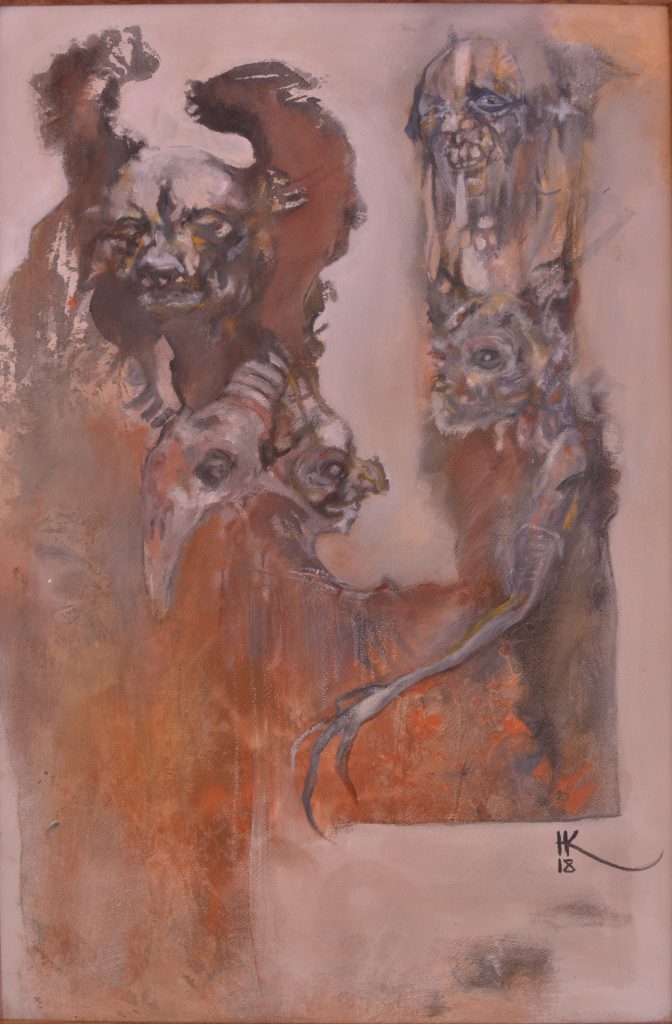
Totems and Transmutation 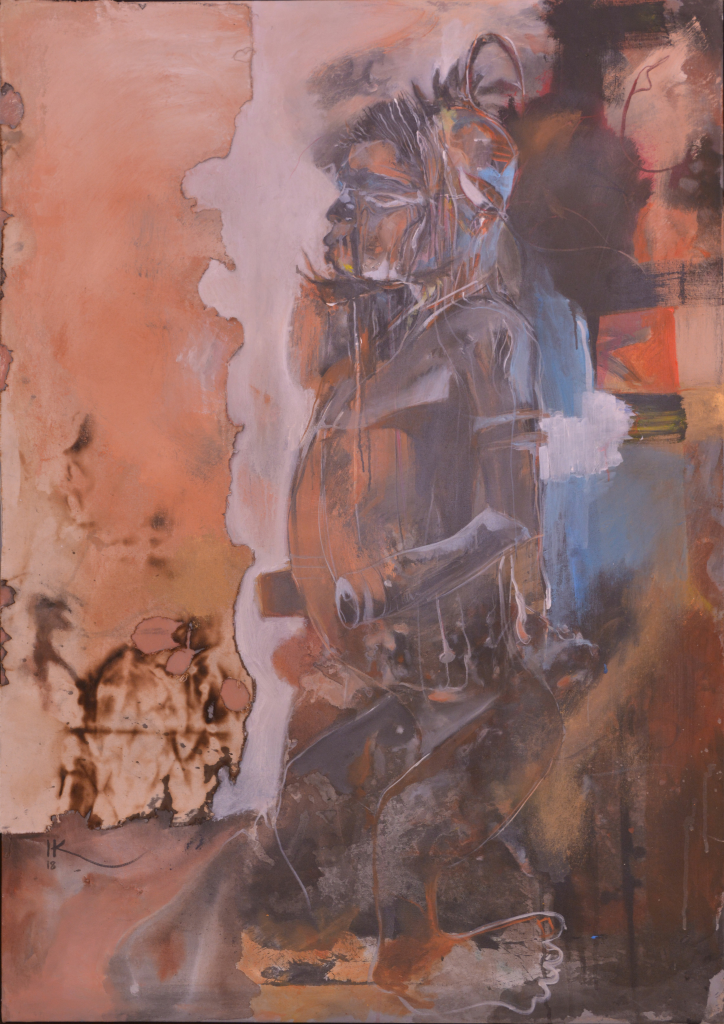
Kambuma Familliar-II
Your work addresses the distortion and misrepresentation of Africa’s past and traditions. How do you make links with science and what sort of misrepresentation of Africa is this fueled by?
When I began practicing as an artist I was very interested in African futurism, and most of my work was about depictions of an African utopia based on sciences of the continent. I wanted to project this Africa into the future, but the information I gathered in books and documented history did not match the stories told to me by my grandparents. The explanations of indigenous science and traditional practices are distorted and recorded in a way that fit the colonial agenda of the time. This bothered me and I knew that if I was going to project any kind of African utopia, I must start by correcting this record. The Unseen; Creatures of Myth and Legends exhibition was my first retaliation to this distorted narrative. Curated by researcher and writer Fadzai V. Muchemwa of Zimbabwe, I presented myths and legends from the indigenous perspective as told in stories and intentionally exhibited at the National Museum of Lusaka. I wanted as many people, especially my people, to interact with their story. In my follow up solo exhibition at Choma Museum, titled “Ba Ila:Re-orienting the indigenous mind,” I explored how different tribes used myths and traditional practices as a way to coexist with nature. It is through this exhibition and critically looking at some of the Ila tribe’s beliefs and customs that I realized that some of the world’s current problems could easily be solved if we just look to the past. Our forefathers were not clueless.
As an artist, I’ve been criticized for talking about Africa collectively, with others pointing out that the continent is vast with varied cultures. Have you faced such criticism? As a Zambian, why is it important for you to unite the continent in your work and thought?
Africa has many cultures, ethnicities and histories. My take is that these should not be put in one melting pot and dished out. All these add to a bigger picture and as a Zambian artist I add to this bigger narrative. One can easily see the links and connections of the different languages, histories and struggles, but ultimately, we should be learning and endorsing each other on the continent and beyond. My realities might be different from others and my goal as an artist is to present where I come from. Too often we consume other cultures and forget our own stories in this globalized world. My question is why stories that came as a colonial cultural package should supersede our stories and not the other way round. Why was it easy to down play indigenous knowledge systems with tags like “primitive” and manage to instill this idea in the local people? An example is how indigenous spirituality was converted to a point that Zambia, for example, identifies as a Christian nation.
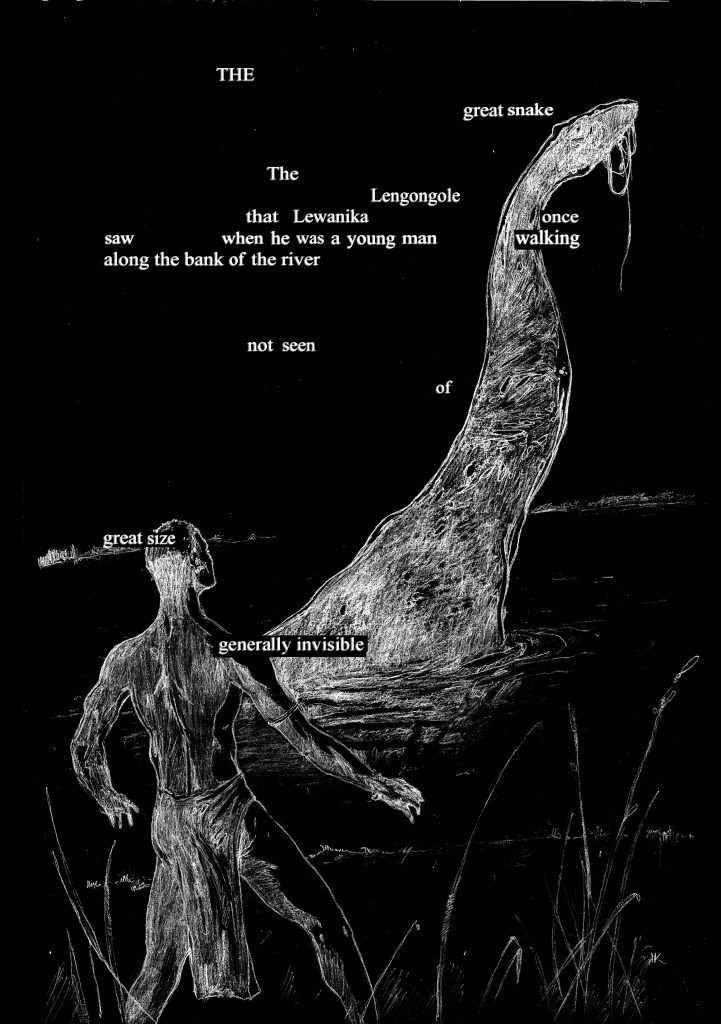
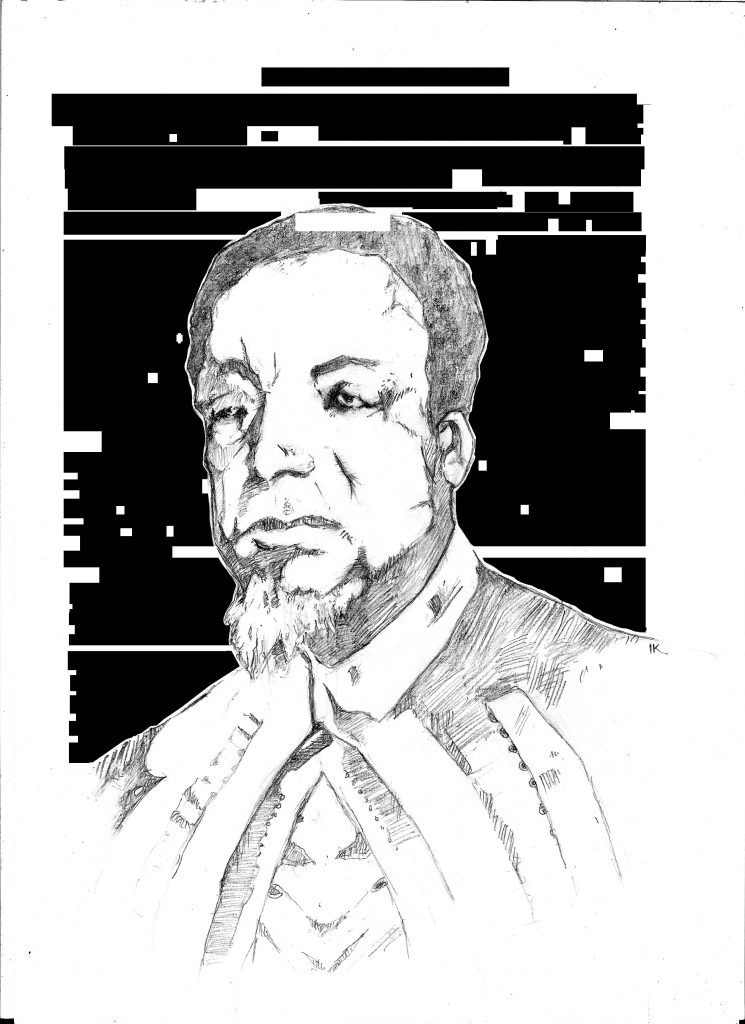
A more pressing issue, I feel, is how our history has been recorded. Do archives and literature represent these cultures and histories in a correct context? If not then how do we learn of each other as Africans? This is where I see the relevance of the artist. In my current work I am filling blank spaces in this colonial narrative and blacking out narratives that don’t match the indigenous [ones]. The blacking out is symbolic of erasure, the erasure that took place in recording this achieved information and the erasure that is necessary to change narratives.
Before the lockdown, you were part of an artists’ workshop. How was the experience and how important are such platforms to the Zambian art scene?
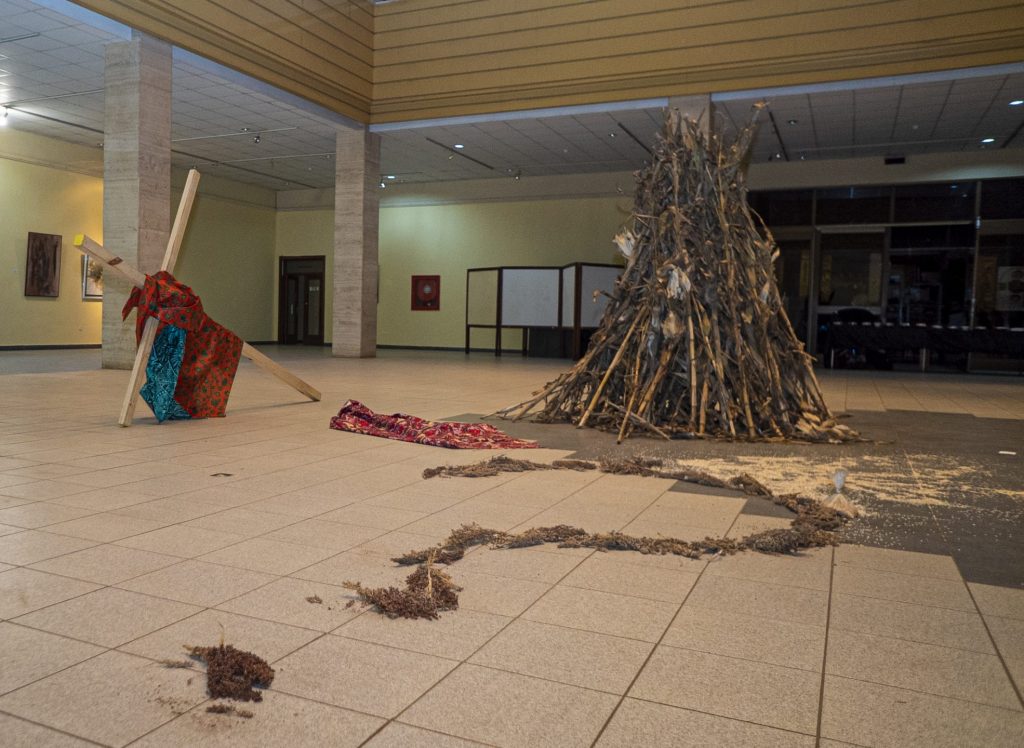
In March I participated in the second edition of the Livingstone office Contemporary Art workshop themed “Tuning in: others of seeing.” However due to the Covid 19 pandemic the residency, which was meant to run for three weeks, was cut short because the facilitators had to go back, or risk being shut out of their respective countries. Regardless, I learnt a lot from the physical interaction and when the workshop continued in virtual space. [It] exposed me to critical thinking, and in truth other ways of seeing which helped me develop the idea I’m currently exploring of blacking out text in my work. The experience was great. I think the interaction between curators, writers, videographers, poets and artists broadens perspective and challenges the status quo by kicking you out of your comfort zone. LoCA is a very important platform that should be commended and supported.
How are you holding on during these corona-virus times? Are you working on anything?
The Corona times have been extremely challenging as life as we know has changed and also changed a lot about what I deem important and relevant in life.
I’ve definitely had ideas that hatched in the midst of the pandemic that have influenced my direction as an artist and the results will be seen in my work going forward.
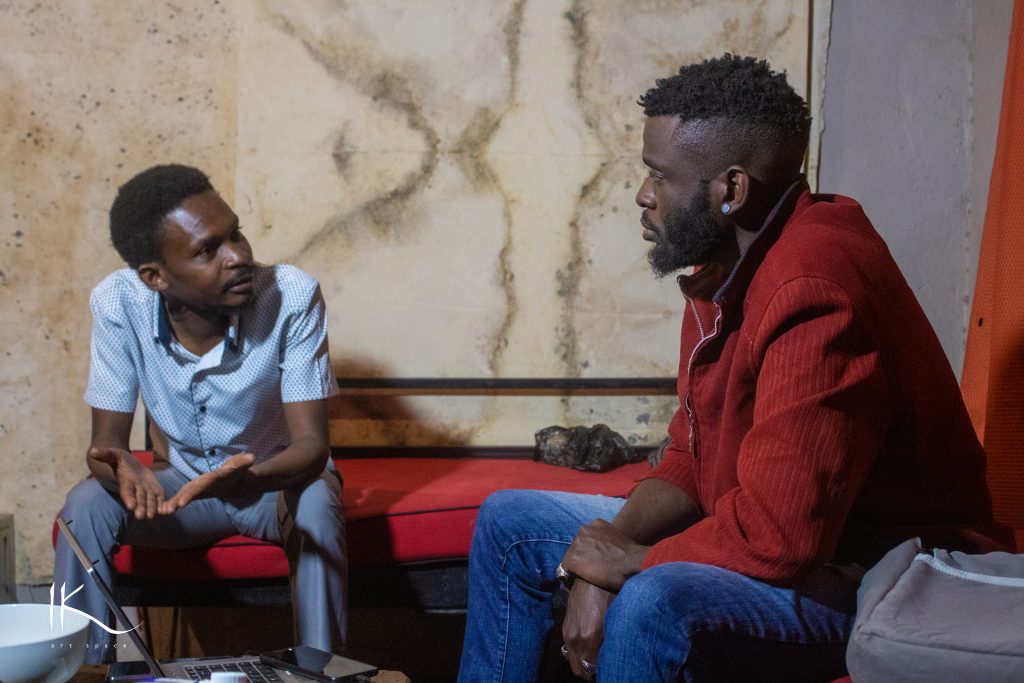
Images from Isaac Kalambata