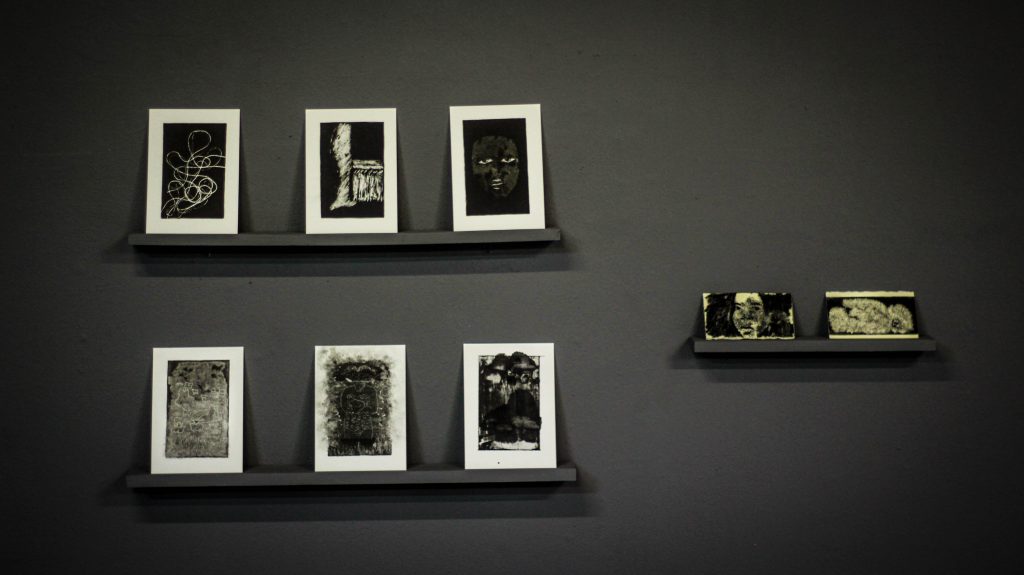
In a recent residency at Johannesburg’s Bag Factory studios, runner-up recipient of the annual Young Womxn Studio Bursary, Lebogang ‘Mogul’ Mabusela, invited local artists to collaborate with her on a printer and artist relationship.
Her Monotypebabe Curatorial Experience was – and is – a scheme whereby as a printmaker, she explores new dynamics for the studio model through a specific focus on small-scale monotypes. In the following conversation, Mabusela talks about her desire to express her creativity through collectivity, her passion for small ‘painterly details, and how her ideas have been crystallised.
Why the focus on monotype prints?
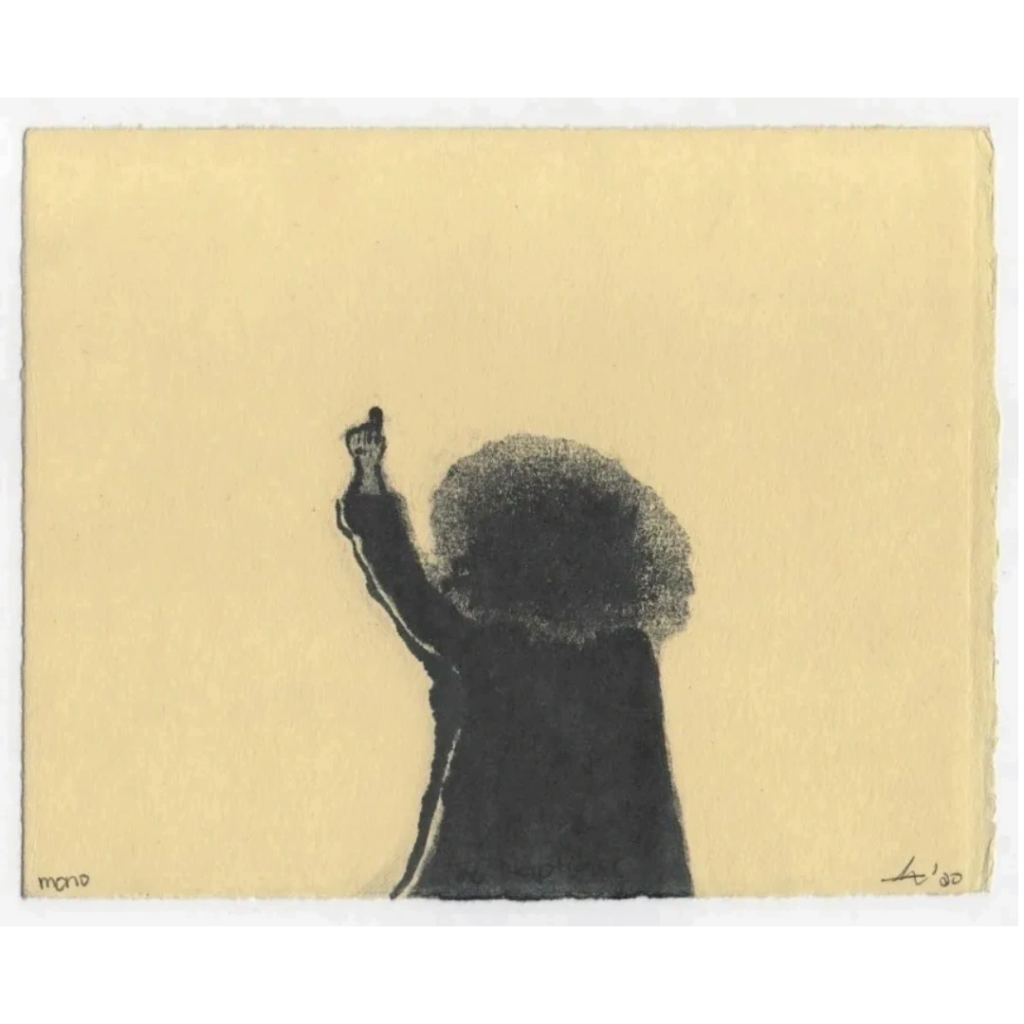
The magic of printmaking is the fact that it allows you to create multiple images. The history of printing maps for ships came about that way. Instead of drawing one map, continuously, someone would carve it, ink it and produce multiples. I find that the medium allows for more flexibility, especially after seeing what other artists have done with it, such the mark making and textures that they play with, as they approach it in a painterly way.

…And the name, Monotypebabe?
I like creating personal monikers and I didn’t want to call myself a printmaker. I just called myself a monotype babe. The ‘babe’ part is to assert my womanhood and femininity within printmaking because it is a very male dominated space. I want to have a name that represents what it is that I am interested in; my expertise. Babe also refers to me being a feminine identifying woman.
What’s the story behind the exhibition, Monotypes: A Monotypebabe Curatorial Experience?
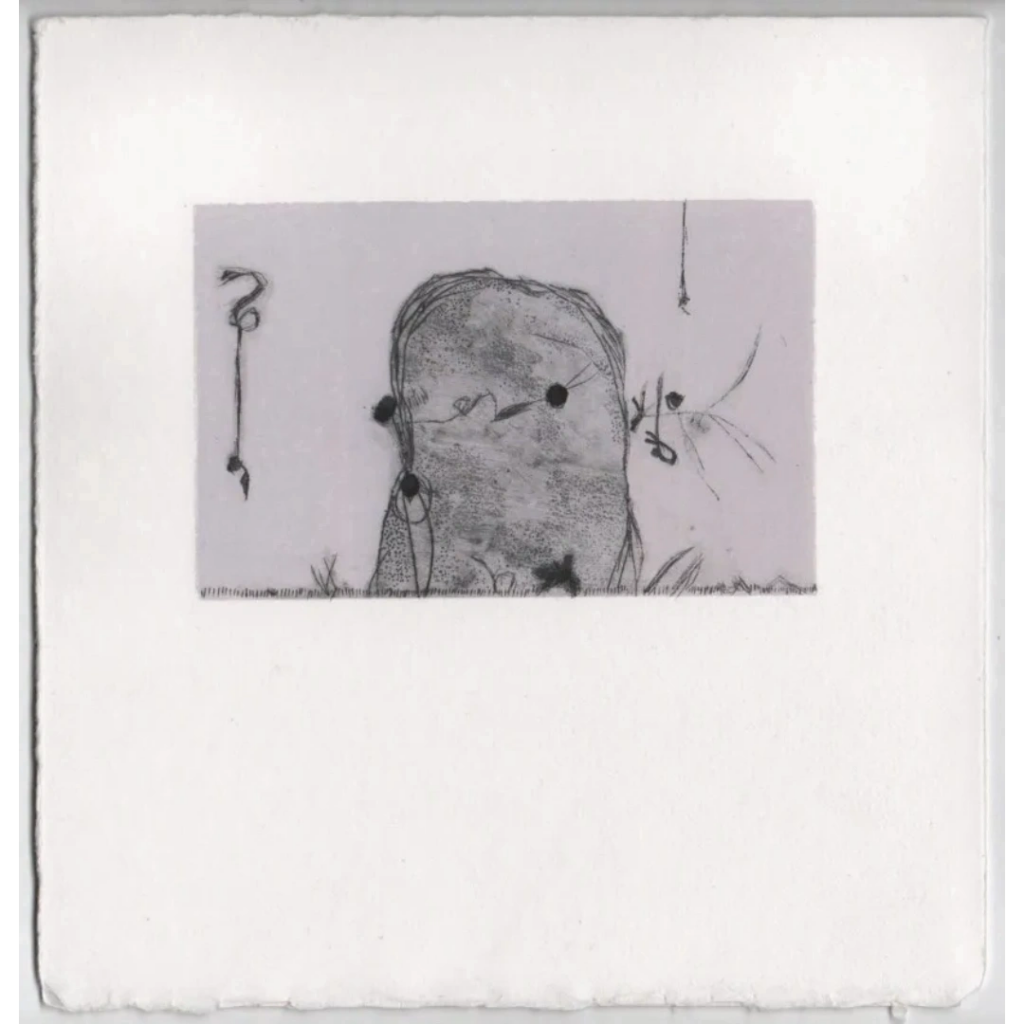
Last year during lockdown, I was looking for projects to undertake. I had a crowdfunding campaign so that I could buy a small press. I decided to get creative – investigating the large nature of prints and why they are mostly presented at that scale. There is this popular belief that artworks that are big are better and I really wanted to challenge that. With the press, I printed a few things for myself and they were well received. I was curious to see how other artists would respond to creating works at this scale, so I decided that I was going to do a project and invite other artists to collaborate.
Why position the exhibition as a ‘curatorial scheme’?
The Monotypes show was a culmination of all the collaborative work that I had done with a selection of artists during my three month residency at the Bag Factory Artist Studios. It wasn’t centred around a particular thematic or subject – beyond the scale and the medium. While I was working with artists there, I garnered a lot of interest from others at the Bag, who were curious to try monotype printing.
Can you talk more about the choice of scale in your work?
Making smaller artworks can be challenging and just as difficult as working big. Large artworks of course require your body and movement – you ache. Making smaller artworks can be strenuous on your eyes. Your hands and wrists will suffer, and your back is going to hurt. Besides the working of it and how the artwork comes out at the end, I feel as though it is a better way of collecting work and managing artworks logistically and for safekeeping. Large works take up space, and the printing and framing is expensive.
You seem to be specifically passionate about connectivity and collaboration.
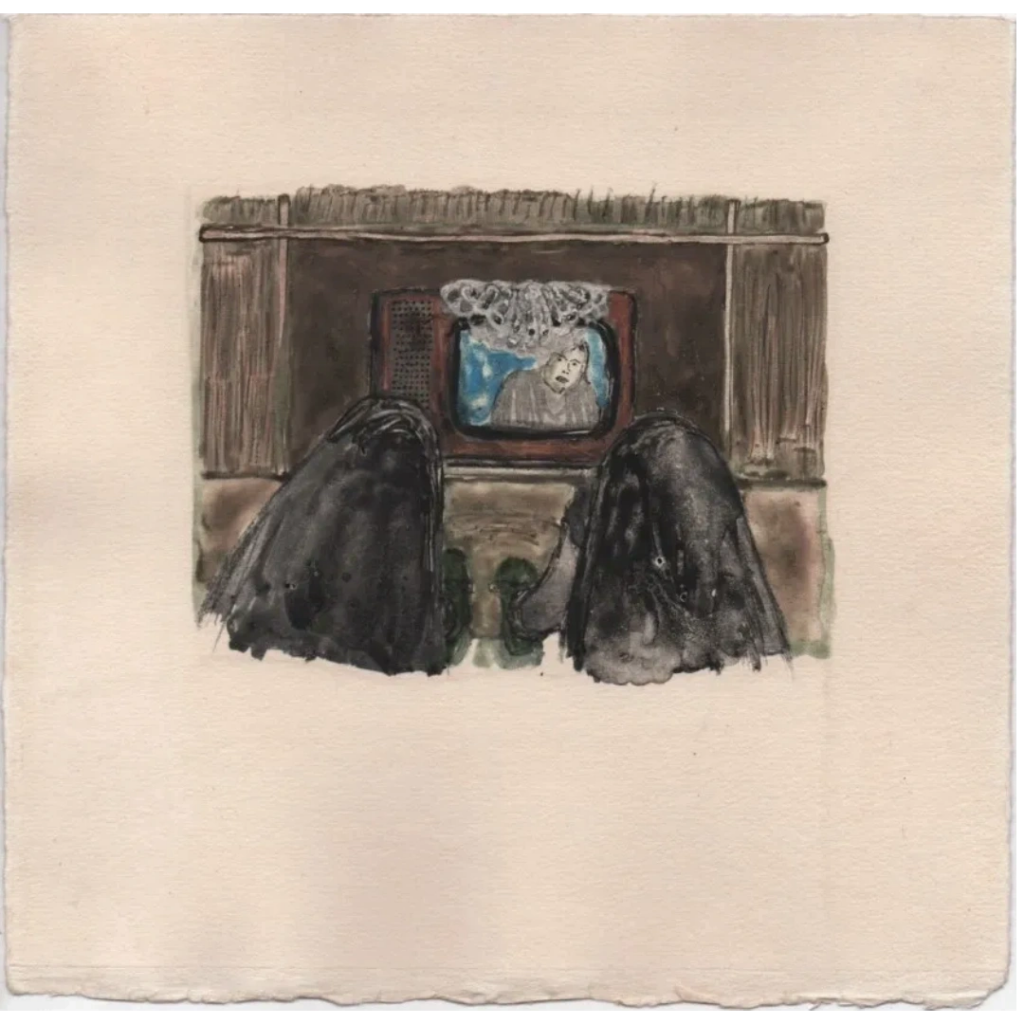
It is about how I get to curate my entire print portfolio. If I look at where I want to be in five years and how I want my publications, videos and archives to look, it becomes a more interesting form when presented collectively. I want to see the evolution of ideas and how people (artists) have grown.
Why have you taken on the role of mediator in this instance – despite being an artist in your own right?
With traditional printmaking studios or print shops , people can just come in and print with the printer or the master printer and then there is work. However, I want it to be a curatorial experience. When I am printing with someone it is not just so that artists can just have pieces that they want to show somewhere. I want to curate all the projects that I make, so that there’s a specific outcome to everything. Now that I have done this exhibition, I want to continue collaborating with other artists, through projects such as this one, and my monotype of the month project – where I select an artist every month to create a monotype with. Most printmaking studios don’t necessarily do projects in a curatorial or exhibition-making manner. They take more of a middleman approach by creating works for artist shows, or to sell.
Your printmaking studio is mobile and can exist anywhere. What was behind that decision?
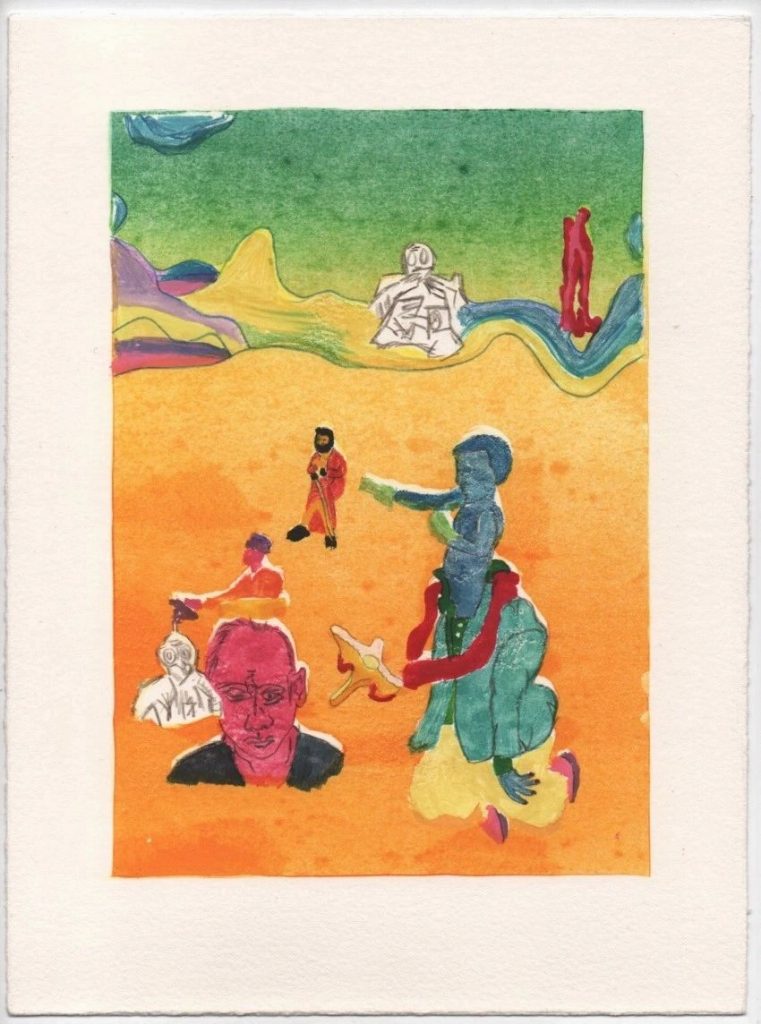
A simple style of being “ghetto” – in a good way. I don’t have all the resources for a studio so I need to be smart about how I approach printmaking. I try to make it as sophisticated as possible. This is another reason why I like working collectively. I want to be able to control that aspect – the “ghetto-ness” of it all.
And with this ongoing collectivism, what kinds of relationships are you trying to foster?
Working collectively vs creating a community of artists who are interested in being inventive and pushing the boundaries of this art form. Some of the artists want to explore printmaking as a medium, some want to see how the work might turn out. Others are interested in the scale, while some want to have small artworks that they can sell to younger collectors.
As an ongoing project how do you see it metamorphosing in the future?
I always want to have exhibitions like this where you get to experience the work. Of course it is important to participate in art fairs, but I am interested in having a print portfolio and a series of publications that relate to each project and enhance the work.