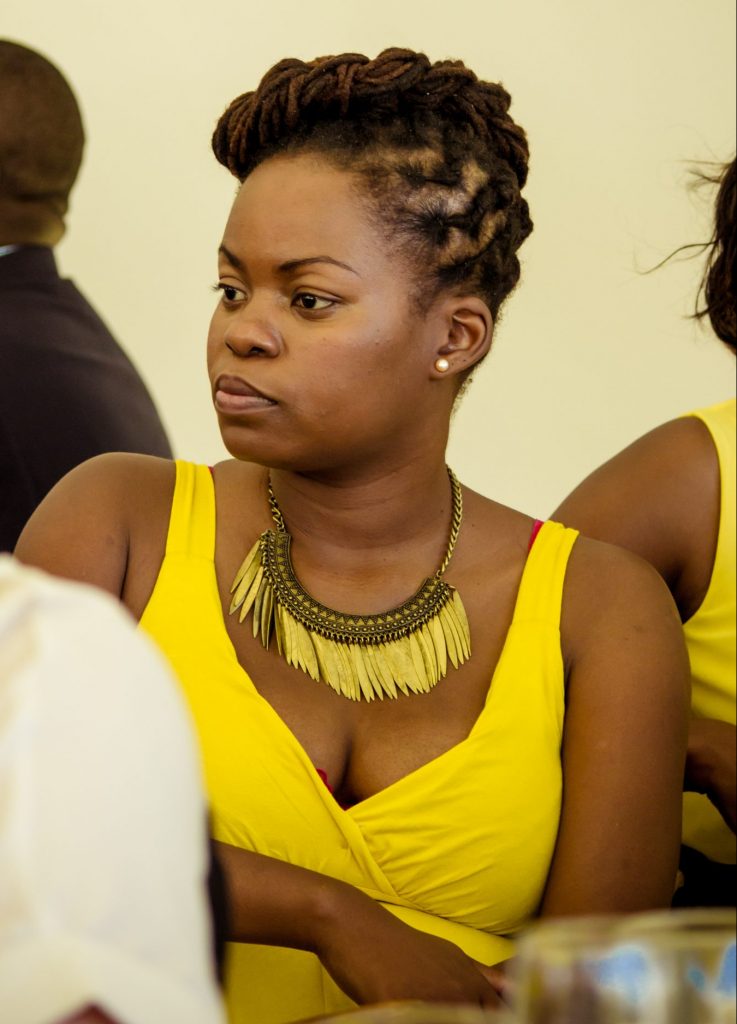
When I first moved back to Windhoek after an involuntary gap year, one of the first things I did was sign up for Spoken Word. While I don’t remember the poem I did, I remember meeting Oshosheni Hiveluah backstage for the very first time. I imagine she saw the newness in my eyes or maybe the fear that settled in my chest right before I had to go on stage because she said something to me. Although the words we exchanged have been lost in the vacuum of time, I felt calm enough after we spoke to deliver line after line of my cringey Tumblr poetry through rattling teeth. The first thesis I wrote was about film in Namibia. It was an ambitious project that aimed to understand the links between heteronormativity and the progression of feminist ideals in public discourse. Oshosheni’s thoughts, bell-like in their clarity, saved the work. She redirected the focus, suggested additional readings and films, answered all my tedious questions and had the kindness to put me in contact with other filmmakers that would help shape my research. So, when she needed extras for her still unreleased Afropunk inspired film Underneath the Sky (2016) and asked me if I could help out, I dropped everything, put on my purple faux-marten boots and showed up. Sitting at the edge of an empty pool, surrounded by the edgiest cool kids in Windhoek, I watched Oshosheni work. She was quietly in control, her face sharpening in and out of focus as she shuffled across the set, immersed in the art of film making.
Sadly, those few days on set were the last times I ever saw Oshosheni…
A year after her passing, in an attempt to stitch together a piece of writing that would best pay tribute to one of Namibia’s greatest talents, I spoke to some of the people that were closest to her. Nesindano Nunu Namises, Tim Huebschle, Tanya Stroh, Ester Beukes, Ndamona Hiveluah, Namupa Shivute and Itayi Duve are only some of the people who lovingly look back and reflect on the life of the award-winning director of the Namibian films Tjitji – The Himba Girl (2015) and 100 Bucks (2012); one of the founders of Spoken Word Namibia, mentor, friend and sister, Oshosheni Hiveluah…
Ester Beukes – Independent filmmaker
I honestly don’t remember how I met Oshosheni or who introduced us. I do recall it being a work connection though; it might have been after she cast me for a Tafel Lager ad in 2015. What I do remember is the first day I went to work for her. I was so nervous. She was very professional and she always offered me fruit. Come to think of it, she always insisted we had fruit and water while we worked! Oshi and I had a very professional relationship, I had to work very hard to earn her respect and to be honest it made me who I am today as an independent filmmaker. She was very straight forward with me and taught me a lot about work ethic. Something I learnt about Oshi that I will always remember is her integrity, her perseverance and her love for God. She paved the way for Black female filmmakers on the continent. Her work and reputation went beyond our borders; I’ve met several filmmakers around the continent that have worked with her and respected her art. Oshi was a no-nonsense person and ran a very tight ship, at the same time she led with grace and truth. She had thick skin and a strong will. Oshi always told me to “Write everything down!”, she always had a notebook with her and she took notes all the time. She also used to say, “Drink water. Be on time. Be humble. Be responsible and listen!” Oshi taught me how to share my vision with other creatives and how to collaborate. She taught me everything I know about casting and scouting. There is a lot I wish I had said and done for her. She mentored me and gave me a path to follow. I pray her legacy lives on, through my work and the work of other young black female filmmakers in Namibia. I cherish just how much she believed in me. She saw something in me before I saw it in myself. She nurtured my talent and helped elevate me. I’ll always feel indebted to her because of the strides I’ve made.
Tim Huebschle – Namibian producer, director and founder of Collective Productions
I met Oshosheni in 2004. I was at home and at the time I was sharing a flat with producer Michaela Bauer and one day she rocked up with Oshosheni and introduced us. Oshi started working for Michaela as a production assistant and because our flat doubled as our office, I got to speak to Oshi and we discovered we actually went to the same school (obviously years apart) and that’s what connected us. On top of that we had a shared interest in making films, writing and because she grew up in the GDR (German Democratic Republic), we would actually speak German with each other. We both wanted to tell very human stories and very Namibian stories;Oshosheni wrote Beef, one of the first films I made in Namibia. It was a huge collaborative effort and we had no budget but what was special about it was that there were not a lot of short films coming out of Namibia at the time.
The film really established how important it was for Namibians to tell their own stories. Of all of her projects, I have a particular soft spot for Cries at Night. I really admired the courage she had to tell a story that dealt with such a difficult part of Namibian history; a part that was largely not spoken about. She delved into it and I truly appreciated that. Oshosheni told stories that mattered, she was a pioneer for a lot of women, she made it okay for women to want to be more than just production assistants, producers and casting directors. A lesson from Oshi that I constantly return to is that I need to be sure about the stories I want to tell, that I need to dedicate myself to the work, regardless of the obstacles I encounter –– to keep working on the story until it is right. Not a lot of people know that Oshi was a bit of a procrastinator despite her amazing body of work. One afternoon over coffee we discovered how we both had difficulty actually sitting down and writing sometimes. With Oshi, laughter was very important. Her laugh was iconic, I can still remember it. Oshi had a very life affirming energy about her. She brought light into your life. When I heard Oshi’s laughter, I knew it was going to be a good day. I think it is the responsibility of the people somebody has touched to remember that person when they are no longer with us. This is what I do happily now; remember the time I spent with Oshosheni Lombolweni Hiveluah.
Ndamona Hiveluah – Oshosheni’s sister
Osh was eleven years older than me so we only got to really appreciate and understand each other when I was older. She was in her teens and I was the annoying little sister always trying to be in her room because it was much cooler than mine. I would go into her room and ask to blow on her clarinet because it sounded so cool when she would practice. I did not have the lung capacity but she would let me try it anyway. That was the kind of sister Osh was to me. I also thought it was so cool that she spoke German and all her friends. I would try and mimic what I heard and wound up creating my own version of German, which our sister Nangula and I would speak. When we lost our mother in a car accident four years ago, that experience really brought us together as siblings.
‘…as she gained more momentum, more Namibian filmmakers in the industry gained momentum too’
Ndamona Hiveluah
Osh had amazing work ethic. She would always push to meet a deadline and she was super focused, driven and excited about her work. When Osh made her first film Tulela’s Fate, I knew nothing about the film industry and as she gained more momentum, more Namibian filmmakers in the industry gained momentum too. She created a space for Black women. It was through her that I was able to meet more Black women filmmakers and see their work. When I think of which of her films are my favourite, it’s a tie between Tjitji – The Himba Girl and 100 Bucks. Nangula and I had the privilege of being extras on the set of 100 bucks and that was such a cool experience and I got to see what it took to produce a film of that scale. Tjitji – The Himba Girl was just a great coming of age story that I could relate to. As women we all know what it is like to have the burden of other people’s expectation placed on your shoulders when what you actually want is to be your own person who paves their own way. I also thought the soundtrack was so good. After I saw the edited version, I kept singing the title theme song “Tjitji weya, Tjitji weya!”. I was so proud of my sister. She brought her vision to life.
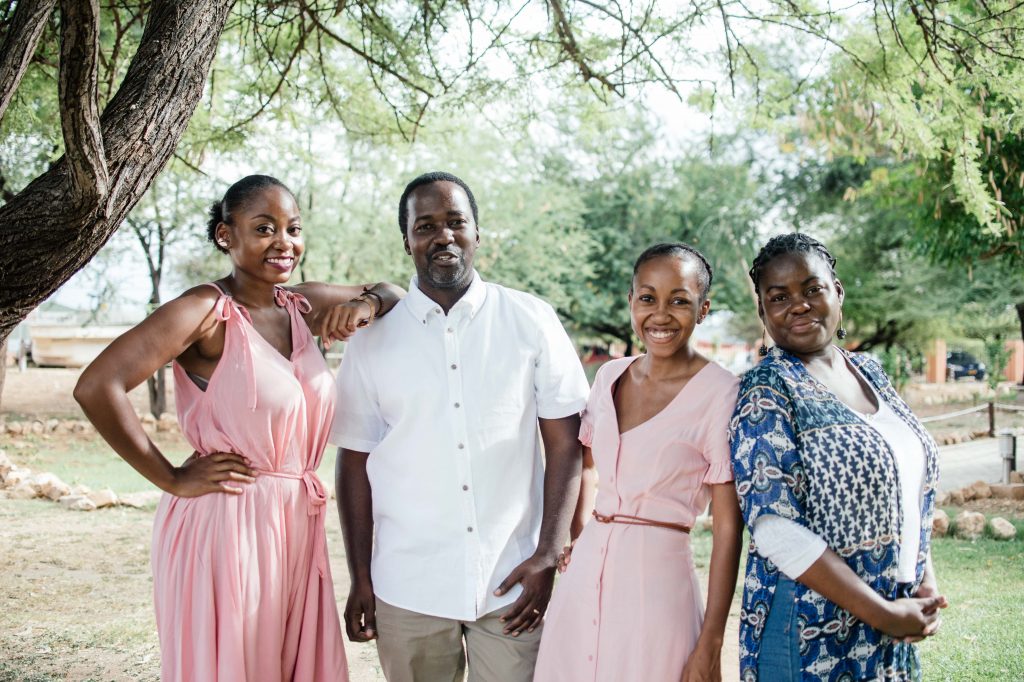
With Osh, the little things would always become the big things. If she was working on a new project, she would ask me if I wanted to be part of it. Osh had a casting agency so if there was ever a casting she’d ask if I wanted to take part or help her out. But our ‘big’ project was trying to get me to be famous and go to New York. I have recently taken steps to try my hand at voiceover work. I think that is something that she directly influenced. She did what made her happy and that is something to live by. She took a path so different from what everyone expected and that is admirable. When I was going through a mid-degree crisis and she told me, “If you don’t like it, change it!” I returned to that piece of advice last year when I decided to leave a job I hated.
Death is not linear. While I am aware and sad that we lost a sister, Osh was so many things to so many people. What carries me through the difficult times is thinking about where we go from here. We shouldn’t hold on to loss because loss is inevitable. Osh showed up for us in how she loved us. We should take those memories and laughter and make sure we live a life we can be proud of. Her faith was very important to her and she held on to it till the very end. One thing I remember is that she asked for her bible when she was in hospital and I brought it to her, which was so encouraging for me. She really showed me that you need to show up for yourself and the things that you believe in, and the things you are passionate about.
It was a privilege to be able to call her my sister.
Tanya Stroh – Multidisciplinary designer, creative director and founder of Turipamwe Design
Life imitates art.
I met Oshi, as she was affectionately known, at Wild Cinema in 2009, through a mutual friend. At the time, I had just returned from studying in South Africa for four years and I didn’t know many people in Windhoek. Her creative energy felt like home. She struck me as a spirited person. Oshi always found ways to make her work happen as an independent creative. She was resourceful; I remember sharing a hotel room in Bulgaria on an exchange programme with her. She was busy writing a proposal on the edge of her bed, working late into the night. She always found a way to realize her ideas. She’d say: “You just have to go for it, you know what I mean.”
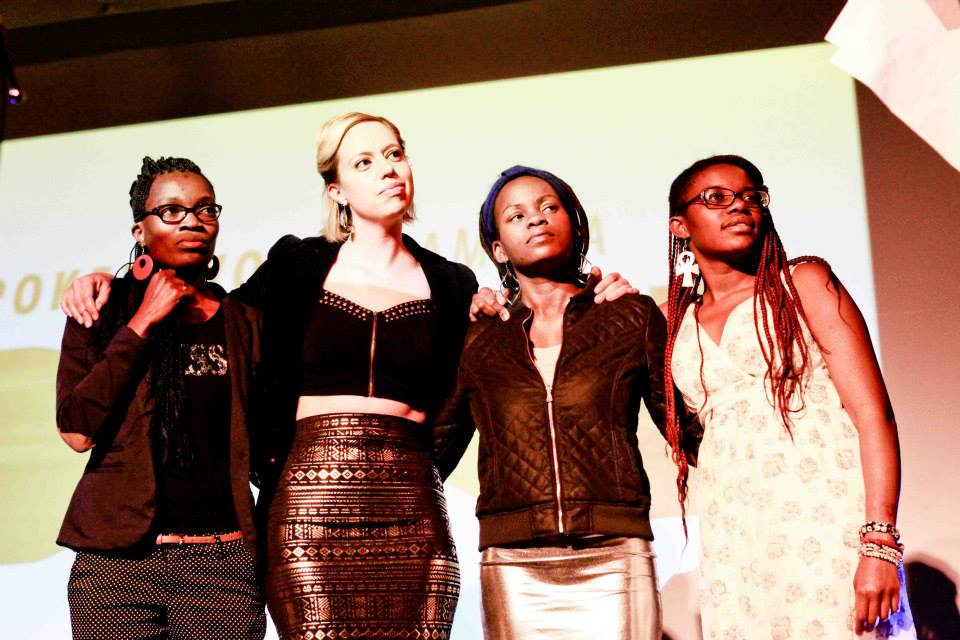
Oshi’s work was always concerned with uncovering a “Namibian-ness” particularly from a youth perspective. Or looking at untold stories. I loved this about her. One of my favourite works of hers would be Evoking Origin, a multimedia virtual reality exhibition at the National Art Gallery of Namibia in 2017. It was novel and brave. It brought together so many of Oshi’s talents in an interesting way. I loved that she was pushing the boundaries of what was possible. Especially following the death of her mother a few months before that. It felt honest and intimate. Omeva would be other. Oshi was particularly proud of this work because of the process she underwent in creating it. She gifted me a DVD copy of the documentary film with a handwritten message after we’d gone to the cinema together and met over coffee. I cherish it.
Oshi asked me to be the prop-hand on her Namibia Film Commission funded film 100 Bucks. This was my first experience on a film set, let alone filmmaking. I swore that I would never work on another film agai n– it was such hard work! Famous last words these were. If it wasn’t for her request, I wouldn’t have ventured into production design. Later, I joined Spoken Word Namibia for 7 years on her request to join the team. Spoken Word Namibia (SWN) was a cultural institution for so many. A beautiful community that created a platform for so many performing artists in Namibia. A movement. A family.
Oshosheni’s work was brave and not only limited to the film industry. She was an advocate for creativity. Film, theatre, performance poetry, photography, literature, art. She made stories of stories that she wanted to see.
Oshi’s influence and impact is lasting. I’m indebted to her.
Namupa Shivute (they/them) – Freelance writer and reporter
Oshosheni and I met the year we both turned four. Until last year, I’ve never had to know life without Oshi. One thing that stands out for me from our childhood was how cute she was, I mean, she was just adorable; she had this round face and these full cheeks and she was so nice. She was to me, the very first definition of a best friend. We were constantly around film, wherever you would find film, you would find us. I was with Oshi at the premiere of her film Tjitji: The Himba Girl, the movie had such an unexpected humour about it, and here is the thing, Oshi was extremely funny, she had a very sarcastic, dry humour and that really came off in the film. Her films always carried pieces of her, she was an observer so Tjitji had these quiet feminist themes. She always tried to bring marginalised communities to the forefront, she always highlighted Namibia’s ethnic diversity. Even with her film 100 Bucks, you could tell that she used her films to communicate the socio-political issues in Namibia. Oshi was always silently revolutionising. People often forget that Spoken Word Namibia was connected to the One Love charity organisation that donated school fees, school uniforms, stationary and other materials for children in Windhoek and Walvis Bay.
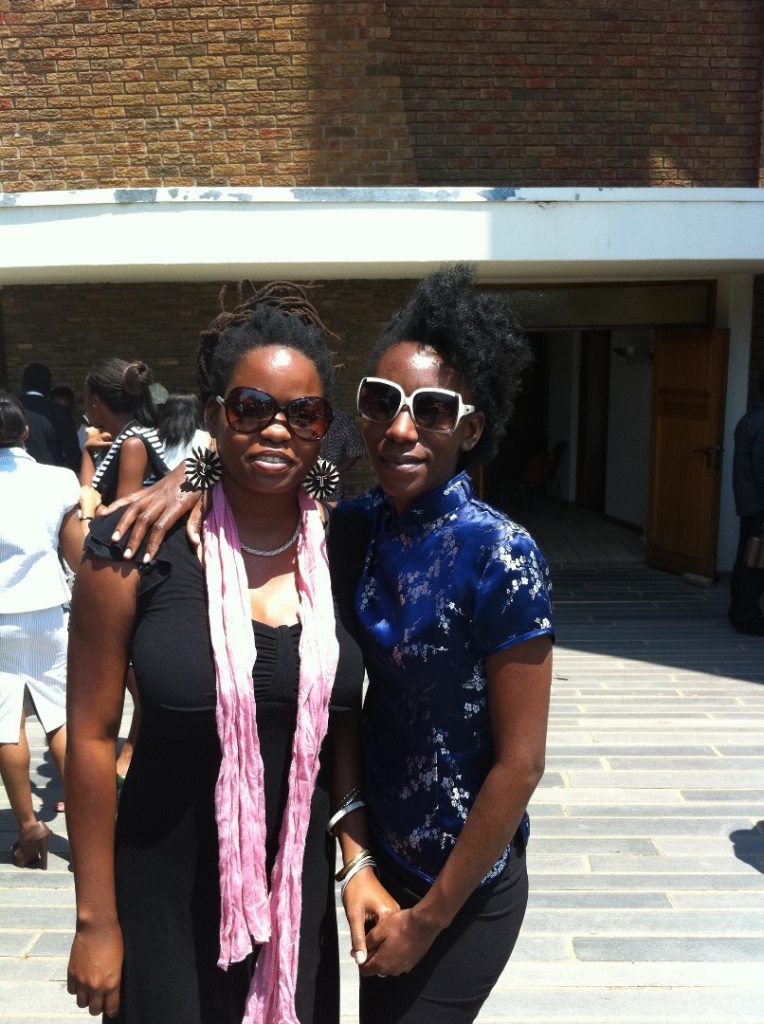
I never thought about getting into film so when I was approached to work on a documentary with Redfish, I referred them to Oshi but in the end we wound up working together on the project. She really helped me with the production elements of the process. I think about how my first introduction to filmmaking was with Oshi and I can’t think of a better way to have entered film. By the time I was making my next documentary, it was released after her passing. I really wanted her to see it. We were in touch throughout the process because I was in Uganda at the time and we were just so excited about the project. I was making a documentary about the LGBTQAI+ community. About their struggle and their resistance. What I really valued about her was that even though she was deeply religious, she was never bigoted towards anyone. She was a great example of how Christians could be…I had really hoped she was going to see me in my role as a reporter for the film.
Oshi was a constant in my life. We maintained our friendship for over thirty years, we were both supposed to turn forty next year. She was there through every phase of my life.
Oshi was very generous and she brought people together. What I miss the most about her is her companionship. It was a steady, accompanying and healing energy.
Clara Schnack – Graphic Designer
Oshi and I had been the best of friends ever since we were about six or seven years old. From Germany, to Namibia, to Cape Town, back to Windhoek, from primary school to high school to varsity, from 1986 to 2019. I think about how Oshi and some of her friends founded Spoken Word. It really started off as just a couple of friends coming together to recite poetry, but it quickly spiralled into a movement that spanned over a decade and gave a platform to writers, poets, musicians and thespians in Windhoek. Spoken Word Namibia helped people spark other movements such as Song Night and Free Your Mind. I would never call myself a writer, but Oshi’s love for literature, creative writing and poetry definitely influenced and rubbed off on me. We wrote numerous pieces that we performed together on the Spoken Word stage – she brought up things that didn’t come naturally to me… out of me, like writing and being on a stage. Her films earned her various local and international awards, Oshi showed that women are a force to be reckoned with in the film industry. I truly believe that she has paved the way for many aspiring female filmmakers here in Namibia. I remember the short film 100 Bucks and Oshi’s excitement and dedication when she was awarded funding by the Namibian Film Commission to make the film. It was my first time being that involved and Oshi allowed me to be a part of the project. We went through the script, went location scouting and I was also the graphic designer on the film. Oshosheni was extremely funny. I’d like to share this old email, I’d asked her if I could borrow her backup phone after mine gave in;
On May 4, 2017, at 8:04 AM, Oshosheni Hiveluah <oshosheni@icloud.com> wrote: Sure thing you can even take it with you to Mars should you decide to go. Wait but do people come back from Mars? Call me anytime. The only thing I have on is a visit to the hospital to visit the kid’s department of the cancer ward.
Oshi taught me to be spontaneous, to live in the moment, to be free-spirited and open minded, to explore and be curious about life, people, cultures, places. She taught me to be passionate, to dream big and just go for it and figure out the details as you go along. And to always check your spelling before you send off anything. Even in a text to your friend. I wouldn’t hear the end of it when I made the tiniest mistake!
My dearest friend Oshi. You have left a hole in my life and I miss you terribly. I carry your light and your spirit in my heart and I will forever cherish all the memories we shared together. Love always.
Nora Thoma – Childhood friend
When I moved to Namibia at the age of eleven, I met Oshi on my first day of school. We remained friends throughout our teenage years, throughout university, work life, family life …We shared so much together. I remember when we were in Grade 12, we got this new French teacher and for some reason, he and Oshi just did not like each other. He gave her such a hard time. He would always tell her, “You will never make it, you’re going to fail your year-end exam!” but when the results came out in the newspaper, Oshi had aced her exam and gotten the highest mark you could get. That’s what I always admired about Oshi, her determination. Her path was not always easy but she always pushed onwards. And she soaked up knowledge, ideas, she read so much. Her short film Cries at Night is one of my favourite works. I thought it was so brave of her to speak about a subject which is not spoken about openly in Namibia. She pushed boundaries and paved the way for so many people who came after her.
I miss her laughter, her sarcastic comments, how we exchanged thoughts and ideas, how much fun she would have with my kids, her warm embrace, how excited she could get.
I miss my friend!
Nesindano Nunu Namises – Actress, writer, poet and musician
About twelve years ago at my first open mic experience at Spoken Word Namibia, I arrived at the Bank Windhoek Theatre School and I signed up. I was very excited to be there. Oshi came into the dressing room to check if the poets were ready, I remember her saying, “Hey poets, Truth is up next (my previous stage name) then a music break.” I still get as nervous as I was that night, I think she noticed and said “dont worry, the Spoken Word crowd are really nice people” and smiled. She was so very gentle and yet quite impactful. That’s how I met Oshi.
‘Her work was important because it created spaces for women and their narratives in film. Her work was transformational and deliberate’
Nesindano Nunu Namises
Oshi really acknowledged people, she was passionate about the visibility of the stories of Namibian women and she showed a lot of dedication toward that. Her work was important because it created spaces for women and their narratives in film. Her work was transformational and deliberate. She wanted to make sure different folks got a chance. She believed in everyone.
Oshosheni really held Spoken Word Namibia togther and stuck around with it for the longest time. She helped mould a large part of the movement’s identity. I really valued the input and creative direction she gave to the project. Whenever auditions went on for a bit too long and she knew I had to get back to my kids, she always offered me a ride home and we had really intimate talks where she’d remind me that I deserve care and love. She checked in often. Poetry really brought us together. She was supportive and an incredible mentor, I am so grateful to have learned that of her.
My growth as a poet has much to do with Oshosheni Hiveluah. She never told me, but often expressed in her way how important it was to keep going. She was my sister. She believed in me and taught me a lot about valuing myslef as an artist.
She cared for the artist community and had an eye for great things. Oshi was an exceptionally humble human and a great storyteller.
Itayi Duve – Co-founder of Spoken Word Namibia
In December of 2003, I met Oshosheni through graphic designer Clara (Schnack), we sat down and talked a lot of rubbish that night but I remember thinking that Oshi was a very shy and observant individual. I didn’t see her again until maybe 2004 or 2005…

One of the things that resonated with me was Mwati Magazine, a literary project that Oshi started with a friend. It was really powerful. The magazine was about celebrating life, writing and creativity. I remember I wrote a poem and Oshi published it in the magazine. Mwaticirculated for about two or three years in Windhoek’s underground creative scene and what was really impactful about it was how it tied in with the work I was doing with Oshi for Spoken Word Namibia. Oshi keep reminding me about my passions, she had a healing energy and could connect people; that’s why she was able to tell stories that really resonated. Her work impacted women and people across all genders in this very beautiful and meaningful way. When people would call me the founding father of Spoken Word Namibia, Oshi would always say, “You’re not the founding father of Spoken Word Itayi, stop it!” and now that I think of it, she was teaching me about non-attachment to things, that everything I made was for the betterment of not only myself but for other people. She reminded me that I was a vessel and a channel. Oshosheni drove Spoken Word Namibia forward. Even after most of the committee members had retired, she continued holding the fort.
Oshi was a true friend. She really would hold space for people with love, care and no judgements, she could sense when people were in a crisis and would be the light that emerges; she used to give so much. Sometimes what I beat myself up for is whether we showed up for Oshi the way she showed up for us. I believe she’s just transitioned and I hope I can connect with her in spirit and ask her if we celebrated her the way she needed to be celebrated; if we honored her gifts the way we were supposed to because she made us so happy. She made us so full. I’d tell her “Thank you.”
“Oshosheni Hiveluah. One of Namibia’s finest storytellers, film-makers and souls. Remember her name, appreciate her art, emulate her grace.” –– Martha Mukaiwa
Oshosheni Hiveluah died in October 2019 after battling with ill-health for a few years.