Timothy Niwamanya: Tell us about your personal and professional background.
Damian Samuels: I grew up in a largely Creole community in what is called The Cape Flats. My family’s genealogy is mainly of Indian extraction with roots in the Atlantic island of St. Helena. Inhabiting this liminal space as I grew up during the race-essentialist years of Apartheid South Africa had a profound impact on my perspective of the world.
Early on, I worked as an advertising manager for several years at Media24. I also ran a group of community newspapers when “that ship” was starting to sink. At the age of 32, I took the calculated risk of quitting my business career and going back to school to join academia. A decision I do not regret!
TN: What do you do now?
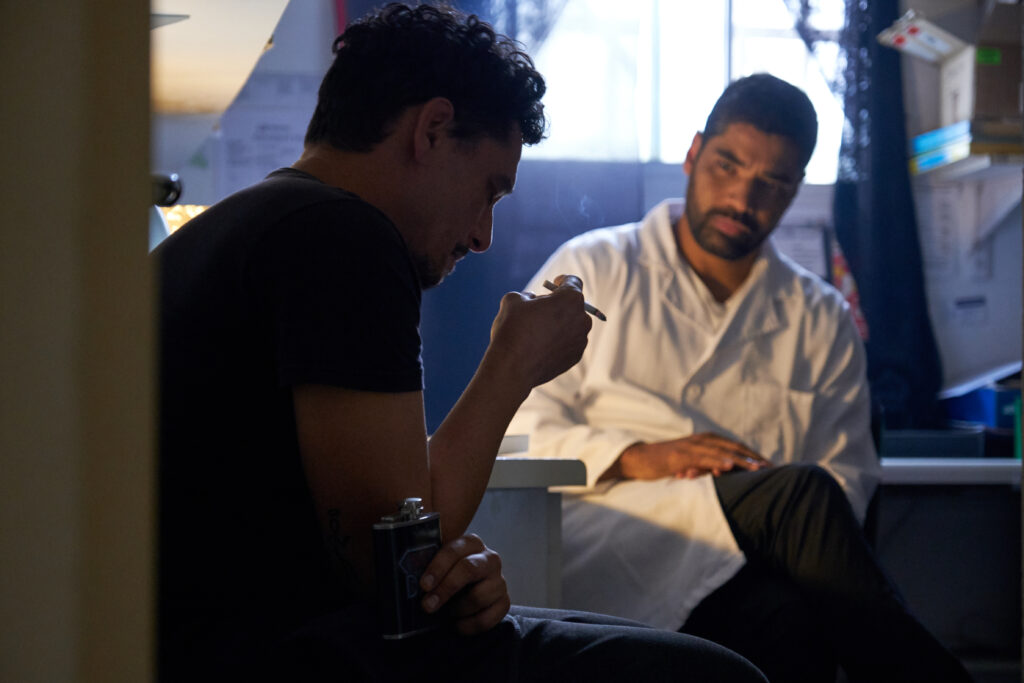
DS: I am currently a lecturer at the Cape Peninsula University of Technology (CPUT) where I teach Film Production as part of the Media & Communications department. I also own a media company, Fade2Black Productions. I have produced two feature-length documentary films worth mentioning, The Black Christ and Cape Helena. I directed Cape Helena and a fictional short, Final Notice.

TN: We’re here to talk about Final Notice. What is it about?
DS: It’s about a bereaved couple dealing with the untimely loss of their only child and the lengths they go to cope with their grief.
TN: What inspired you to make this?
DS: About 15 years ago, I had the idea of making a film about a man so overcome by a sense of failure and grief that he wants to end his life but cannot because it would leave his family destitute. He plans his own death to avoid his own culpability for insurance reasons.
I then started following the discourse around assisted suicide and became very interested in it. Euthanasia is almost like abortion and the death penalty were decades ago in terms of significant public debate because it brings into question the legality and morality of one seeking to ethically terminate one’s own life.
I was also going through a particularly difficult time. I lost my 21-year-old brother to what I think was a drug-induced asthma attack. His name was Nino. The child the couple loses in the film is also named Nino.
“There is an acceptance of euthanasia for those suffering physically, but not nearly enough empathy for those who are dealing with debilitating psychological trauma”
TN: What was the production process like?
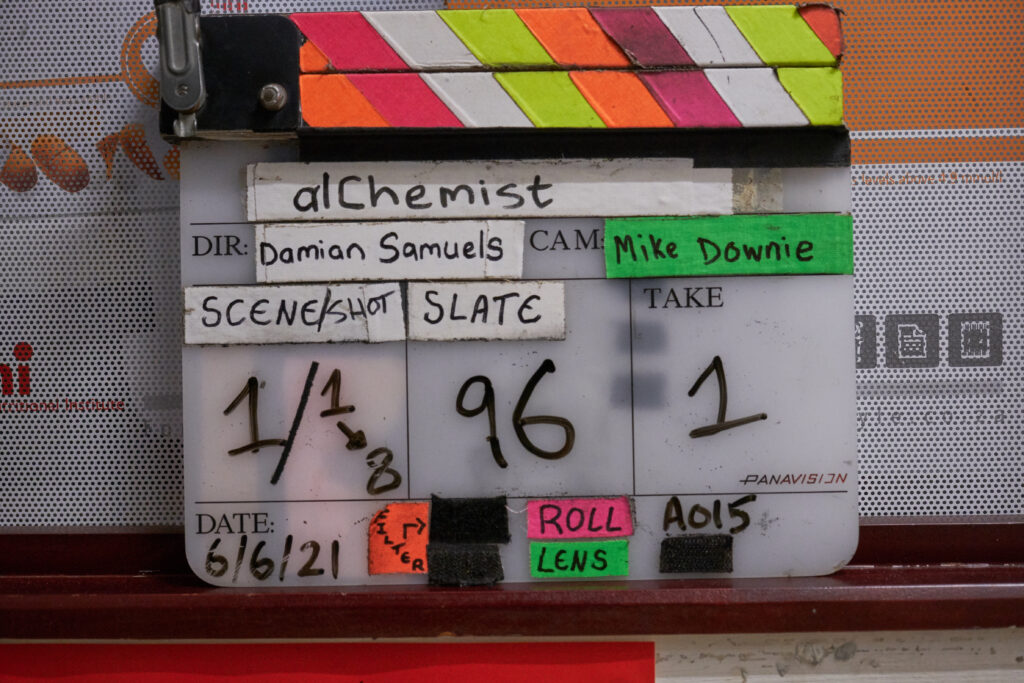
DS: It was my directorial debut. I had written and produced different projects before but never directed. It was titled “alChemist” before I renamed it “Final Notice”.
I was lucky to have an experienced production manager in Ben Linderoth and an incredible cinematographer, Mike Downie, to collaborate with on this. I also had three great actors to work with. The project cost only 300,000 ZAR to make and we shot all of it in four days which was very challenging. I wish we could have taken a little longer shooting it but that was all we could afford. To see the final film manifest the way it did was really rewarding and for me that is enough.
TN: Despite the important subject matter, compelling narrative and commendable aesthetics, it has never been screened at a festival. Why?
DS: I honestly thought the film would do much better considering how well the story and script was received. My theory is that when I made the film, I crossed a line not many people are willing to cross with regards to the discussion around euthanasia.
TN: Could you elaborate on this?
DS: All the socially acceptable debates around assisted suicide right now deal with people who are terminally ill or in severe physical pain. One of the characters in this film is euthanizing someone who is not terminally ill. There is an acceptance of euthanasia for those suffering physically, but not nearly enough empathy for those who are dealing with debilitating psychological trauma.
TN: Do you think the way your film has been snubbed thus far is justified?
DS: I think my film has been misunderstood. I hoped it would be interpreted as a cautionary tale for not being flippant with one’s life. Even in the story there is a point where the main character starts to regret his decision. The knee jerk reaction might be that I am promoting euthanasia, but that is not the case.

TN: Why do you think people, especially in Africa, have an aversion to exploring a taboo topic like euthanasia in cinema and other art forms?
DS: In most developing countries, the sanctity and ephemerality of human life is extremely important from a religious and traditional/cultural perspective. There is no room for frivolous thinking in regard to taking one’s own life. It is considered a white middle- and upper-class prerogative.
TN: Why do you tell the stories you tell in your films?
DS: I see my work as a way of dealing with the problems of the past that we have inherited, in the present. I also see my films as a catharsis and a way of channeling my own pent-up thoughts and feelings. A lot of my work is grounded in History and Politics but if I had to sum it all up I would say my work is about change.
TN: What advice would you give filmmakers interested in exploring challenging or controversial themes?
DS: Know yourself. That way you will not be swayed by fickle opinions. You also need to find a balance between making films that stimulate critical thought on difficult themes and more commercial work that will reach a large audience in order to be financially successful making films.

The full version of Final Notice is available to watch for a limited period on Vimeo. The password is Takeoneaday.
The film’s trailer will remain available for ongoing viewing.