Interview: Nana Ocran
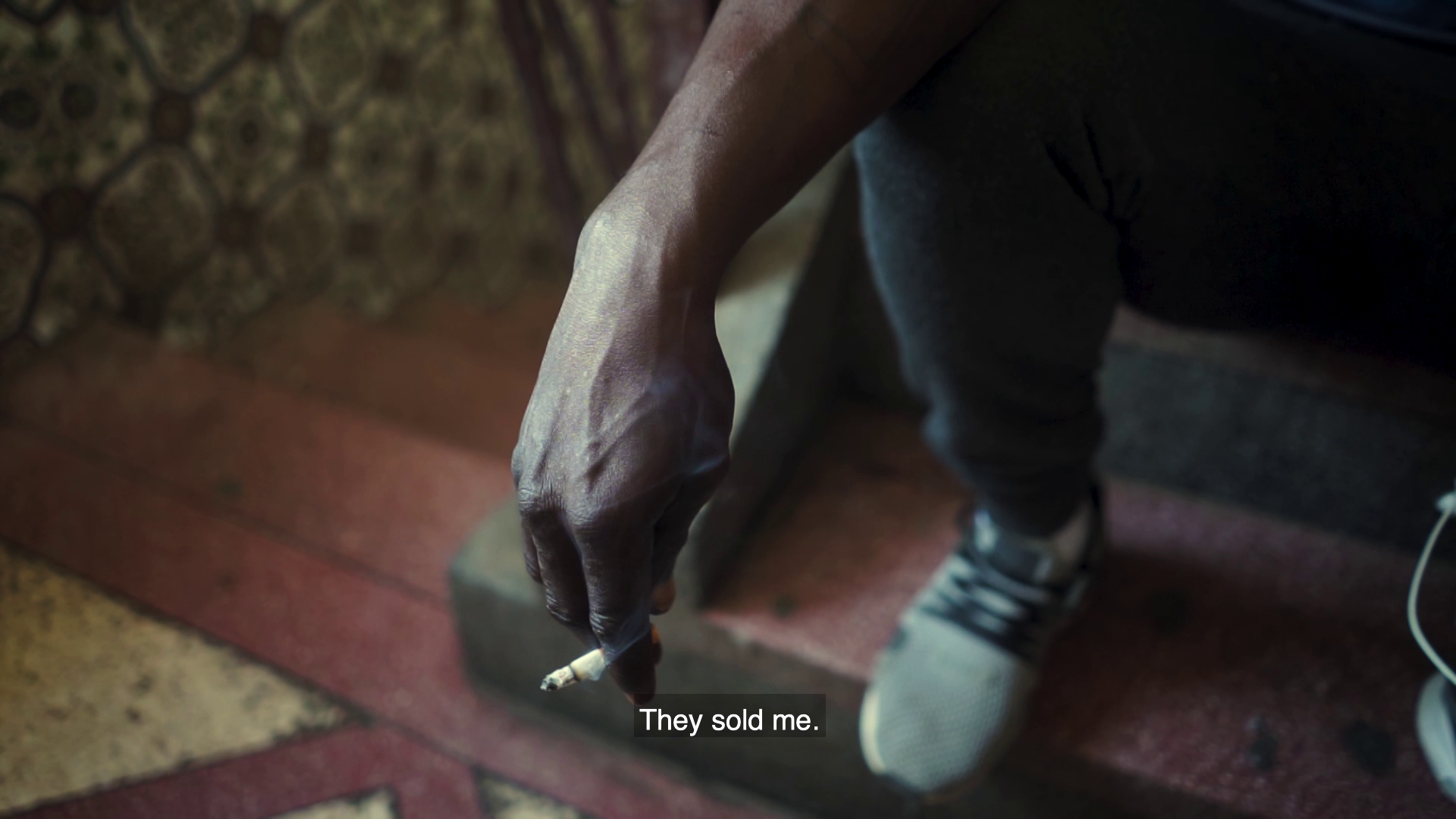
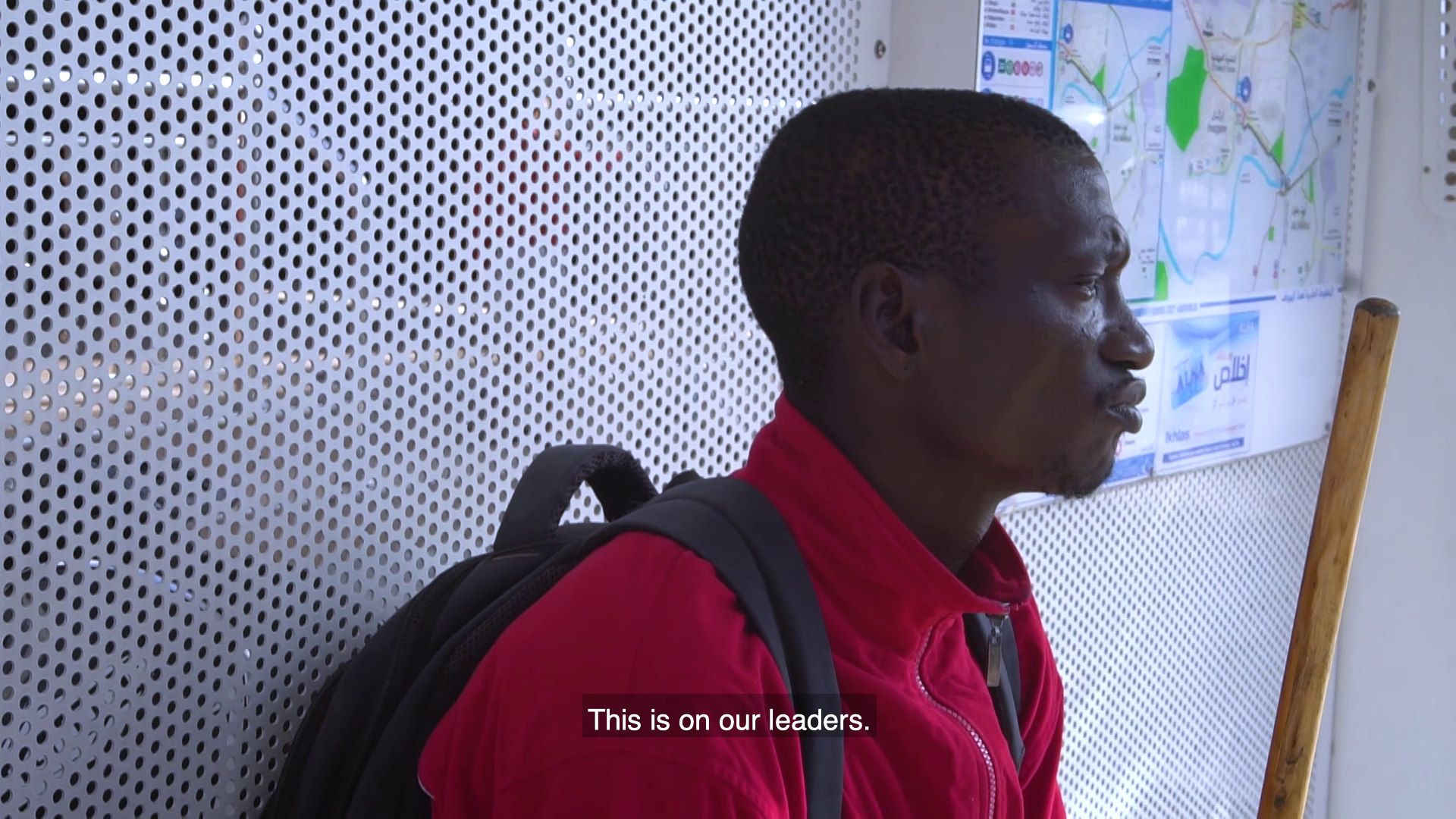
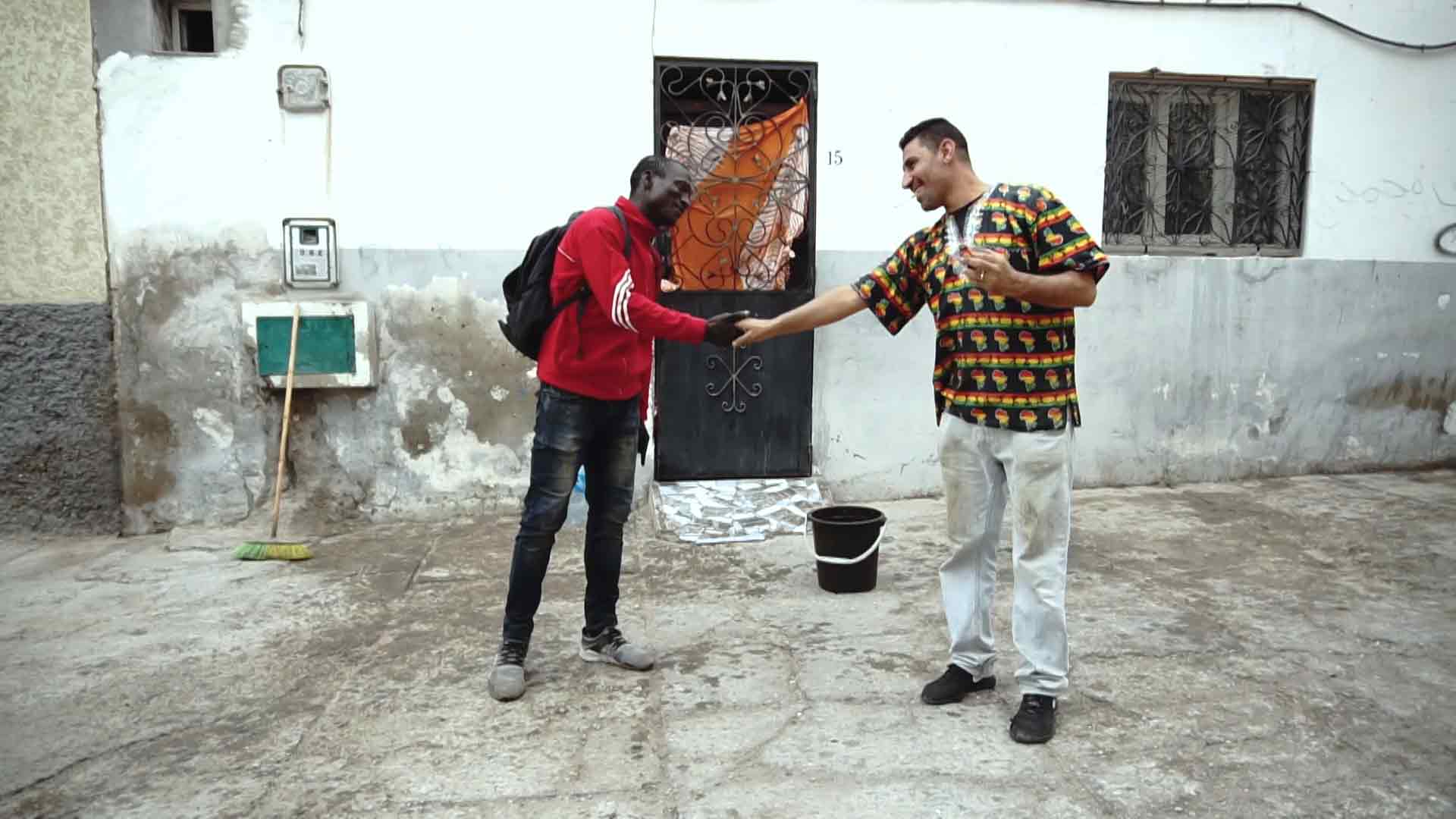
I’ve been seeing sub-Saharan immigrants all my life, especially in Agadir. They come with the intention of crossing Morocco to Europe, so Tangiers is their destination. It’s a city in the north and is the closest to the border with Spain, but the authorities capture them and just throw them to the south of Morocco where there’s nothing but Sahara. I think it’s political. They never send them abroad, to other countries; it’s always inside Morocco. They try to go to the north again, but Agadir is like the capital of the south. It has good weather, it’s touristic, and there are more things to do.
The peak of my interest in working with Sub-Saharans was when I saw them on the buses, travelling together and carrying broomsticks. I started questioning what they did with them, so I thought I should talk to somebody. I decided to make a project, so I went out to look for the character I could work with. I kept going on and off different buses, from station to station, and that’s how I found Oumar.
When I stopped him, he was in a real hurry because he was going to see a friend in hospital. I told him I wanted to do a photo project and document his day. He said, “ok, maybe you can take my phone number,” and that’s what I did.
‘I don’t have a deep thing about immigration, I’m just a young guy with a camera who likes to learn and tell stories …’
Oumar just fit. He really knows how to express himself and has knowledge and experience. I knew that he represented the whole community. They live in groups here, but Oumar is a special case because he lives alone and doesn’t like to be with others. I really don’t believe in powers and stuff, but something happened there when I met him. He’s 35, if I’m not wrong, and has a law degree back home in Cameroon. He believes in honesty and says what he thinks. To me it really matters, to document things as they are. That’s where I find my pleasure. If I just showed beautiful pictures, it’s nice, but I’m more into interesting stuff so I can learn and better my understanding of the world.
Most of the times when we show the movie and then start a conversation or debate, all the questions go to Oumar.
The reactions are mainly positive. People are interested in Oumar’s story, but I remember one guy was negative about the film. He came to me at one screening and said, “This movie of yours is full of negativity; you could have thrown in some positive news about Morocco. We are nice.”
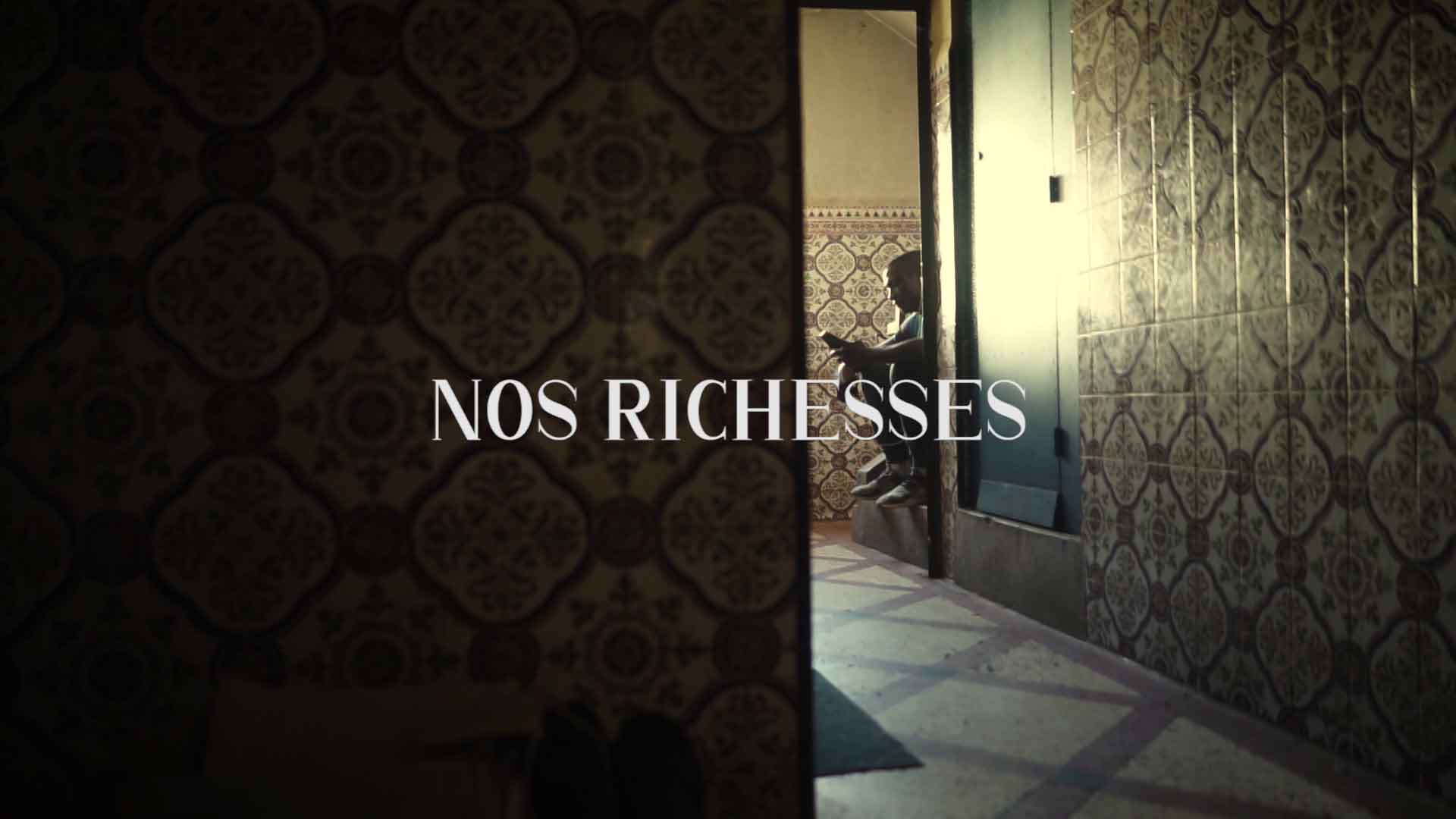
He was right, because I had spots where Oumar talked well about Morocco, but it didn’t make it into the movie because I tried to make the ideas take us to the Nos Richesses part, because that’s where the title came.
When he talks about the wealth of Africa it’s my favourite moment. I don’t have a deep thing about immigration, I’m just a young guy with a camera who likes to learn and tell stories, and this point about wealth opens a wide door for me to research. It’s a big question. It’s history.
In general, Oumar has trust issues, but with Moroccans it’s really insane. Imagine being sold. In the film, he said many times that Moroccans didn’t pay him what he was owed.
In comparison with Algerians, he calls Moroccans hypocrites because Algerians confront you, and say, “…black, immigrant, sub-Saharan. We don’t want you in our country” but Moroccans, no.
There were times at screenings when Oumar talks about the negativities of Morocco and the audience just sits still and listens. It’s like he preaches. I remember one time, he was really mad. He had this temper, which was interesting to see.
For me, I’m never afraid to hear what he has to say about Morocco because if it’s the truth it’s great. It’s a plus to talk to people who are ready to hear whatever you have to say, not just people who have to hear you, like therapists.
I remember we had a conversation and Oumar didn’t like that Moroccans don’t call themselves African. He said, “If you’re not African, what are you? You’re not European. You’re in Africa, in Morocco. You can see the map.”
Moroccans are Africans. They cannot do anything about it, but when it’s about sub-Saharan Africa, to the majority, or I would say to the ‘uneducated,’ it’s a little bit complicated. If you’re not uncultured, it’s like you live in a box. The influence of Europe is powerful, so you think, you’re in Morocco, but you’re European, and if your source of culture is social media – I’m talking about the majority of Moroccan youth – it would be weird if somebody introduces you as an African in front of a sub-Saharan because they never had the best image here. I don’t know if they gave that image to themselves through their struggle here in Morocco, or through Moroccans who visioned them that way.
Back when I was a kid, of course I had some stereotypes. Maybe at some point I called sub-Saharans what Moroccans call them, which is “mon ami” (my friend) because that’s the first thing Moroccans hear from them when they come. “Mon ami”, “mon ami”, “mon ami.” … so, every sub-Saharan is “mon ami” now. Did I think badly about them? I’m not sure, but the stereotype stays, that they might be violent because, they’re really physically strong, so it’s easy for the stereotype to sink in.
There are videos that I shot with other sub-Saharans, about death or family…. I asked philosophical things and they were always surprised to answer.
I worry about documenting them. It’s always uncomfortable knowing their situation and wanting to help somehow. It concerns me.
With Oumar, I try to support him. He learned a lot of things that haven’t been filmed because we see each other outside the film.
I feel happy at screenings when I see him get somebody’s number, because I know he will benefit as those are Moroccans who have good intentions. I would hope that the screenings, and the conversations he’s had, helped him physically too, because it’s not the best thing to hold a lot of those experiences and stories inside.
He is willing to cross to Europe for the third time. I’m confused because the filmmaker in me, or the crazy guy in me tells me to go with him to the water and film until he gets to Spain. On the way I would keep asking him about family, death and what he thinks about the fact that he’s going to commit an act that may put his life in danger … but I will not do that. It’s dangerous. I don’t know how to think about it physically. Something might happen to him; I hope not.
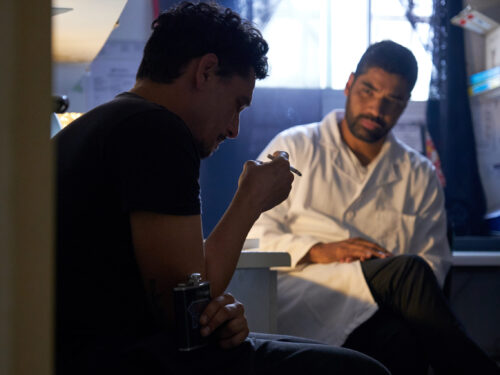
The Nos Richesses Film can be watched on YouTube.
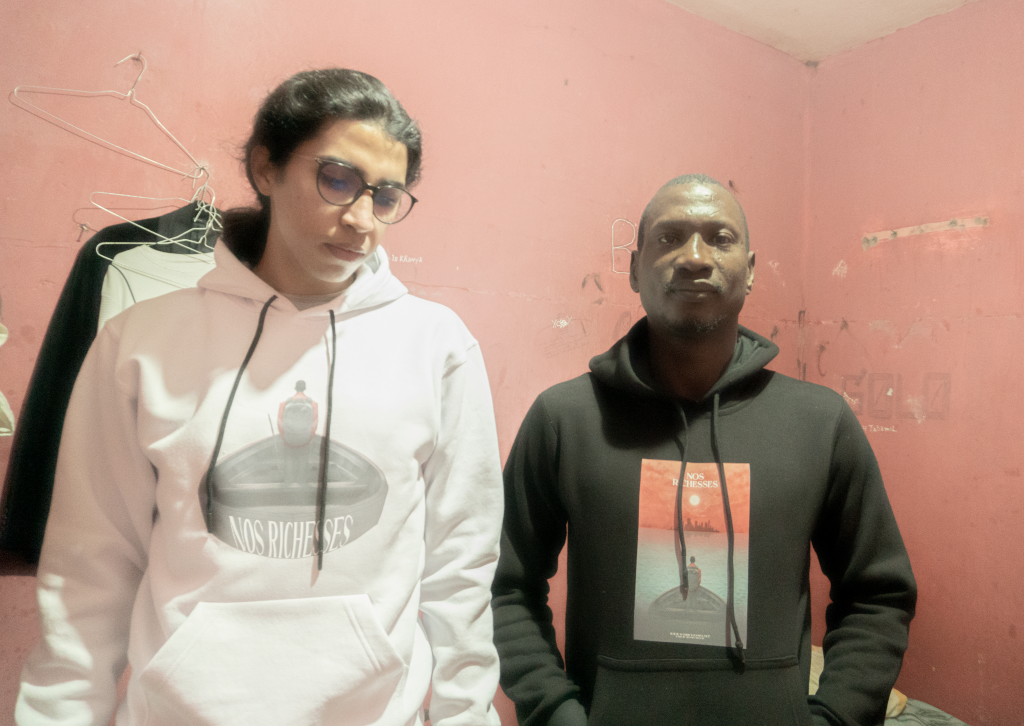
MED BOUBLOUH (with Oumar)
City: Agadir
What are some of your creative influences? Currently, Playboi Carti is one of my main creative influences. I admire his minimal and experimental approach to music and business. Under his Opium label, he signed a young artist my age, Destroy Lonely. I followed and studied his rise. Yeat, Fijimacintosh and Ken Carson are pioneers of this new underground and experimental rap wave. I also like Earl Sweatshirt and Bon Iver, an indie-folk band.
Since childhood, Rouais art has been an essential source of inspiration. Its history goes back to the beginning of Amazigh poetry. The Ribab is the main instrument and I learned to play it. It’s a rare and disappearing art, so I’m happy and honoured to keep it alive.
Connect Institute and its network are doing a remarkable job of empowering Moroccan youth. Led by Taha Balafrej, it aims to uplift young people through culture, reading, writing and debate.
What is the best, or most memorable creative (or life) advice anyone has given you? The most memorable life advice was from my mother. She advised me to stay away from drugs. A mother’s love is deeply embedded in one’ s existence. It’s too powerful to let go of no matter how strong one thinks they are. I love you, Mom!
As a boy, I was active in the local associative scene. An association president once advised me to take small but sure steps towards my career objective. He said “De9a De9a”, which means one at a time. This philosophy stuck in my mind then. It was a relief. His advice occurs to me often.
How would you describe Nos Richesses in one sentence? Nos Richesses is the voice of the voiceless. It is mine and for anyone real and truthful enough to claim it.
[IN MY WORDS] is a series of short, first-person essays based on a conversation between People’s Stories Project and an artist, whereby the starting point is a single piece of their work.