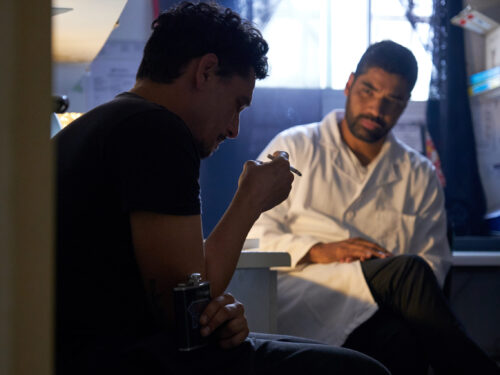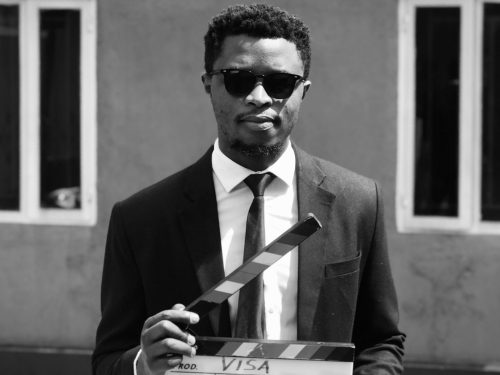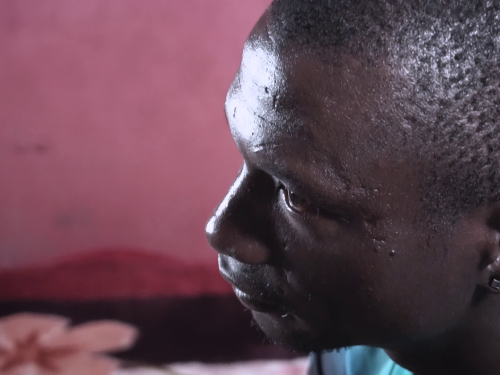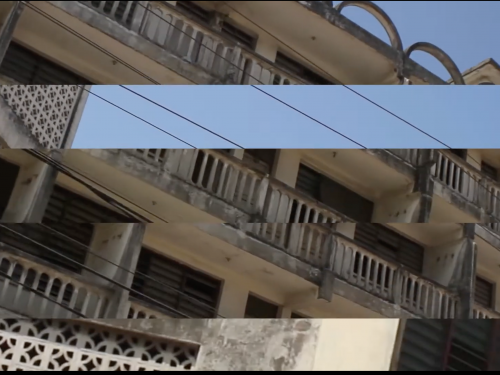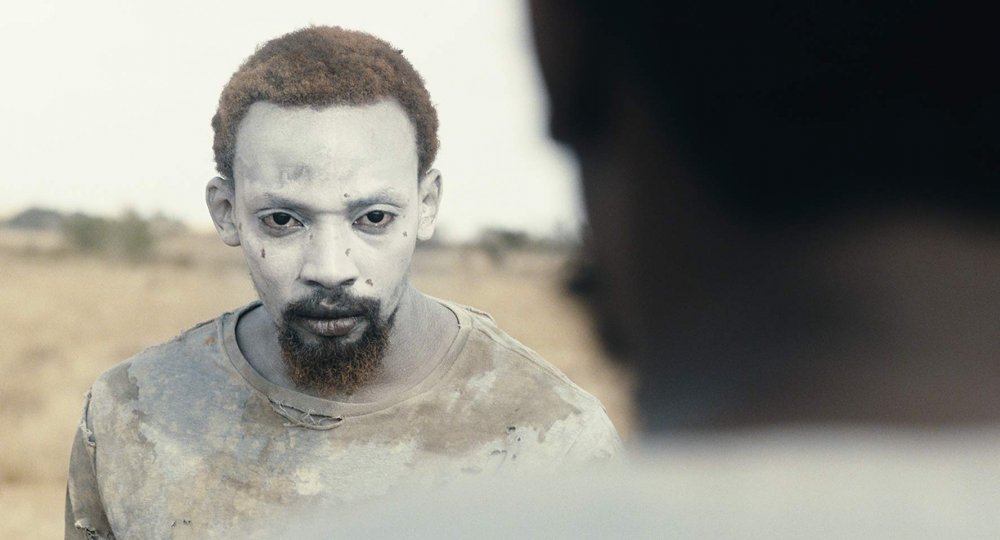
Mbithi Masya: I’m really curious about the visual direction you take your work in. The aesthetics in Afronauts(2014) and Boneshaker (2013) are both quite different.
Nuotama Bodomo: I went to film school, and when you’re in that situation people talk a lot about finding your voice. We’re still in an auteurist era where you’re expected to find your filmmaking voice and then just repeat it. For me I think the aesthetics, rhythm and structure of a film are in service of the story being told.
I really like the work you do, and I’m impressed by how internationally lauded you are, and how rooted in Kenya your work is at the same time. I appreciate that as an African filmmaker, who so far has made all my work outside the continent. As I’m watching your work, I see how it’s really connected to what people are watching in Kenya. In terms of your aesthetic do you shift it based on work that’s made to play internationally versus locally?
MM: I started out in visual media through the collective Just a Band. We started out wanting to make stuff for ourselves; we had ideas in our heads and wanted to get them out. We made a video, and Wangechi Mutu and Binyavanga Wainaina helped us exhibit at the Rush gallery. Somehow the people in New York got it. That gave us the energy to just keep making. I haven’t ever had to translate or think about an external audience. Even my feature film, Kati Kati (2016), was an experiment to see if I could do the same work with film. The film addresses a lot of societal conversations in Kenya; I was shocked to find it resonated with people. It did well on the international festival circuit, but I think people were surprised to be connecting to African stories on a human level. It wasn’t an exotic story; it was about guilt and shame and people letting go.
NB: That sounds so rewarding, because you can do the work you want to do and people connect with it.
MM: It’s good but it’s still been tough to develop new work. It’s not that easy to explain how something will translate before it’s made – even when you’ve done it before.
MM: I know you’ve travelled a lot and grown up in different places. I’m curious about what your idea of home is and how it influences your work, especially when looking at Boneshaker.
NB: Wow, that’s a complicated question. When I hear people talk about a physical home it’s as if it is this comfortable, rooted place that you can always go back to. I have that (for example, in the fact that I only have a Ghanaian passport and my family’s permanent home is in Accra, which I value), but also – for a lot of us – those definitions of home and nationality are increasingly not enough. When I was making Boneshaker at 23 years old, there were these existential, angsty questions of “Will I ever have a home?” and “Will I always be here but there?” In the years since, I’ve become numb to that idea of home. That’s not to say I don’t have people or family.
I’m on the hunt for a place to land, but also I know my home is a Pan-Africa of sorts. I grew up in Ghana, Norway, California, Hong Kong, and in all those places I was in different kinds of African communities. If I were to talk about where I’m from that’s where I’m truly from. It’s not a space that has land necessarily, but it’s very real and I admire that at least the African Union recognises the diaspora as the sixth region. It’s interesting to remember that Pan-Africanism started outside Africa, and that the visions of a globally united Africa started from those who were away from it. I want to find the places where that is rooted. That’s where I want to be.
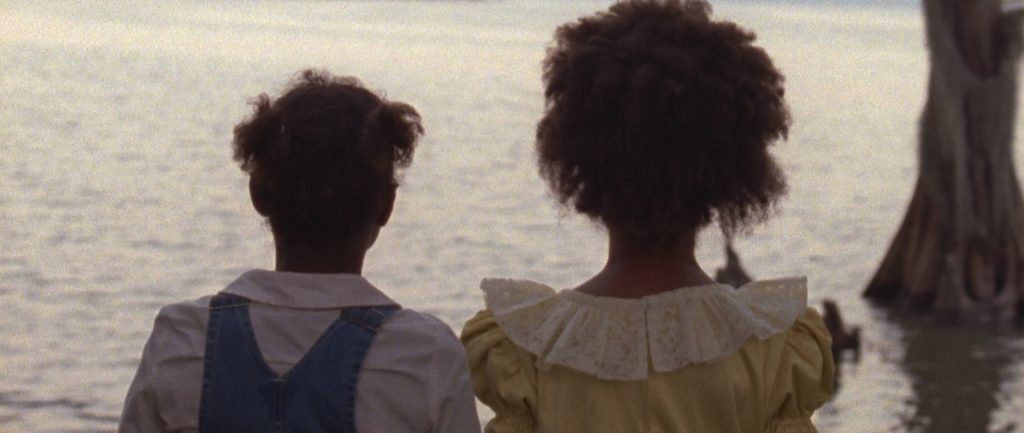
MM: How connected do you feel to filmmaking in the continent?
NB: I just got back from six months in Zambia (where we were developing the feature film version of Afronauts) and that shift has been very generative. Just the simple difference of writing and developing in relationship to everyday reality and community versus researching about a far-away place. But also it’s not so either-or. For example, filmmaker Kabinda Lemba – who made a short documentary on Edward Mukuka Nkoloso – reached out to me all the way back in 2013 (before the short premiered), and we’ve been in conversation since then. That’s been my more common experience.
As I move into the next phase of my filmmaking, I’m interested in continuing to make links with people working locally. African cinema has traditionally been plagued by this split between the films watched internationally and the films watched locally, but I think we’re finally seeing the internet undo that rift. I’m yet to complete a film on the continent, but this has been the goal from the beginning. Some of my earliest film viewing experiences were people from the neighbourhood gathering around one small TV to watch Nollywood, telenovelas and the World Cup. That’s one of my origin images of ‘African cinema’, of where and why I want to make movies, and who I want to make films for.
MM: I’ve started NBO Film Festival with a colleague, and one of the things we wanted to do was to grow cinema audiences in Kenya and also to connect filmmakers across the continent. Hopefully what the festival will do is connect different local industries together.
NB: Do you see yourself as part of a local or global community? In between counts as well…
MM: I think I am in between. I feel like a local member of a global movement, a global voice, and that voice is particularly black. I’m proud to exist in a time where blackness is getting its voice in different ways. The global voice of blackness is a patchwork, not a mass movement. The voice of this East African adds to the voice of someone like you or Barry Jenkins. These are all contextual to the black voice.
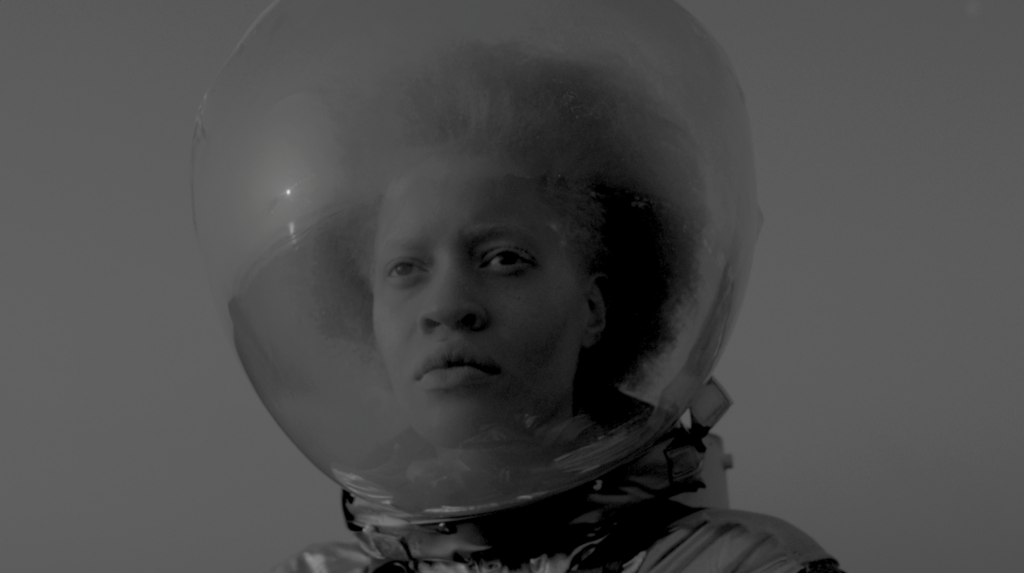
NB: I like the way you name it as something local and rooted but speaking to a global moment. As you are saying this I feel like I’m in the reverse position. Because I grew up in diaspora, I was in the global, but right now I’m trying to link to a specific local. Because of my background I’m thinking it’s Ghana, but I’m also open. Sometimes I think it is a practice of being local wherever you are. I understand very clearly what I’m trying to build now. I want to make films in a space where I can be free and where I can be in conversation with other Africans and global black filmmakers. These questions are why I am working with vernac.media for the Afronauts short online release, and these questions come up a lot in our conversations (and events) in the New Negress Film Society. There are stories in our worlds we all know haven’t been adapted, and I want to see those works in conversation with each other, rather than brought into, say, Hollywood as a ‘representation’ of us. If we were talking to each other what would come out?
This is an extract from a conversation that was captured by curator Tega Okiti, for an editorial partnership between No Direct Flight and People’s Stories Project (PSP) – an initiative that comes under the umbrella of the British Council’s arts programming across Africa.
This is an extract from a conversation that was first published on the BFI website on 6th August 2019. It was captured by Tega Okiti in a partnership between No Direct Flight, British Film Institute (BFI) and People’s Stories Project (PSP).
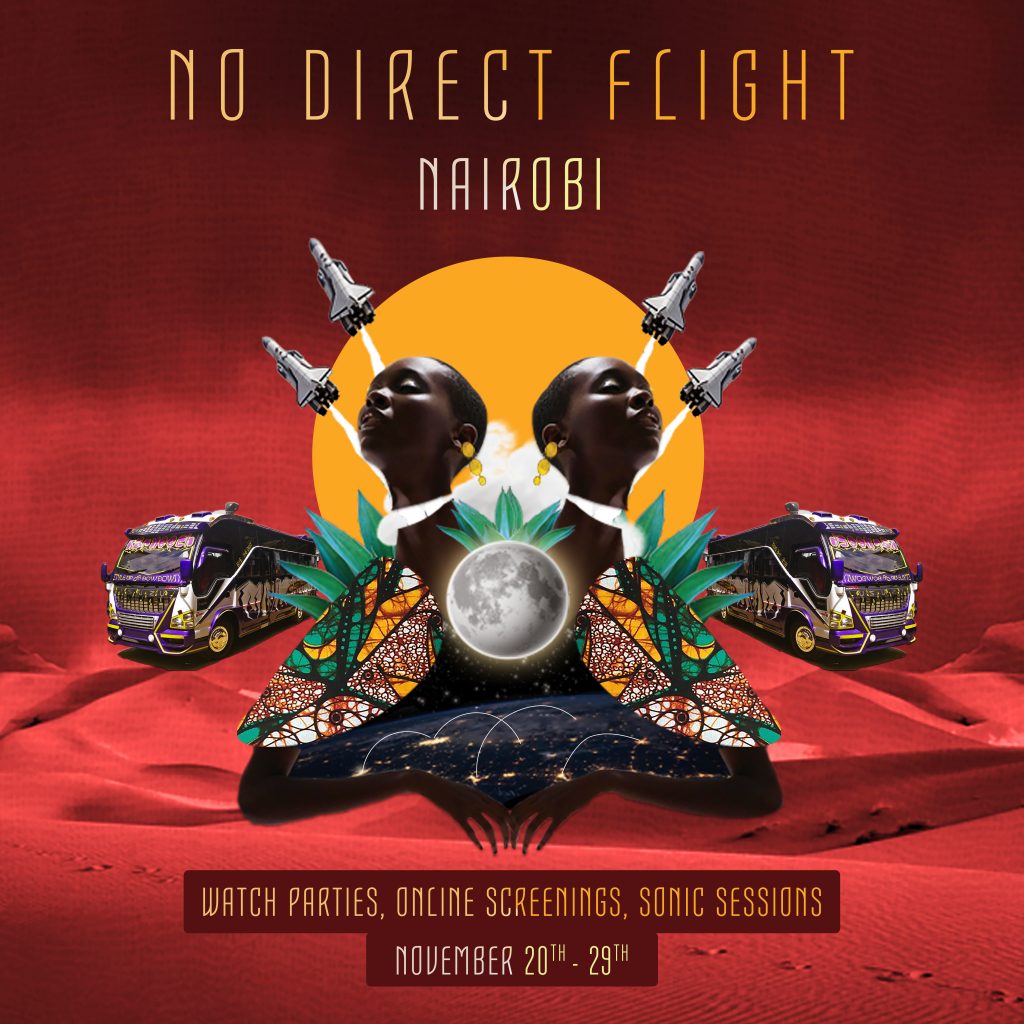
NDF 2020 runs from 20th-29th November 2020 and is produced collaboratively with Kenyan partners African Digital Heritage, Go Sheng Foundation, Down River Road, Studio Tisa, and Monday Movie Nights with Mugambi Nthiga.