Amirah Tajdin: How did you start communicating through visuals?
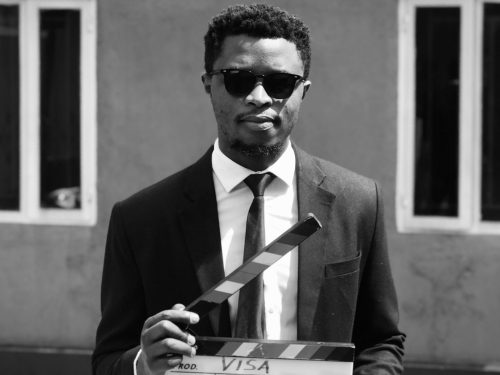
Seye Isikalu: I was going to become a social worker at university and I did a module in Media Photography. We had to make a mock campaign and I decided to do it for Sean John. I started considering photography from there. I put my work on Myspace and people really liked it. I got an agent and slowly transitioned into film.
AT: It’s interesting that you chose Sean John, because I think your work deals with black masculinity, and maybe that was the first inkling of your representations.
SI: Can I flip the question back? How did you get started?
AT: It’s a very vivid memory. I was 14, and we were doing To Kill a Mockingbird for our GCSEs. I fell in love with the book. We had to watch the film, and I remember being like, ‘Oh my god this is not what’s in my imagination.’ I thought I should look into cinema and how words become pictures. That translated to studies in painting, photography and writing. I didn’t go to film school, which I think was a good idea! I was scared of going there, because I thought I would loose my conceptual language and be told, ‘This is how you make a movie.’
SI: If you were to go to film school now do you feel that would still happen or do you feel you’d have an advantage?
AT: There was a part of me that wanted to, but my career took a different turn. I would study painting. Imagery has become more spiritual for me and it’s more about light and characters. I’m stronger visually. I like that we both didn’t do the traditional thing with making images or becoming filmmakers.
SI: From time to time I do feel like I should have. You get a kind of imposter syndrome when you’re being mentioned next to artists who’ve done it that way and you haven’t. And then there are other times when I’m like, ‘No I’m actually dope and deserve to be here.’
AT: You can’t be a creator and not have self doubt. That’s something I’ve learned to forgive myself for. It’s nice to have that humility too. I think a lot of filmmakers lack that perspective, and I guess that’s what differentiates a creative and an artist.
SI: Where does your inspiration come from?
AT: A lot of it comes from music. It’s a starting point for a lot of my work. If I had to narrow it down it’s definitely personal experiences being cross-cultural. It also comes from consuming other images and travel. A big part of it over the past few years has to be the internet. I’ll be on Twitter bookmarking and reading stuff and a few months later I get to work it into something.
SI: I think it’s the same for me. I can get inspiration from anywhere but what’s hard for me is getting the motivation to execute ideas.
AT: Why do you struggle with that?
SI: Because I am a perfectionist. I have to break past the point that everything has to be done right or in a certain place before I make a move. A lot of the time my best stuff is made when I’ve done it off the cuff and I haven’t thought about it too much. It’s just getting started that’s a struggle.
AT: I read an article where Barry Jenkins said that as filmmakers we still don’t have the resources to just take our inspiration and make it happen in the same way musicians can. You could make a full EP in your bedroom by yourself. As filmmakers we need an entire village to help us see this little idea in our head. Getting started is definitely a shared struggle.
SI: What about the work you have in No Direct Flight?
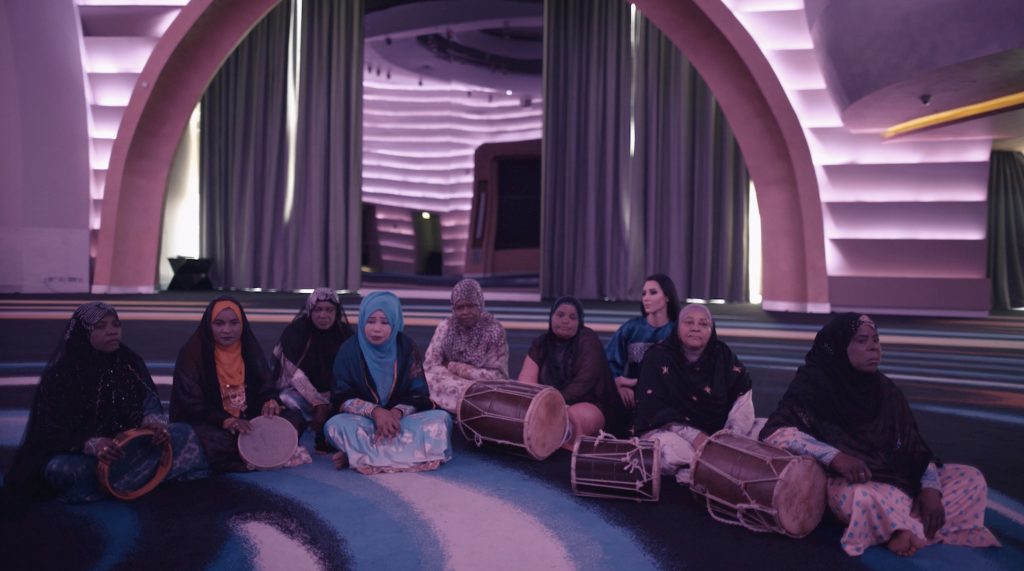
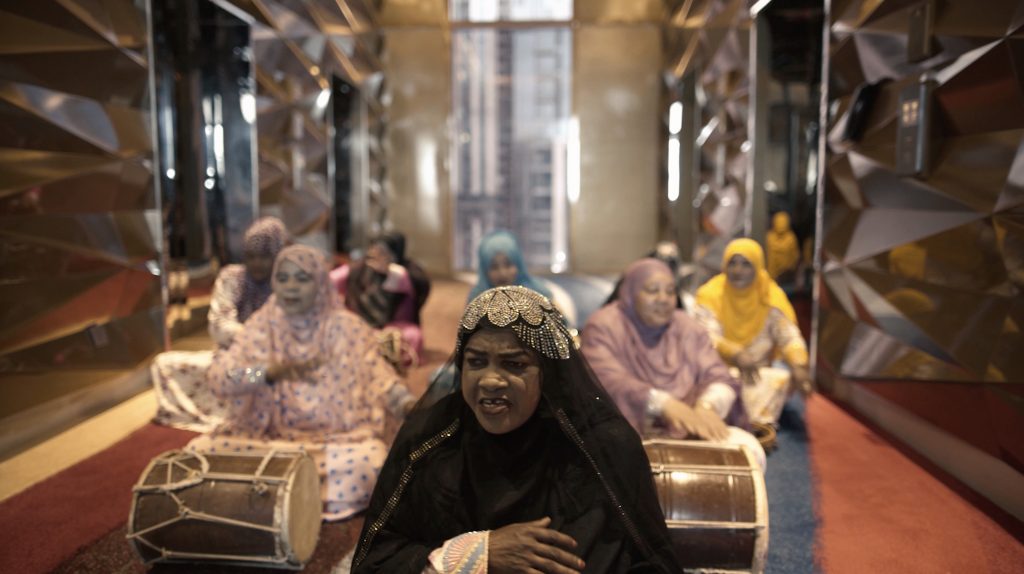
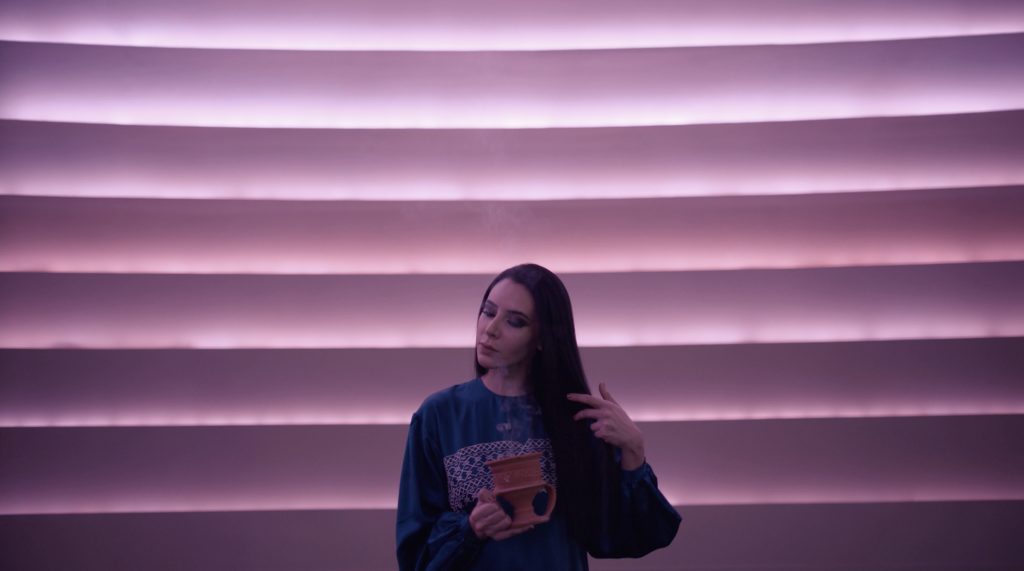
AT: Embroidery for a Long Song (2018) was a roundabout creation commissioned by Mixcloud and the W Hotel. I was working with Faissal El-Malak and he wanted to film his fashion collection with Taarab folk singers from the Emeriti and Gulf region. In east Africa we have similar music in Swahili culture. At the same time I was working on my feature film, which is about preserving the art of Taarab music and the history it has in Mombasa and Lamu. The bands are really hard to get, because it’s a dying art. We ran with it on the day and made the film as we went along.
SI: It’s interesting that you say you improvised; the way I interpreted it seemed like everything was intentional, like the scene where the band is juxtaposed with the model. It felt like a comment on the women in the band paving the way for the model to express herself.
TA: The film was always going to be a juxtaposition of the traditional and modern woman. We got a new layer with the African Arab Omani women. It ended up being a pretty bizarre juxtaposition of where we’re at with womanhood. Not just in this region, but globally.
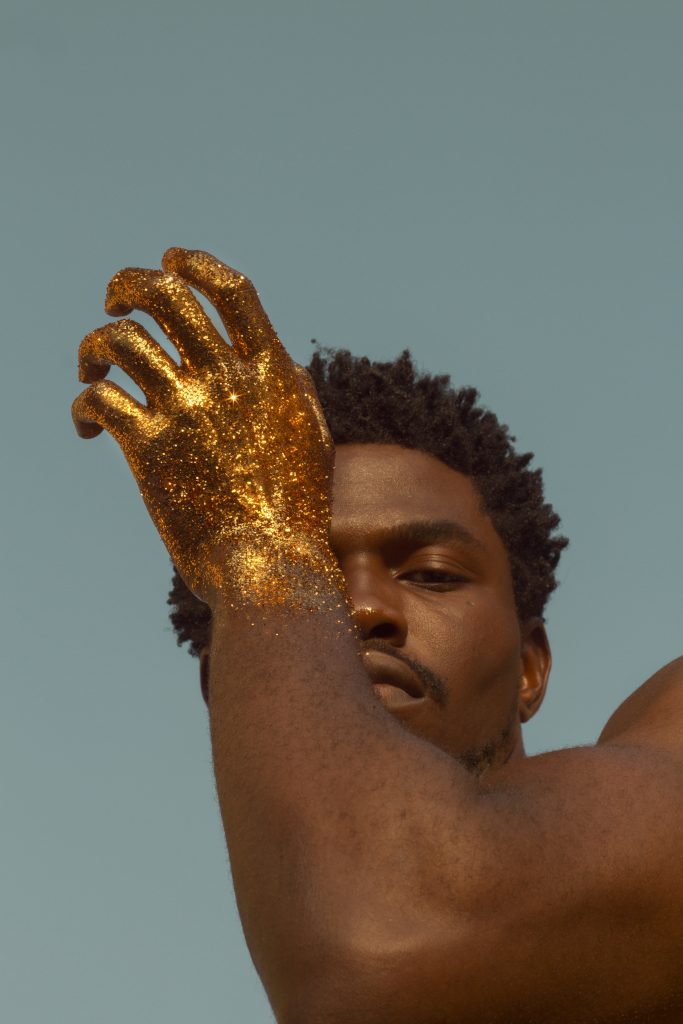
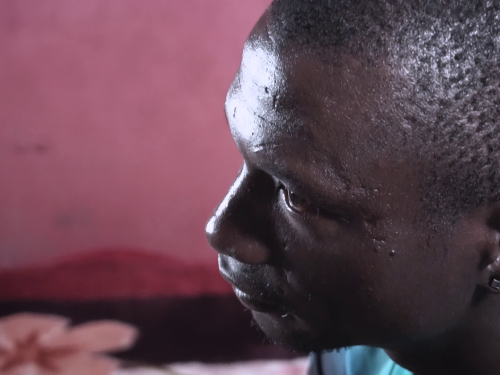
SI: Contact (2018) was made in a similar way. I was out in Lagos for Lagos Photo Festival, and I was meeting all of these talented artists. I was literally inspired by everything. I made a couple of friends, one of them being Kadara Enyeasi, a Lagos-based photographer. I remember saying to him, I like your style and your energy, and that we just had to shoot something. It didn’t matter what. Initially it was supposed to be a photo shoot, but I also started capturing videos on my iPhone. I liked that process. Kadara also writes poetry, and I felt it could fit for creating some type of narrative.
AT: How did Kadara take to opening up to the creative process?
SI: He’s used to being in front of the camera. He does a lot of nude self-portrait work. I was out there for almost two months, and we just built up a strong friendship. Part of that is why a lot of the clips I got were captivating and interesting. In certain scenes in the film it’s almost like I’m not there.
AT: Do you think that’s a stylistic trait of yours as a director?
SI: It’s down to the subject. Ideally if you can find a subject who’s that comfortable then yes. I like the idea of making something where the audience is watching as if they’re a fly on the wall. There’s something compelling in that.
AT: I often work with non-actors as well for the obvious reasons related to budget. I think there’s an aesthetic that’s coming out in work that I see and also in No Direct Flight where you see non-actors. Maybe it’s because these are new stories and filmmakers are more comfortable with that. I feel like that in itself is becoming a whole new visual language. Do you feel that there is a shared aesthetic among your peers in black and African cinema?
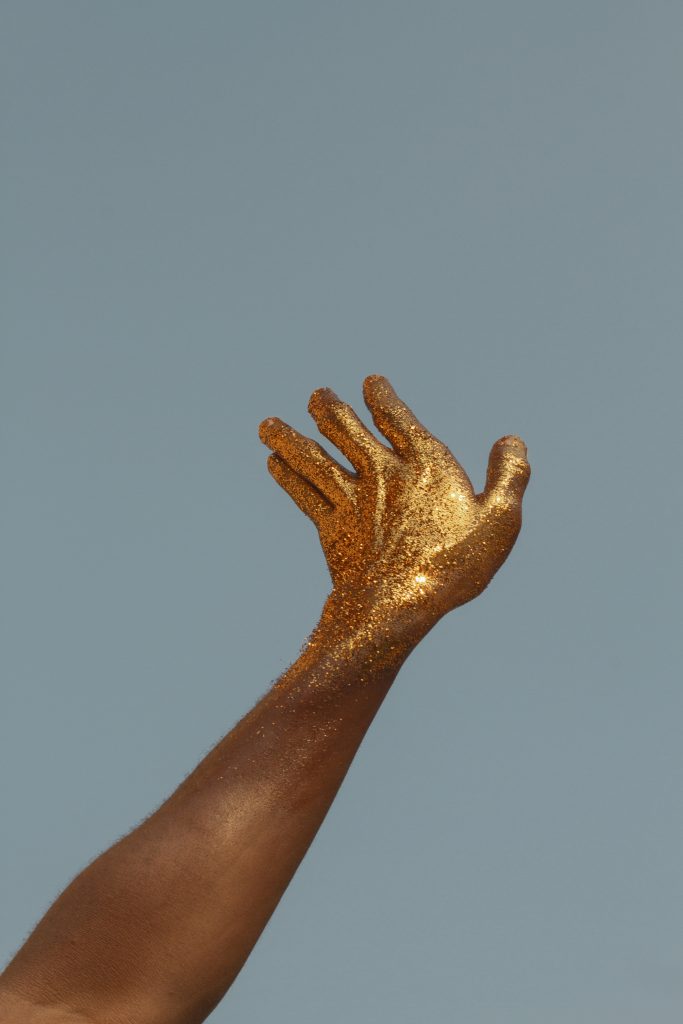
SI: Work across the board is varied. There’s definitely a sense of black pride whether it’s in TV, films, fashion or music. There’s definitely a sense of us retuning to Africa or to our blackness through imagery and artistry. A lot being produced isn’t shy to reference people like Fela, The Black Panthers or Yoruba deities. We’re also seeing a bit more black queer imagery in the mainstream as well. We’re a lot more bold, fearless and a lot more proud.
AT: The latest point to this question is the debacle between Beyoncé’s Spirit video and Petite Noir’s work. Is that a shared aesthetic or is Beyoncé giving it a platform? Personally, I think it’s fucked up. It highlights the downfall of us sharing our work because of the internet, but how do you control it? It goes to show how small the internet is.
SI: You never know who’s watching your work.
AT: Black aesthetics are also popular culture, whether it’s African, black American or island aesthetics from Jamaica. It’s being packaged as popular aesthetic.
SI: I did see the comparison shots. There’s no doubt Petite Noir was on the mood board. I do feel like Noir borrows from other black artists as well. Who borrows from who? Who’s gatekeeping the process?
AT: Maybe it’s our duty as filmmakers not to regurgitate things that are easy for people to consume.
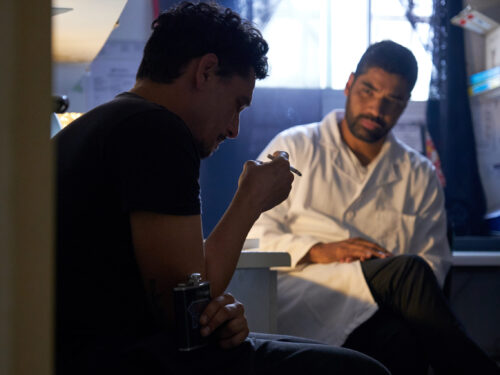
Aminah Tajdin’s award-winning film Fluorescent Sin will be showcased during No Direct Flight 2020.
This conversation that was first published on the BFI website on 7th August 2019. It was captured by Tega Okiti in a partnership between No Direct Flight, British Film Institute (BFI) and People’s Stories Project (PSP).
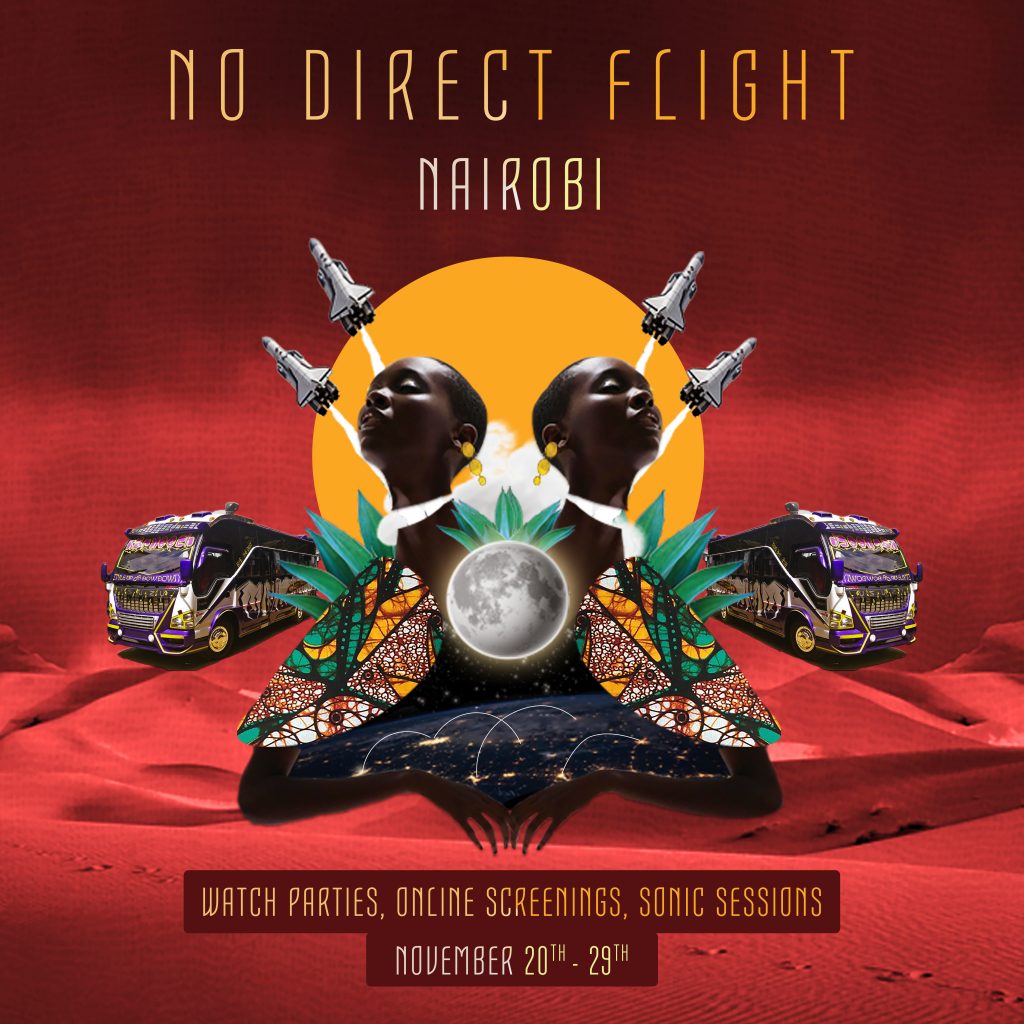
NDF 2020 runs from 20th-29th November 2020 and is produced collaboratively with Kenyan partners African Digital Heritage, Go Sheng Foundation, Down River Road, Studio Tisa, and Monday Movie Nights with Mugambi Nthiga.