As language predates literature, stories have long been used to impart wisdom and warnings. When the act of storytelling is utilised to document events and experiences it also stands to function as anthropological evidence of the life and times of a people.
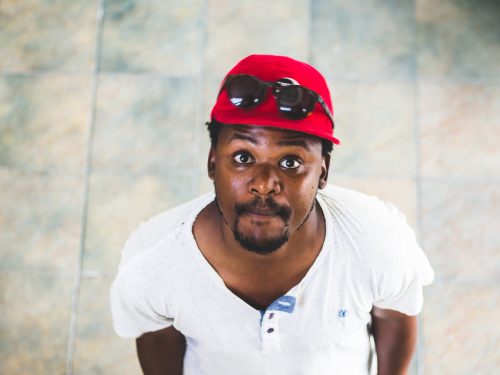
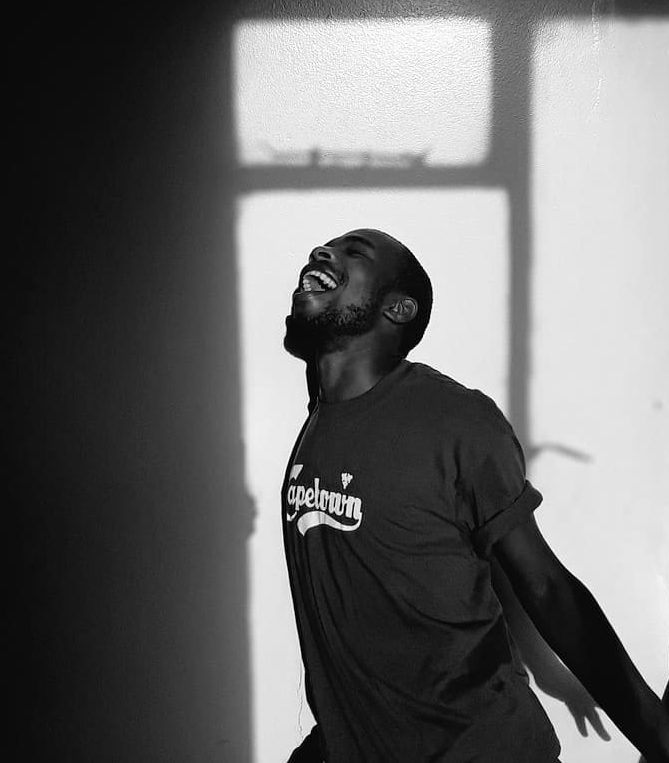
In 2019 writer and editor Anathi Jongilanga would combine his love of literature and the queer community to put together the first edition of the Go the Way Your Blood Beats series – an anthology of short stories from writers across the African continent. Published in conjunction with online literary magazine, Brittle Paper, what began as a casual, fun idea would grow to become a solid body of work. With the second edition of Anathi’s publication currently in the works, we spoke with him about the process and pains of publication, the impact of queer representation and the way forward for African literature.
For many queer people who’ve become writers, we discovered the beauty of books early – mainly as a form of escapism that allowed for the exploration of one’s limits and imagination. When did your relationship with literature start?
I remember as a child I liked to read things I found interesting. We never had a library or even a bookshelf in the small room I shared with my mother and siblings, or in the two-roomed house we later moved to. There was no community library at all, only a bookshop that closed when I was in Grade 6 or 7. I was fascinated by that shop, but I never really ‘explored’ it. Buying books wasn’t as normal a thing as it is now, for me, but I knew that books and I – literature, rather – had something going. My favourites from the books we read in school are John Kani’s Nothing but the Truth and the short story collection to really grip me – ‘Kaleidoscope’ with tales including, ‘The Toilet’, Unto Dust’ and ‘1949’. Later, in varsity, I started finding the literature that I knew my heart gravitated towards and I never looked back.
What’s sustained this relationship over the years?
I can never imagine my life without it. Nothing would make sense, really. I truly enjoy reading, and writing. More than that, knowing what I know now, I have an idea of the transformative, and destructive power that literature can have, and I want to be on the side that uses its transformative power to change the world as we know it.
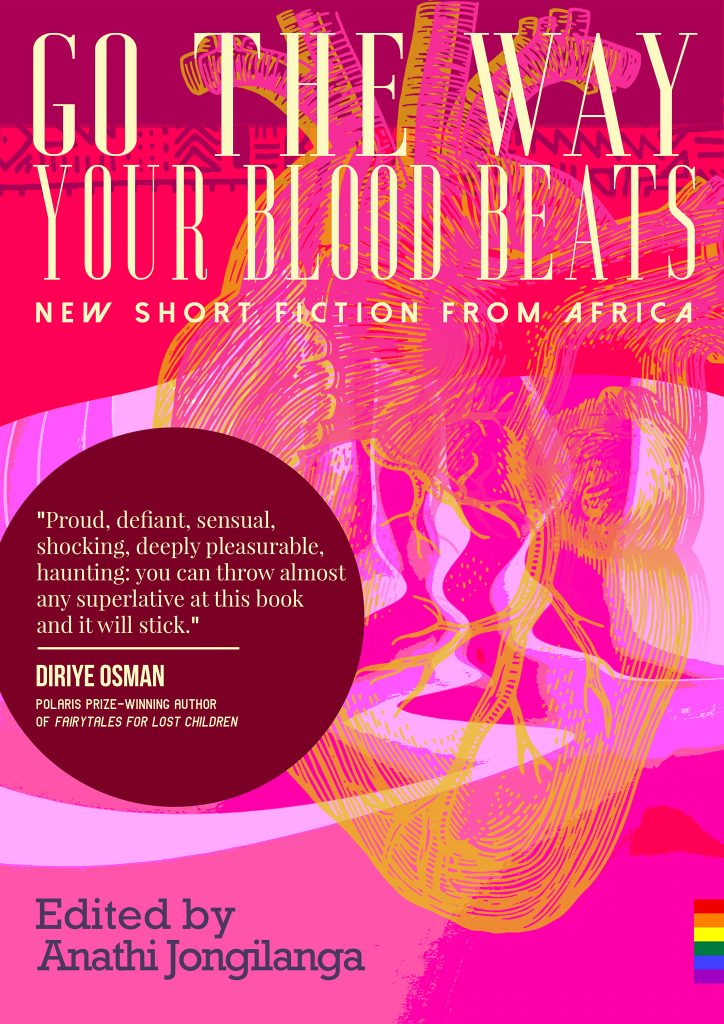
In the Editor’s note of the first Go the Way Your Blood Beats anthology, you mention a conversation between Village Voice journalist Richard Goldstein and James Baldwin. Goldstein says he sometimes thinks gay people look to Black people to heal them. Baldwin corrects him to say, “not only gay people” to which Goldstein adds people look to Black people to “heal their alienation”. Which writers – or works – have helped to heal any of your feelings of alienation, and how has this influenced you along the way?
Part of my answer goes back to that time in varsity when I started buying books for myself and getting into reading. This included Chimamanda Ngozi Adichie’s Half of a Yellow Sun, The God of Small Things by Arundhati Roy, and Dust by Yvonne Adhiambo Owuor. These all helped me open my imagination a little more, long before I ever thought about writing anything. In those books, I found good company, not that I felt ‘safe’ or anything like that, but the world looked different then. Toni Morrison became a literary teacher, later; Nadine Gordimer, in a way, was a historian. It was the queer writers and stories about people like myself that brought even more meaning to literature for me. My contemporaries, whose work I appreciate and admire a great deal, include Kabelo Motsoeneng, Innocent Chizaram Ilo, Keletso Mopai,Troy Onyango, Sibongile Fisher, Innocent Immaculate Acan, Kiprop Kimutai, Jarred Thompson … as well as the poetry of Esihle Lupindo, Chisom Okafor and many others. These are the authors and works that beat that alienation away; work that makes it a little easier to breathe in the world and show me just how important what we do is. They teach and influence me in many ways.
I think the act of writing useful or often difficult things about the human condition, with the purpose of helping someone else along their journey, is a colossal act of agape love. If the premise is that love is godly, would you then say that the first edition of Go the Way Your Blood Beats acted as a catalyst for transformation – not just for you, but for others as well?
This is a big question, and I don’t think I have the answer for it. I don’t think one can quantify that sort of thing. What I hope the book achieved, though, is what I intended for it: to be one more source of comfort, in a way, for those who sought and continue to seek it; to create space for queer lives in literature, and to change perceptions of those outside of the queer community.
What was your biggest take away from the process and publication of the first edition of the anthology?
I never knew what it took to put a book together and see it into the world. I was a complete novice and was basically learning on the job. What drove me from beginning to end is the vision I saw for the work I sought to put out. It was an arduous, learning process. Shout out to writer and editor Otosirieze Obi-Young for helping me with the final touches, and to artist Diriye Osman for agreeing at such short notice to grace our work with his presence through the introduction he wrote.
How was the book received?
The reception was truly a wonderful thing. I hope that people will read that book for years to come. Stories like that matter more than we may think, and if anything, putting out that first one and seeing how it went about in the world, gave me an enriched look at things. With Africa being such a queerphobic continent, the work that we do is so very important.
In what ways has working on the second edition been similar or different?
I wouldn’t say that there have been any similarities between now and the first anthology so far. What I can say, though, is that I am planning on doing things a little differently this time and will keep posting updates on social media as time goes.
Ideally, how would you like to see your literary projects grow?
I am so looking forward to finally getting the website for The Blood Beats Series up. Once that is out there, it will be easier to work on the next book in terms of publishing and calls for submissions. Primarily, this series is for queer stories, by and for queer people – and queer Africans, in particular. It is a space for them to put their work out there and add their voices to the continuing and important work of documenting our lives and experiences, our wishes and joys, our pasts and our futures.
Brittle Paper, the Kalahari Review and Ja. Magazine were pivotal when it came to you getting this off the ground. How important have they, and the likes of Blackbird Books, Jacana and Lolwe been in helping to promote, print and publish authentic works by African authors?
Firstly, the magazines and publishing houses and platforms you mention mean so much to me, as a reader, first, then as a writer and as an African. Each one of them is as important as the next. I truly wish and hope they keep rising and getting better and publishing more awesome African authors and stories.
What, are your thoughts on what could be done to help African publishing and storytelling along and better sustain it?
The future of African publishing is bright and exciting, no doubt. Already, Lolwe have opened a bookstore of their own in Kisumu, Kenya. Blackbird Books are publishing books outside of South Africa and Africa. Platforms like Brittle Paper, Ja, Kalahari, Doek, and so many others are invaluable. Writers who wish to publish their work can only do so if these platforms exist and continue to thrive. They need funding and support from anyone, anywhere in the world. Not a lot of things work without money these days.
Would you consider opening your own publishing house one day?
My own publishing house? The idea alone scares the pants off of me. Time will tell.
The first edition of Go the Way Your Blood Beats can be read and downloaded for free here.
Follow Facebook or Twitter for all updates on the new series.
All images supplied by Anathi Jongilanga.