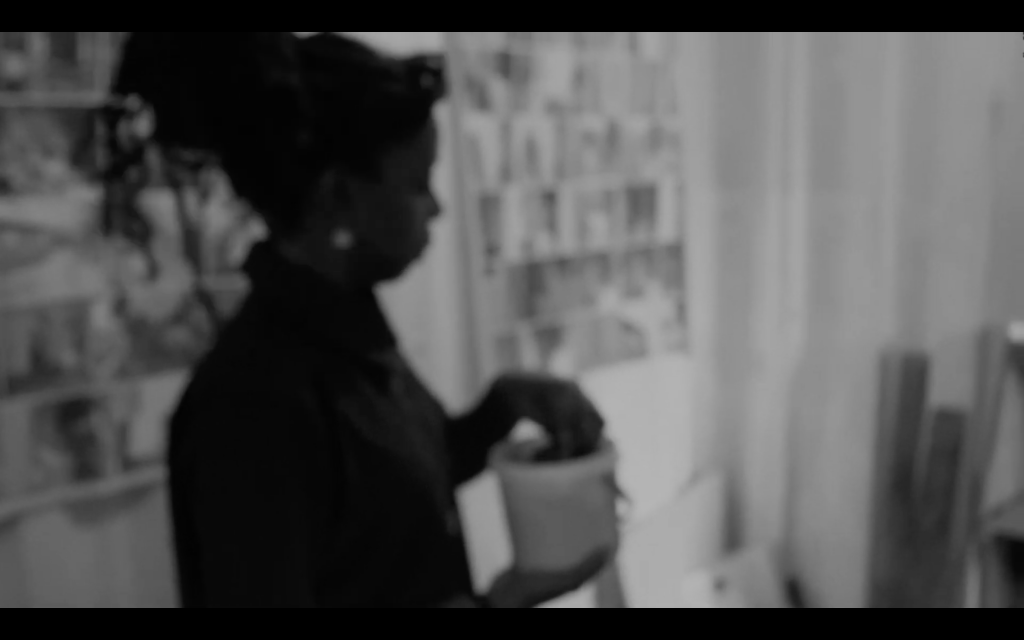
How was the Wysing Arts Centre residency?
Fantastic. I was supposed to attend in person with seven other artists, but covid obviously meant we couldn’t go. It therefore became more of an opportunity and a space for interrogating what digital art can do. In fact, stepping back from technology has been good for making me focus on concept again, and the relationship between history and the contemporary, and how we put them together in film.
So, you specifically use film as your lens?
Definitely. I’m a documentary filmmaker and I want to see how we can explore and reinterpret our archives from a Ugandan perspective. Digital art offers so many ways to play with that; to challenge how we normally get to see it. That’s what I was trying to explore through the residency.
How did you find the remote experience?
You know, some days were great, and other days were just challenging. I love being able to coop myself up in my house and focus, in the way that you usually get at a residency, but the technical challenges got on my nerves! How many times can a phone disconnect? What’s beautiful about a residency is sharing meals with people, seeing things, playing with new tools …but much like the whole lockdown experience, I was forced to focus on what I had.
Did self-sufficiency become an upside of the situation?
Yes… and figuring out who the community is that I need around me. What’s also important is to see myself outside of a person who produces things for other people. That’s made me look much more closely at myself as a human being, and to acknowledge what matters to me.
What were you producing at Wysing?
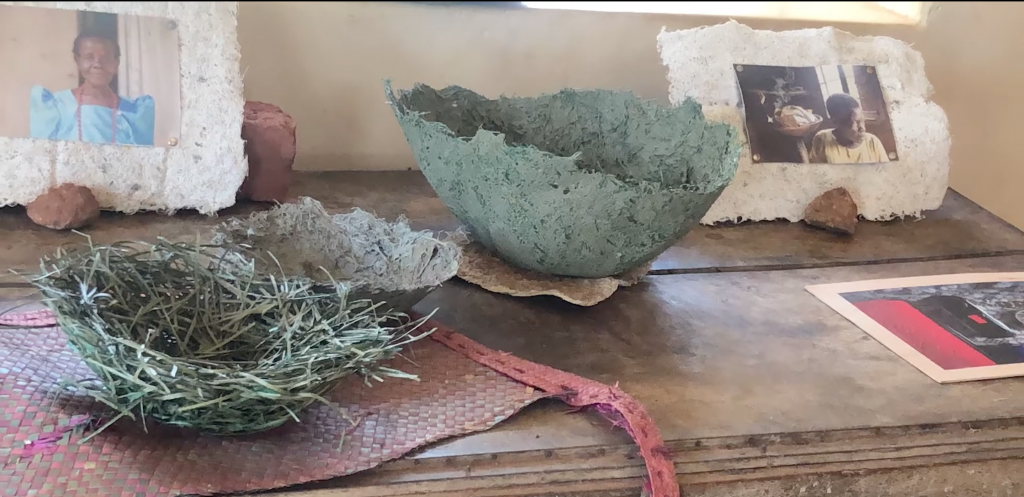
I created a series of moving images and made paper from a Pictures of Ageing residency that I previously did at 32° East – which is an absolutely brilliant research centre for artists in Kampala. The new Wysing material will feed into a larger documentary that I’m working on, and will keep working on, for the next couple of years.
The Ageing project looked great. What was the story behind that?
Thank you so much for taking the time to look at it. Back then, I had just finished working at 32° East as a programme manager. When I left, they were setting up a residency programme in collaboration with Makerere University, Kampala and University of Cambridge. They were asking questions about ageing that were interesting, especially in Uganda’s context. We’re a country where over 80 percent of our population is under 35. So much energy is poured into the younger generation, but then what happens to our older generation is that they’re not taken care of, so then who’s going to take care of this large youth population later?
There’s a sense of intimacy in the way you approached the theme …
Well, we went to a semi-rural place called Busukuma, which was not too far from Kampala. Myself and two other artists were working with the elderly. I decided to focus on two women from the same clan, who I loved, because they made me laugh. They also cooked delicious lunch, so I thought, why wouldn’t I hang out and chat with them. A couple of times they said that they felt that people didn’t see them as having any more value and usefulness in society, which was strange, because they weren’t even that old. The older of the two was 71.
Were there symbolic reasons for working with the materials you chose?
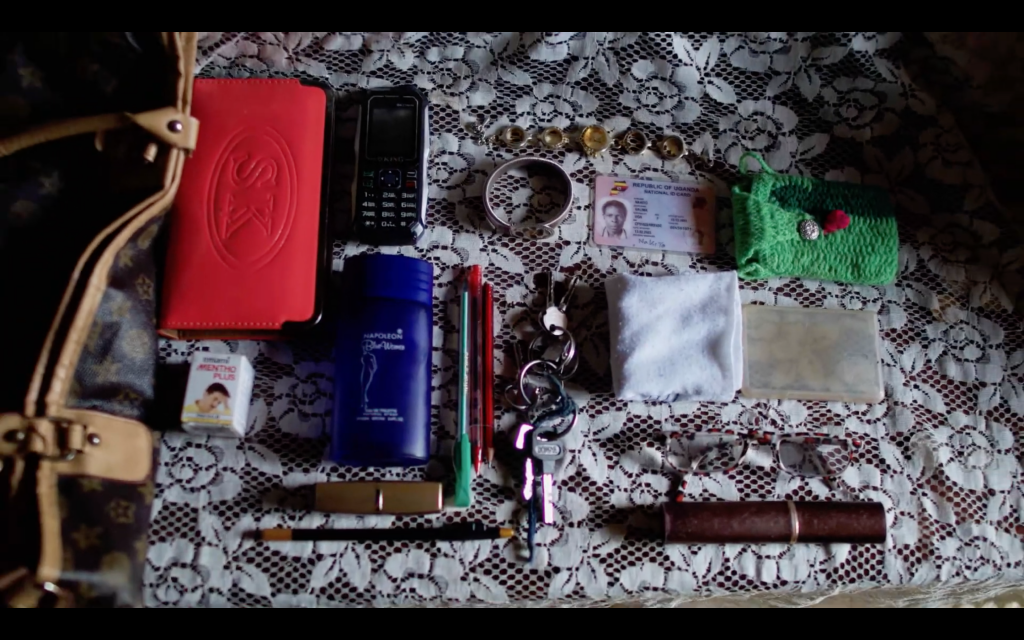
When we were in their home, we’d often sit on their old and worn mats. I swapped one of these for a new one and then shredded it down. I learnt about doing that from another artist in residence called Ife Piankhi. She inspired me because she would make paper with flour and newspapers. I thought if I took the mat and shredded it to its thinnest version of itself, I could essentially transform its usefulness and give it new value. It requires a lot of inventiveness in taking something and using it in a different way. You have to be opportunistic with what you have available. It was good to remind myself that I could refresh the circumstance through this object.
There’s a beautiful ‘forensic’ look at old age in this project. What other impact did that residency have on you?
It reminded me that Kampala is not Uganda. It’s so easy to get stuck in the idea that everything revolves around this city. There are so many important lives that are lived outside the centre of the country. I’m grateful for that experience because it put the idea in my mind that I can take myself a little more seriously as an artist. It sounds ridiculous, but I was an administrator, which is a valuable skill, but I had this other thing within me that needed some attention.
In your film work you’ve made Speak Soon (2017), which seems to encourage the audience to look and listen in a particular way. There’s a sense of interaction as the angles fragment’s shadows and voices come at you in a certain rhythm that makes the experience of watching seem physical.
That’s great. I recently read a fantastic essay on, I guess what I’d call ‘body cinema’. The person was arguing that the three best genres are melodrama, horror and pornography because they encourage a bodily reaction to what you’re watching. I like the idea of being so involved that you can’t help but scream or reach out … I’ve never thought about my piece in terms of how somebody physically watches it.
Where was it shot?
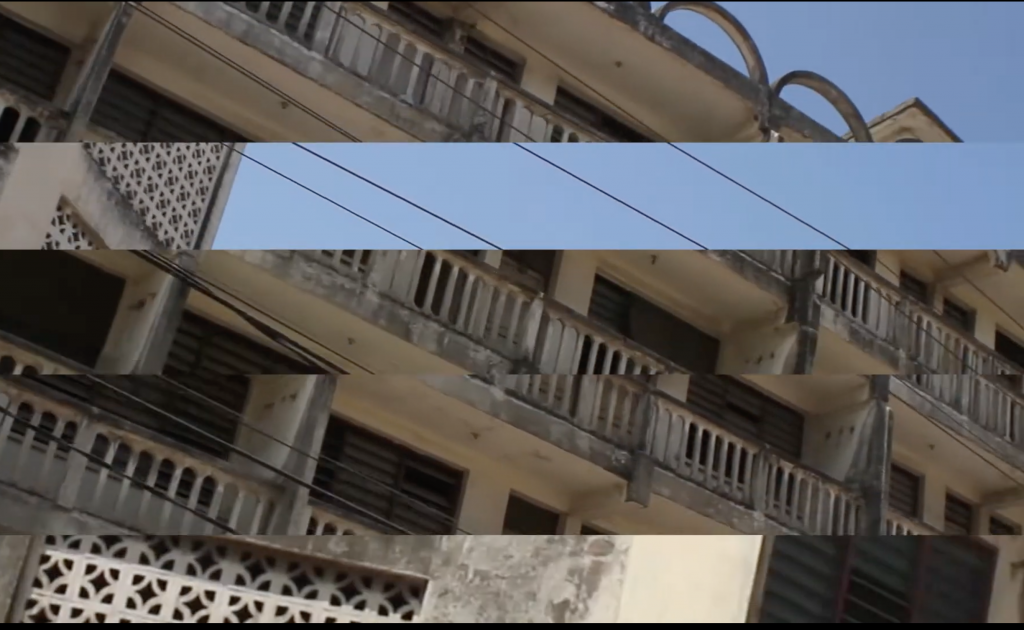
It was part of East Africa Soul Train, a pop-up residency where we travelled from Nairobi to Mombasa on an old, gross train, but the process was good for getting me back in touch with my intuition and paying a lot of attention to how I observe and what I’m observing. That was fundamental to creating something that felt genuine.
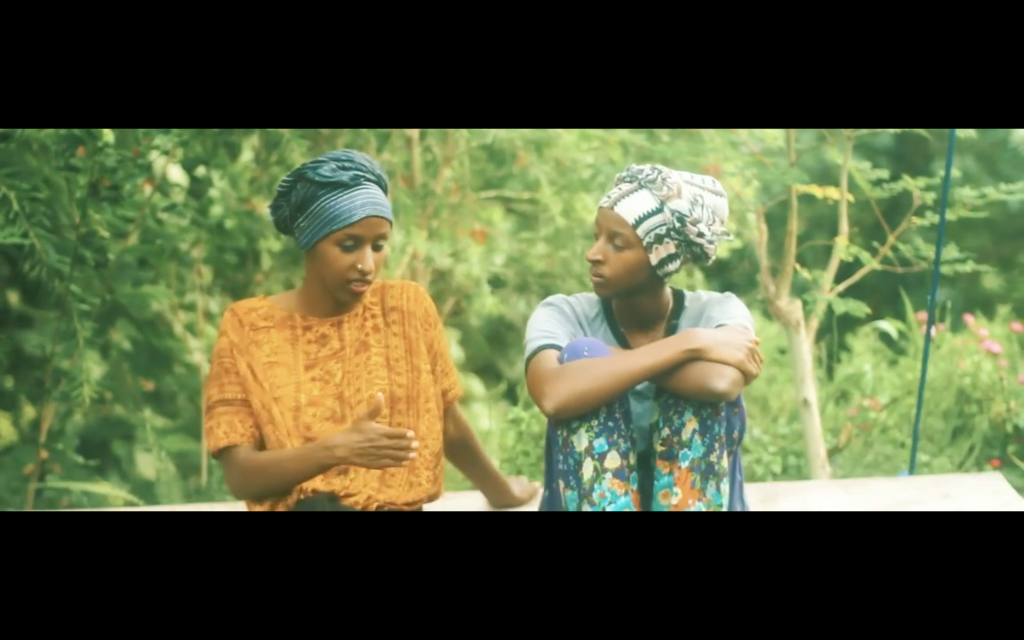
Hibo and Hoden is one of your longer films. It feels like a coming-of-age story. Did you intend it to epitomise a blend of reality and fiction?
That was an earlier film. Essentially my best friend and I had been living together. Everything was super random at that time and our lives were hyper stimulated, so we started writing down our experiences as little scripts. I then went to Canada where I was working for the Toronto International Film Festival. When I came back, I had an idea of these two characters who were essentially based on us. I was trying to document how we were growing apart so that we could become the women we needed to be, independently. Great, fine, but neither of us can act to save our lives.
How did you find your main actors?
I bumped into Hibo at the Nyege Nyege studios. She told me she had an identical twin, Hoden, so I said “Bring. Her. Closer.” The structure of the film was based around two characters. One of them has a job opportunity to go to another country, so they must split to in order to grow. We shot chronologically, without writing any dialogue. Everything was improvised so we could respond to our environment. Those two ladies were so generous with their stories, and with their time and emotions. We incorporated a lot of their own life events, which is what makes the film so beautiful. I have to give huge thanks to both of them. They are now fantastic DJs in Kampala. The film may not be technically great, but it feels that it’s coming from the heart.
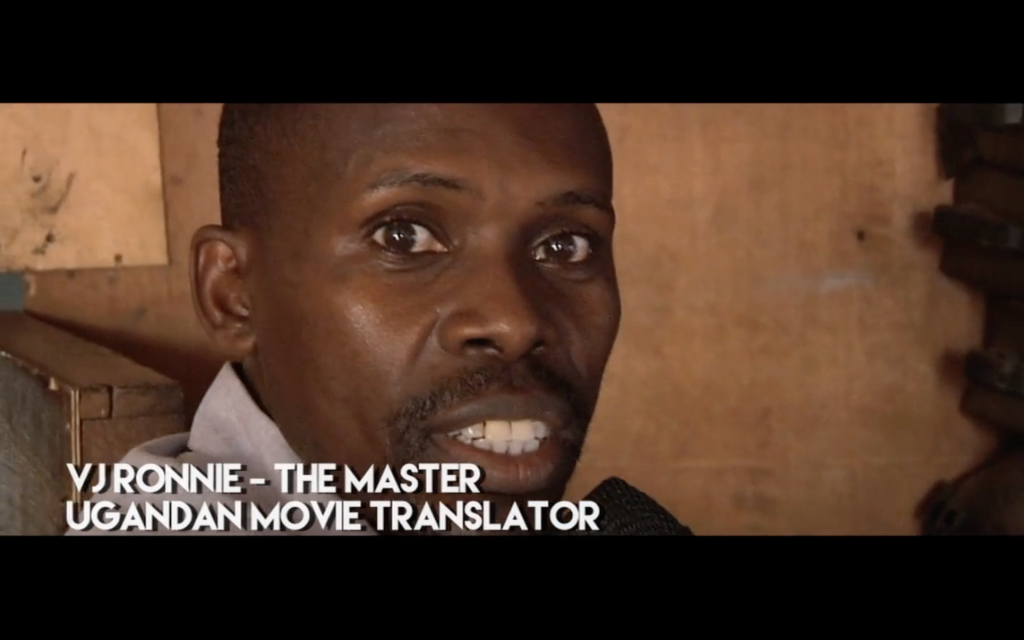
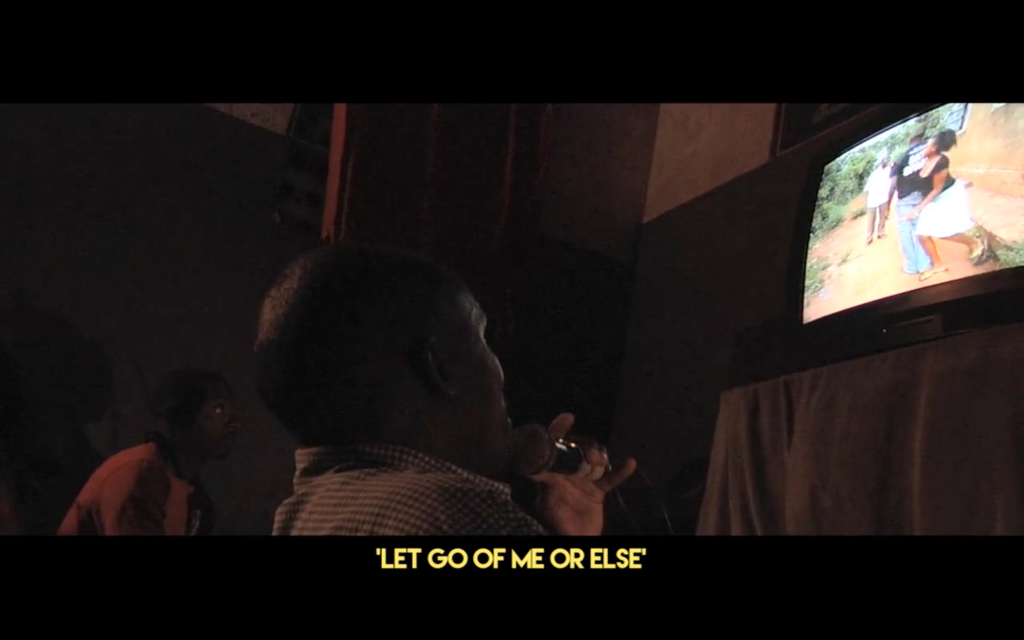
In another of your films , Master and the Movie Doctor, the main takeaway seems to be that the two VJs at the centre – Ronnie and Sammy – are offering a unique cultural service in Uganda.
All the films that they get are pirated copies that they translate, but there was one time when we went with VJ Sammy into a local cinema and did a live translation of a video art piece by an artist called Othello De’Souza-Hartley. There was such a beautiful response to how the VJ’s were interpreting the work. Without them, the film would have just landed quite poorly with the audience. The film was about masculine vulnerability, so what we were physically seeing was a man walking around in a concrete space, totally nude. You can imagine, in a conservative space it would be difficult for people to engage with, but VJ Sammy brought the audience to a place where they were talking back to the screen and had a lot of things to say. I like the way that this format suited us; not necessarily in the way that it was intended.
There’s a sense of playfulness that particularly comes out in your film work. Does this energy feed into your research as well? Which aspects of exploring your subjects do you enjoy the most?
I’m finding that research into my own family is the thing that most excites me. I found these beautiful, insanely bizarre stories about a relative who travelled to the UK in 1926. There’s also my grandfather. He worked with a troupe of actors who would rehearse for six months a year and tour the world for the other six months. Even my great grandmother started a town. There’s something so tenacious and ‘grab life by the balls’ about that, which just makes me feel that you have no excuse. Absolutely no excuse. It’s great to see people living a particular identity that’s not normally seen, and to be validated in knowing that this exceptional behaviour came from people who have existed within your own family.
How do you feel you’ve evolved as a filmmaker over the last few years?
I have a lot of difficulty thinking about how I’ve evolved, but I guess I’m becoming clearer about where I want to go. It involves lots of testing and experimenting to see how I can get to know a little bit more about who I am and where my interests take me, rather than trying to pre-determine them from a distance.
*The British Council in partnership with Wysing Arts Centre and Digital Arts Studios supported the Net/Work artists in residence.