If you are reading this, you might know about emPawa Africa. If not, it is simply, a talent incubator and investment and funding program for young African artists, spearheaded by Banku Music pioneer, Mr. Eazi. Among the hundreds who have benefitted from the initiative are rapper Lioness and Art Director Ericke Tjiueza – both from Namibia. Here is how it happened with them: Lioness was selected as an Empawa beneficiary early last year and was awarded funding for a music video. Cash secured, she slid into Ericke’s DM on Instagram with a request for him to work on the visuals. This collaboration materialized, in the end, because both artists were firm fans of each other’s work.
Within a week, they’d finalised concepts and assembled a creative team mainly composed of emerging Namibian artists. Ericke’s inceptive plan for this project was to ‘use the opportunity to promote notions of inclusivity, to provide creative access for new artists and to solidify the power that lies in collaboration.’
‘As an emerging director, it was a beautiful experience to see my work being well received, and to have created work that was meaningful to black women’
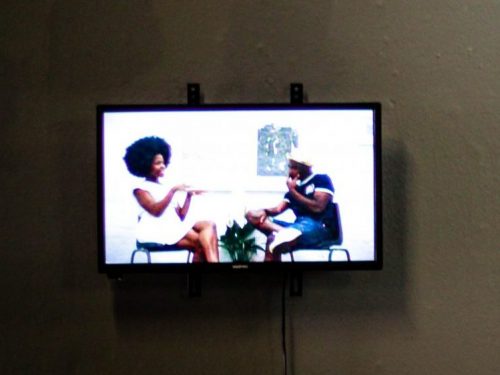
With less than a year’s worth of experience working the camera, Ericke went to work on the video with co-director, Kevin Perestrelo. They created Tala, which made Namibians extremely proud, if the comments on Youtube and other socials are anything to go by.
‘As an emerging director, it was a beautiful experience to see my work being well received, and to have created work that was meaningful to black women’ Ericke recalls. ‘A personal high for me was when a woman showed up to a public screening of the video, with lyrics from the song “Don’t let a bum nigga stress you” printed on her shirt. I knew then, that the audience had gotten the story we were telling and that it resonated with them.’
Up until the beginning of last year, Ericke had been living in South Africa. During his five years there, he completed a finance-focused Bachelor of Commerce at the University of Cape Town. It was within this creative hub that Ericke’s artistic identity was formed. ‘My creative journey started with me being curious about the concept of identity. I’ve always been intrigued by the personal truths of people because as a queer Black man, I grew up in an environment where I couldn’t own my experiences. As a result, I was accustomed to robbing myself of many personal truths.’
It was in Cape Town, where Ericke was anonymous, that he became comfortable with self-identifying as an artist. Gaining what he describes as “valuable creative perspective,” he returned to Namibia to contribute to the elevation of relevant industries in the country. Shortly after arriving back home, Ericke picked up a camera and started doing photography, concept development, styling and directing for fashion and video.
‘I think of luxury as an experience that has historically been treated as innately separate from the Black experience’
Before long, he was nominated to serve on the board of the Fashion Council of Namibia, and after a six-month stint, he stepped down to co-found New Luxury Studios, the outfit where he currently serves as art director, working alongside his aforementioned partner, Kevin Perestrelo. Their vision is to bring together artists – also known as NL storytellers – with diverse backgrounds and perspectives to tell ‘honest stories that don’t exist anywhere else in the world.’
“New” in the name is a nod to the trailblazing entity they would like to embody, while “Luxury” speaks to Ericke’s belief in an inherent luxuriousness to being African. ‘I think of luxury as an experience that has historically been treated as innately separate from the Black experience. “Luxury” challenges that misconception by telling stories that redefine the metrics as well as personalise what [the word] means and feels like for Black, and, specifically, African audiences. I believe that despite the present-day inequalities, it’s a luxury to be African. Our identity is synonymous with many gorgeous things – beauty, diversity, freedom, kindness, melanin, resilience – the list is endless.’
In August last year, New Luxury Studios organized a casting event in Windhoek, assembling emerging models and a diverse mix of artists for “a redefining collaboration with the voice and experiences of Namibian millennials” to establish an authentic national identity. Themes such as collaboration and millennial identity, which are at the heart of Ericke’s artistic ethos, were included.

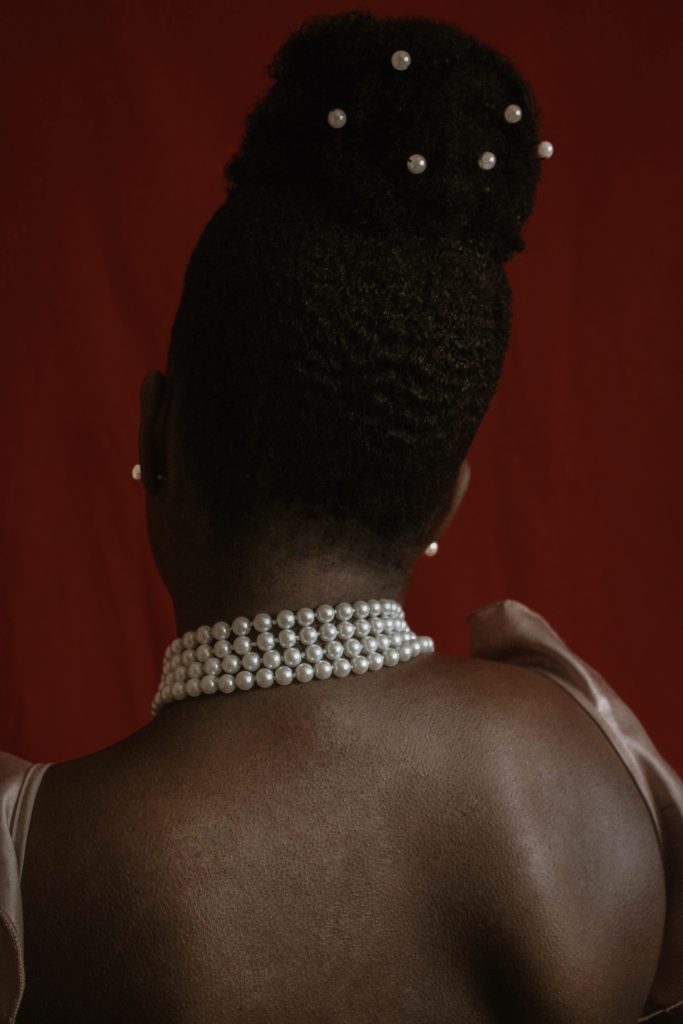
This series explores themes such as the overwhelming need to be perfect, feeling boxed in by societal perceptions of black womanhood and embracing African culture and identity.
However, could the ambitious undertaking of establishing an authentic national identity be susceptible to major pitfalls? For instance, when Ghana attempted such a thing right after independence, cultures from Northern parts of the country turned out to be cannon fodder for the endeavor. This was during the late 1950s to mid 1960s, and included stern efforts by the government to get the peoples of the once largest region of the country to abandon their “primitive” ways – which included what the state perceived as unnecessary nudity. In a Cameroonian equivalent of the same agenda, it was women and their way of dressing that bore the brunt. Ericke’s response: ‘Firstly, I believe all people have authenticity ingrained into their identity. How can you not when there aren’t two people who are exactly the same anywhere in the world? Namibian people have struggled with fully comprehending their identity, which is understandable seeing as we are a population of about two million, who only gained independence 29 years ago. There’s a lot of trauma bonding that needs to be reworked in order for us to start redefining what it means to be Namibian. Art, like science’ he adds, ‘is essential for the healthy development of any society. That is why it has become so important for me to tell stories that include people with subcultures that are still developing, and equally important to tell these stories by collaborating with the artists from those respective subcultures. I don’t believe in representing people in my stories as much as I believe in including them.’

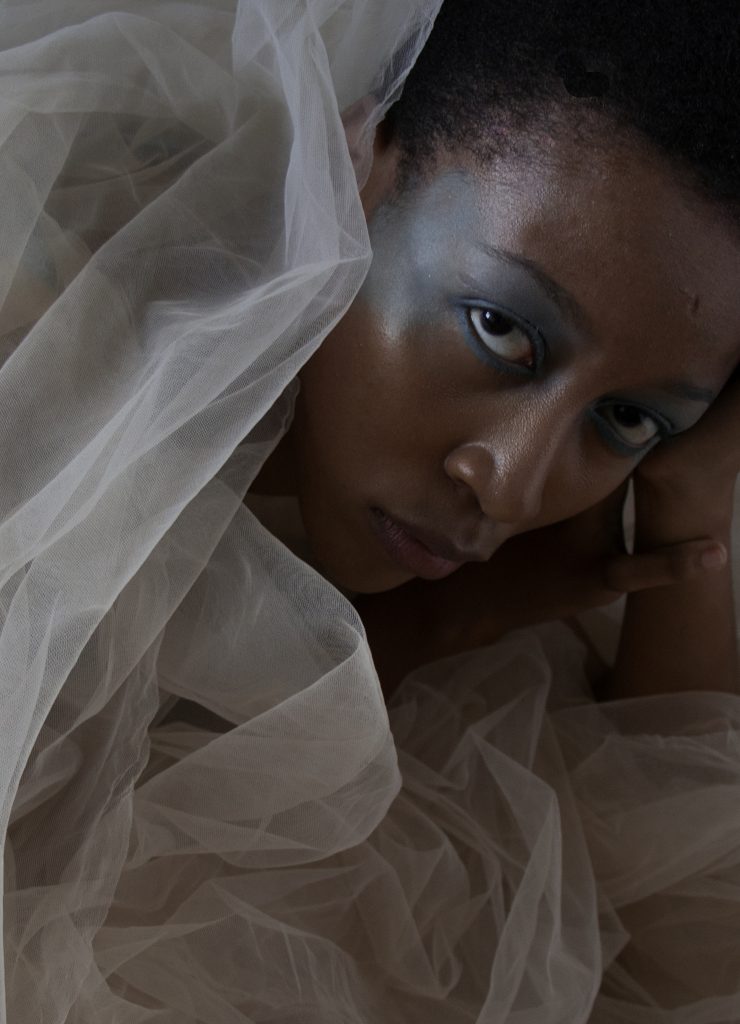
I really want my photography to reminisce about an identity that’s seems new but belongs equally to black African millennials. As Solange said, seeing black women as avant-garde beings in a world that puts them in a box is really important.
And it is millennials, members of his own generation, that Ericke is using as the main architects of this project. He sees a link between this youthful renaissance and the idea of Afrofuturism. ‘For a long time, the world has been using one standard benchmark for determining what art is. And for so long, African art has been limited to the “crafts” categorisation. However, what we’re seeing from African millennials ties in with the concept of “Afrofuturism” – which is really just us creating room in the world for how we dress, how we speak, and for our art.’
He goes on to cite US film and TV costume designer, Ruth E Carter who has said that the Afrofuture belongs to anybody who takes on the responsibility of their future and their contribution to their culture.

Ericke: ‘To me, that means anybody can be in, and embody, their Afrofuture. Essentially, I connect with the idea that Afrofuturism is recognising and materialising a consciousness, and then bringing that thing back to your people in a way that validates them.’
It appears to be a particularly booming time now for African creators, and Ericke is enthused by the sensation that this engenders. He is pleased to play a part in this apparently defining moment: ‘It’s an exciting time to be an African art director. The brilliance of our culture was manifested long before us, and I’m grateful that my work gets to tap into that as one of the voices adding perspective to the world’s archive of Contemporary African art.’

All images courtesy of Ericke Tjiueza